
One-Off Commercial Deep Clean Melbourne: The 2026 Restoration Guide
May 14, 2026
Apartment Building Common Area Cleaning: The 2026 Melbourne Strata Guide
May 16, 2026
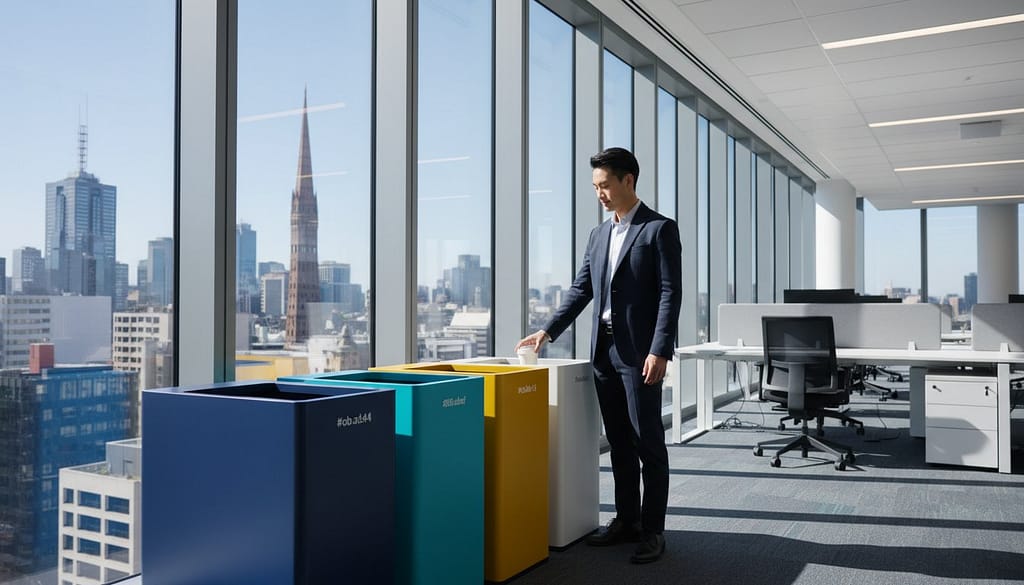
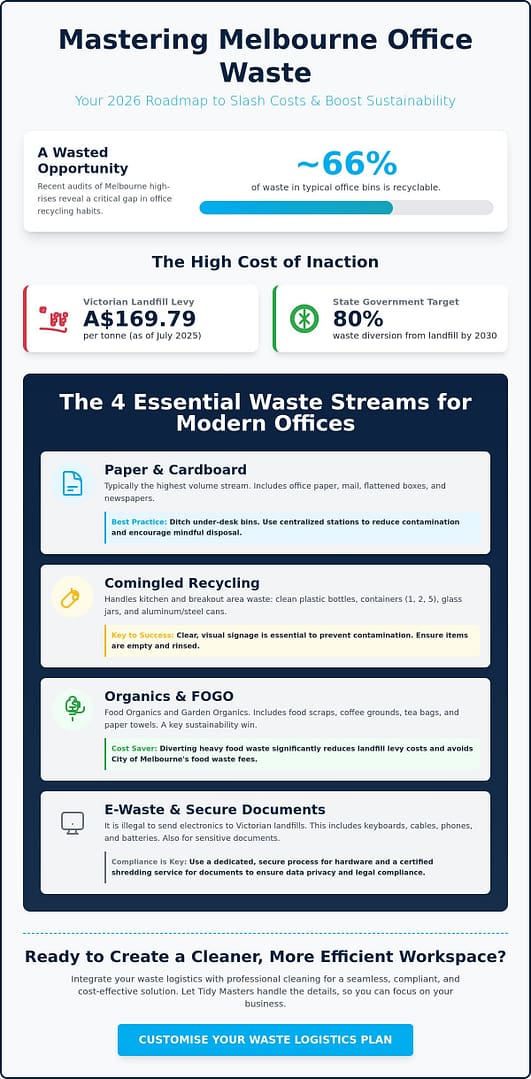
Did you know that nearly two-thirds of the waste currently sitting in Melbourne office bins could actually be recycled? Recent audits of high-rise buildings reveal a significant gap between sustainability goals and daily habits. As the Victorian landfill levy hits A$169.79 per tonne and new City of Melbourne waste fees take effect, managing your office rubbish removal melbourne is no longer just a cleaning task. It is now a critical financial strategy for your business.
It’s frustrating to watch waste collection costs climb while staff struggle with confusing recycling rules and overflowing bins. You deserve a workspace that reflects your professional standards without the hidden environmental or financial penalties. This article provides the 2026 roadmap to master your internal systems, helping you slash levies and hit your sustainability targets with ease. We will examine the latest regulatory changes and provide a clear, actionable plan to transform your office into a model of efficiency and cleanliness.
Key Takeaways
- Navigate the 2026 Victorian regulatory landscape to ensure your business remains compliant with the latest landfill levy updates.
- Master the four essential waste streams to streamline your office rubbish removal melbourne and significantly boost your recycling rates.
- Eliminate costly contamination issues by understanding how small errors in the kitchen can ruin entire recycling loads.
- Execute a precise two-step waste audit to identify exactly where your current disposal systems are losing money.
- Learn how integrating waste logistics with professional cleaning creates a cleaner, more sustainable workspace without added effort.
Understanding Office Waste Management in Melbourne
Commercial office waste management in 2026 is a precise discipline. It is no longer just about emptying bins at the end of the day. It involves a systematic approach to handling materials generated in a workplace while adhering to strict Victorian environmental laws. Understanding Waste Management principles is the first step toward a compliant workspace. The Victorian Government has set an ambitious target to divert 80% of waste from landfill by 2030. This shift toward a circular economy means Melbourne businesses must prioritize resource recovery over simple disposal. It’s about keeping materials in use for as long as possible to reduce our collective environmental footprint.
Effective office rubbish removal melbourne relies on separating materials into distinct, manageable streams. General waste is the final resort for non-recyclable items. Comingled recycling handles common kitchen items like plastics, glass, and aluminum cans. Specialized streams are now essential for e-waste and organic food waste, especially with the City of Melbourne’s 50c per kilogram fee for food waste hubs. Businesses must arrange their own private collections and meet strict standards for waste storage. Keeping city laneways clear and hygienic is a priority for local council compliance. Failure to manage these areas can lead to significant penalties under the Environment Protection Act 2017.
The Legal Landscape for Melbourne Businesses
The Circular Economy (Waste Reduction and Recycling) Act sets clear expectations for every commercial tenant. You have a legal duty of care to manage your waste responsibly. This requires you to take all reasonable steps to prevent harm to human health or the environment. Choosing a dependable partner ensures your waste is tracked and processed correctly. Many modern offices now track these metrics to improve their NABERS or Green Star ratings. A high rating proves your commitment to sustainability. It makes your office more attractive to top-tier talent and investors who value environmental accountability and corporate responsibility.
Economic Benefits of a Structured Waste Plan
A structured waste plan is a financial necessity for the modern business owner. The metropolitan landfill levy rose to A$169.79 per tonne on July 1, 2025. This makes landfill disposal the most expensive option for your business. Every kilogram you divert into a recycling stream directly reduces your overheads. You should also audit your bin sizes regularly. Paying for the collection of half-empty bins is a common waste of resources. Right-sizing your service ensures you only pay for what you actually use, protecting your bottom line.
There is also a strong link between waste efficiency and your professional office cleaning Melbourne costs. When waste systems are organized, cleaning teams work with greater speed and precision. This prevents the buildup of unhygienic overflows and reduces the time spent sorting through messy bin areas. A clean, well-managed waste system reflects your brand’s professionalism. It gives you peace of mind knowing your environment is safe, compliant, and cost-effective.
The 4 Essential Waste Streams for Modern Offices
Modern offices require more than just a single bin. They need a strategy. To optimize your office rubbish removal melbourne, you must separate waste at the source. This disciplined approach reduces contamination and ensures you aren’t paying the high A$169.79 per tonne landfill levy for materials that belong elsewhere. By organizing your workspace into four primary categories, you maximize diversion rates and maintain a high standard of commercial rigor.
- Paper and Cardboard: This is typically the highest volume stream. It includes everything from delivery boxes to printed drafts.
- Comingled Recycling: This handles your kitchen waste, including plastics, glass, and aluminum cans. Clear signage is essential here to guide staff behavior.
- Organics and FOGO: Food waste is heavy and expensive to send to landfill. Diverting it to organics processing is a key sustainability win.
- E-Waste and Secure Shredding: Victorian law prohibits sending electronics to landfill. You need a dedicated, secure process for hardware and sensitive documents.
If your current setup feels disorganized, you can customise your waste logistics to meet these 2026 standards effortlessly.
Managing Paper and Secure Documents
Under-desk bins often lead to high contamination rates. Staff tend to toss coffee cups or food wrappers into them out of convenience. Transitioning to centralized recycling stations encourages better habits and simplifies the collection process. You should integrate secure shredding bins into these hubs to protect sensitive data. When managing your office essentials and stationery from Mega Office Supplies, a digital-first culture further reduces your volume, ensuring you only pay for the office rubbish removal melbourne services you truly need. This shift promotes a cleaner, more minimalist aesthetic throughout the office.
The Rise of Organics (FOGO) in the CBD
The City of Melbourne now prioritizes food and garden organics (FOGO) to hit 2030 diversion targets. Effective April 1, 2026, businesses using city hubs face a fee of 50c per kilogram for food waste. Implementing small, ventilated kitchen caddies prevents odors and keeps your breakroom fresh. Your cleaning team plays a vital role here. They must manage these caddies daily to maintain hygiene and prevent pest issues. This proactive approach keeps your workspace professional and compliant with local regulations while hitting your sustainability targets.
Common Office Waste Management Pitfalls
Reliable collection is only half the battle. Even the most sophisticated office rubbish removal melbourne strategy fails if your internal systems are flawed. Many businesses treat waste as an afterthought, leading to avoidable costs and messy workspace environments. When staff are confused or bins are poorly placed, compliance drops and expenses rise. Identifying these common pitfalls is the first step toward a leaner, more sustainable office. It requires a disciplined approach to how materials move from a desk to the loading dock.
- Contamination: This is the most frequent failure. A single half-full coffee cup can soak an entire bin of dry paper, rendering the whole load unrecyclable and fit only for landfill.
- Poor Bin Placement: Convenience often overrides compliance. If a general waste bin is closer than a recycling hub, staff will use it regardless of what they are tossing.
- Lack of Signage: Commercial recycling rules differ from residential ones. Without clear, visual guides, staff often guess incorrectly based on their habits at home.
- Over-servicing: Many managers pay for daily pickups out of habit. If your bins are only half-full, you’re paying for “empty air” and unnecessary truck movements.
The Hidden Cost of Contamination
Contamination isn’t just an environmental issue. It’s a financial one. Melbourne waste depots now apply heavy surcharges for contaminated recycling loads. If your provider finds food waste or liquids in your comingled bin, they may reclassify the entire load as general waste. This forces you to pay the full A$169.79 per tonne landfill levy instead of the lower recycling rate. You can prevent this with simple, color-coded systems. Using the correct bin liners is also vital. Putting organic waste in a standard plastic bag defeats the purpose of a FOGO stream, as the bag itself becomes a contaminant. Expert teams ensure the right liners are used every time, protecting your investment in sustainability and keeping your waste areas spotless.
Strategic Bin Placement for Better Compliance
Success starts with removing individual desk bins. These are magnets for mixed waste and discourage mindful sorting. Instead, create high-visibility waste hubs in kitchens, print rooms, and break areas. These hubs should be the only place staff dispose of items. This centralized approach makes it significantly easier for your commercial cleaning team to maintain high standards. They can empty, sanitize, and reset these areas quickly, ensuring your office remains hygienic and professional. Strategic placement ensures that every piece of rubbish finds its correct home without adding friction to the workday. It makes the right choice the easiest choice for your employees, fostering a culture of accountability and pride in the workplace.
How to Conduct an Office Waste Audit
You cannot manage what you do not measure. Conducting a formal audit is the most effective way to optimize your office rubbish removal melbourne and identify hidden inefficiencies. This process moves beyond guesswork. It provides a clear, documented look at what your business actually discards. By following a structured five-step framework, you establish a baseline that allows you to track progress and justify your sustainability investments. It is a methodical approach that yields immediate financial and environmental clarity.
- Step 1: Gather Data. Review your waste provider invoices from the last six months. Look for weight totals, collection frequencies, and any extra charges for overfilled bins or contamination.
- Step 2: Perform a Visual Bin Dip. Before the bins are collected, safely inspect the contents. Identify the most common contaminants, such as food scraps in the paper bin or soft plastics in the comingled stream.
- Step 3: Survey Your Staff. Ask your team what stops them from recycling correctly. You might find that bins are too far away or that signage is simply too confusing.
- Step 4: Map Your Layout. Trace the flow of waste from desks to the loading dock. Identify bottlenecks where bins overflow or areas where waste piles up unnecessarily.
- Step 5: Set Measurable Targets. Commit to a specific goal, such as increasing your landfill diversion rate by 15% over the next 12 months.
Analysing Your Current Waste Volume
A waste audit serves as a data-driven baseline that measures your current output to guide your future sustainability strategy. To calculate your diversion rate, divide your total recycling weight by your total waste weight. This number reveals the true efficiency of your current system. You will likely notice patterns in your volume, such as peak waste days during Friday afternoon clean-outs or Monday morning stock arrivals. Recognizing these trends allows you to adjust your collection schedule. This prevents you from paying for daily pickups when your volume only requires three visits per week.
Engaging Staff in the Process
Success depends on your team. Appoint “Green Champions” in each department to lead the transition and provide peer-to-peer guidance. Use your internal newsletters or Slack channels to share your audit results and celebrate when you hit major milestones. Clear communication removes the burden of confusion. Use icon-based signage that mirrors Melbourne council standards to ensure everyone understands the rules at a glance. If you want to ensure your waste systems are managed to the highest professional standard, you can partner with Tidy Masters to integrate these logistics into your daily maintenance routine.
Integrating Waste Management with Tidy Masters
Tidy Masters treats waste management as a core component of facility maintenance. We don’t just clear bins; we manage the entire internal lifecycle of your materials. Our approach seamlessly blends daily cleaning with professional office rubbish removal melbourne logistics. This ensures your office hits its sustainability targets without adding to your management burden. By synchronizing our team’s movements with your external collection days, we maintain a lean, efficient system that protects your bottom line. We take pride in working behind the scenes to ensure your environment functions perfectly.
- Internal Sorting: Our teams perform daily checks to minimize contamination risks at the source.
- Liner Management: We use specific, high-quality bin liners tailored to each waste stream for easy identification.
- Specialised Removal: We provide expert rubbish removal for office relocations, refurbishments, or end-of-lease cleans.
- Bespoke Scheduling: We build maintenance plans that align perfectly with your external waste collection frequency.
Beyond Just Emptying Bins
Our cleaning teams act as your first line of defense for recycling accuracy. They are trained to spot and remove contaminants before they reach the external collection point. This proactive sorting saves you from heavy surcharges and helps maintain your landfill diversion rates. We also provide regular feedback on your bin volumes. If your bins are consistently underfilled, we help you adjust your external collection frequency. This partnership ensures you never pay for “empty air” or unnecessary truck movements. Maintaining hygienic waste storage areas is also a priority. We sanitize bin hubs to prevent pests and unpleasant odors, keeping your back-of-house areas as pristine as your boardroom.
Complete Facility Support in Melbourne
We offer a holistic approach to facility care. You can combine your office rubbish removal melbourne with steam cleaning, window washing, or hard floor stripping for maximum efficiency. This integrated model reduces the number of contractors in your space and simplifies your invoicing. We use sustainable practices, including high-quality, eco-friendly liners that align with Victorian environmental standards. Every proposal we create is bespoke. We analyze your specific layout and waste output to build a schedule that works for you. Whether you need a one-off deep clean or an ongoing maintenance plan, our expert team delivers a high-end experience that values aesthetic perfection and regulatory compliance.
Future-Proof Your Melbourne Workspace
Transitioning to a sustainable waste model is a strategic move for your business. You’ve learned how to navigate the 2026 regulatory landscape. You now know how to implement essential waste streams to maximize diversion. By conducting a thorough audit and eliminating contamination, you protect your bottom line from rising landfill levies. A cleaner office isn’t just about looks. It’s about commercial efficiency and environmental responsibility.
Managing your office rubbish removal melbourne should be simple. Tidy Masters provides over 15 years of Melbourne facility expertise. We offer specialized rubbish removal for commercial properties. Our team designs customized cleaning and waste schedules that fit your operational needs perfectly. This meticulous approach ensures your environment remains hygienic and compliant. You can focus on your business with complete confidence and relief.
Get a Tailored Waste and Cleaning Quote for Your Melbourne Office
Take the first step toward a more sustainable, cost-effective workspace today. Your team and your budget will thank you.
Frequently Asked Questions
Do I need a separate bin for every type of waste in my Melbourne office?
You don’t need a dozen bins, but you do need a system. Focus on four primary streams: general waste, comingled recycling, paper and cardboard, and organics. Grouping these into centralized hubs is far more effective than placing multiple bins at every desk. This setup simplifies your office rubbish removal melbourne and ensures compliance without cluttering your floor plan or confusing your staff.
How often should office waste be collected in the Melbourne CBD?
Most CBD offices require at least twice-weekly pickups for general waste and recycling to maintain a professional environment. High-traffic workplaces with active kitchen facilities often need daily organic waste removal to prevent odors. You should review your waste audit data regularly to adjust these schedules. This prevents you from paying for truck collections when your bins are only half-full.
What is the most common recycling mistake in Melbourne workplaces?
Contamination from food and liquids is the most frequent error. Tossing a half-full coffee cup or unrinsed food container into a recycling bin can ruin the entire load. This mistake often forces waste depots to divert recyclable materials to landfill, resulting in higher levies and surcharges for your business. Clear, icon-based signage at the bin level is the most effective way to prevent this habit.
Can my cleaning company also handle my external waste collection?
Professional cleaning companies manage internal waste logistics, including emptying bins and sorting materials into the correct external skips. While they handle the daily movement of rubbish, a specialized waste contractor typically manages the final truck collection from the street or loading dock. Integrating these services ensures your internal bins are always clean and your external collection areas remain organized and hygienic.
Is it cheaper to recycle or send waste to landfill in Victoria?
Recycling is significantly more cost-effective because it avoids the high Victorian landfill levy. As of July 1, 2025, the levy for metropolitan industrial waste is A$169.79 per tonne. By diverting heavy materials like cardboard and organics away from general waste, you reduce the total weight subject to this tax. Strategic office rubbish removal melbourne focuses on maximizing diversion to protect your operational budget.
What happens to the e-waste collected from my office?
E-waste is sent to specialized recovery facilities where valuable materials like gold, copper, and aluminum are extracted for reuse. Victorian law strictly prohibits sending any electronics to landfill. These items are dismantled, and hazardous components are safely neutralized. This process ensures that retired hardware stays within the circular economy rather than contributing to environmental pollution.
How do I reduce the smell from my office organics bin?
Use small, ventilated caddies with compostable liners and ensure they are emptied every evening. Keeping the bin in a cool, shaded area of the kitchen also slows down the decomposition process. Your cleaning team should sanitize these bins daily to prevent odors and pest issues. This proactive maintenance keeps your breakroom fresh while you contribute to Melbourne’s organic waste diversion targets.
What is the best way to dispose of secure documents in a shared office?
Use locked, dedicated consoles for all sensitive paperwork to ensure data security. These bins prevent unauthorized access until a certified shredding service can process the contents on-site or at a secure facility. In shared environments, centralized consoles are much more secure than individual desk shredders. Once shredded, the paper is baled and recycled, ensuring both privacy and environmental compliance.