Owners Corporation Cleaning Services Melbourne: The 2026 Asset Protection Guide
June 29, 2026
Commercial Cleaning Rates Per Hour 2026 Australia: The Complete Pricing Guide
July 1, 2026
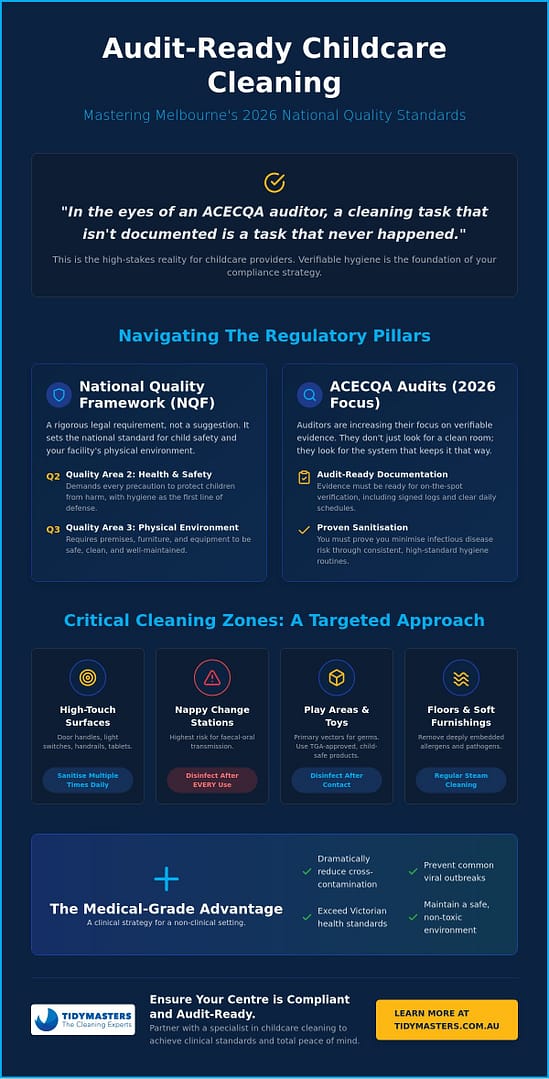
In the eyes of an ACECQA auditor, a cleaning task that isn’t documented is a task that never happened. It’s a high-stakes reality for Melbourne providers navigating the 2026 National Quality Standard refinements. You likely feel the daily pressure of managing cross-contamination in busy play areas while worrying if your current “child-safe” products actually kill the pathogens they should. It’s difficult to maintain a clinical level of hygiene without making the environment feel like a hospital. Using a comprehensive childcare cleaning checklist melbourne centres can rely on is no longer optional; it’s the foundation of your compliance strategy.
We understand that your primary goal is the safety and well-being of the children in your care. This guide helps you master the complex regulatory requirements for childcare hygiene and learn how to maintain an audit-ready facility that exceeds Victorian health standards. We’ll preview the essential documentation protocols, TGA-approved chemical selections, and the specific cleaning schedules required to keep your centre safe, non-toxic, and perfectly compliant under the latest 2026 regulations.
Key Takeaways
- Understand how the 2026 National Quality Framework updates impact your centre’s health and safety benchmarks.
- Identify critical high-touch zones and nappy change protocols that require immediate sanitisation to prevent viral outbreaks.
- Learn how to implement a childcare cleaning checklist melbourne facilities use to maintain clinical standards and pass strict ACECQA audits.
- Master the documentation requirements that prove your hygiene routines are active, verifiable, and compliant with Victorian health regulations.
- Discover the benefits of a medical-grade cleaning strategy for reducing cross-contamination in high-traffic play areas.
Understanding the Regulatory Framework: NQF and ACECQA Standards
The National Quality Framework (NQF) serves as the backbone of the Australian early childhood sector. It isn’t a set of suggestions; it’s a rigorous legal requirement. In Melbourne, every centre must align its hygiene protocols with these national standards to ensure child safety. Most directors find the complexity of these regulations daunting, yet they’re the primary measure of your facility’s success. We take pride in helping you navigate these benchmarks with commercial-grade precision.
Quality Area 2 of the NQF focuses specifically on children’s health and safety. It demands that centres take every reasonable precaution to protect children from harm and hazard. Effective hygiene practices are the first line of defence against illness. Parallel to this, Quality Area 3 addresses the physical environment. It requires your premises, furniture, and equipment to be safe, clean, and well-maintained. Failing to meet these standards often results in a “Working Towards” rating or formal sanctions. These outcomes damage your reputation and cause unnecessary stress for your team.
The Role of the National Regulations 2011
Specific regulations provide the granular detail needed for compliance. Regulation 77 is clear: centres must implement effective hygiene practices daily. This includes everything from handwashing protocols to the sanitisation of shared toys. Regulation 103 mandates that premises and equipment are kept clean and safe. Regulation 103 serves as the baseline for physical environment safety. By following a structured childcare cleaning checklist melbourne providers can ensure no corner is overlooked. We focus on these details so you can focus on the children. Our approach turns these legal mandates into a seamless, behind-the-scenes process that supports your centre’s operational flow.
ACECQA Audit Expectations for 2026
The Australian Children’s Education & Care Quality Authority (ACECQA) oversees these standards nationally. As of June 2026, authorised officers have increased their focus on verifiable evidence. They don’t just look for a clean room; they look for the system that keeps it that way. You must prove you minimise the risk of infectious diseases through consistent sanitisation. This requires an audit-ready childcare cleaning checklist melbourne inspectors can verify on the spot. Evidence includes signed logs, clear daily schedules, and visible hygiene in high-risk zones like kitchenettes and nappy change areas. We provide the meticulous documentation and high-standard results that give you total confidence during an assessment. A proactive partnership ensures your facility remains in a constant state of audit readiness without the last-minute panic.
Area-Specific Cleaning Standards for Early Learning Centres
Effective hygiene isn’t a generic task. Different zones in your centre carry distinct risk profiles. High-touch surfaces like door handles, light switches, and handrails require sanitisation multiple times per day to prevent viral outbreaks. Nappy change stations represent the highest risk for faecal-oral transmission. These must be disinfected after every single use without exception. For floor surfaces, soft furnishings and carpets require regular professional steam cleaning to remove deeply embedded allergens and pathogens. A meticulous approach to these specific areas ensures your facility remains safe and welcoming.
Play Areas and Toy Sanitisation
Toys are a primary vector for germs in any early learning environment. Any toys that come into contact with a child’s mouth require immediate removal and high-level disinfection after use. Shared equipment should be cleaned weekly or immediately after a known outbreak. Always refer to the Staying Healthy guidelines for specific infection control measures. The use of TGA-registered, child-safe disinfectants is non-negotiable for all play surfaces. These products provide the necessary efficacy without exposing children to harsh or toxic chemical residues. We take pride in using only the safest, most effective solutions for these sensitive areas.
Bathrooms and Nappy Change Stations
Bathrooms demand a disciplined and methodical approach to cleaning. We implement strict “clean-to-dirty” wiping protocols to prevent faecal-oral transmission paths. This means starting with the cleanest surfaces and ending with the most contaminated. Deep cleaning of grouting and floor-to-wall junctions is essential to eliminate lingering odours and bacteria colonies. For 2026 compliance, ensure regular maintenance of hand-washing stations and touchless dispensers. This reduces physical contact points and encourages better hygiene habits among children. Maintaining these zones at a clinical standard is vital for passing any unannounced inspection.
Kitchen and Dining Hygiene
Kitchen safety is paramount for child health. Food preparation areas must meet HACCP-aligned food safety standards for 2026. This involves preventing cross-contamination between raw and cooked food zones in centre kitchens. Daily sanitisation of high chairs, tables, and surrounding floor areas keeps dining zones safe and presentable. Professional commercial cleaning ensures no harmful residue is left behind on food-contact surfaces. Using a structured childcare cleaning checklist melbourne directors can rely on ensures every zone meets these high benchmarks. If you’re looking to upgrade your centre’s hygiene, our specialist childcare cleaning team provides the clinical results you need to stay compliant.
The Medical-Grade Approach to Childcare Infection Control
Childcare centres are high-risk environments for viral transmission. Close contact between children makes the spread of pathogens inevitable without a clinical approach to hygiene. Standard domestic cleaning is insufficient for controlling aggressive gastro or flu outbreaks. We treat your facility with the same rigor as a healthcare clinic. This involves using hospital-strength, non-toxic disinfectants that offer maximum safety for children while obliterating harmful bacteria. A medical-grade strategy ensures your centre isn’t just tidy; it’s biologically safe.
Efficiency meets safety through strict equipment segregation. A professional childcare cleaning checklist melbourne providers trust must include colour-coded equipment. This simple yet effective system prevents cross-contamination between bathrooms, kitchens, and play zones. A red cloth used in a bathroom never touches a dining table or a toy shelf. This level of discipline ensures bacteria stay contained and are eliminated at the source. We take pride in these meticulous standards because they protect the most vulnerable members of our community.
Preventing Cross-Contamination
We use dedicated cloths and mops for every specific zone. Bathrooms, kitchens, and common play areas each have their own set of tools to prevent the spread of faecal-oral pathogens. We also implement standardised protocols for handling and disinfecting bodily fluid spills safely. These incidents require immediate, high-level sanitisation to stop the spread of infection. For a deeper look at these clinical benchmarks, you can refer to our medical centre cleaning standards. These hygiene practices are the gold standard for any high-traffic early learning environment.
Safe Chemical Management
Safety is our primary priority when selecting products. We eliminate harsh VOCs (Volatile Organic Compounds) that can trigger asthma or respiratory distress in children. Many common commercial cleaners contain heavy fragrances and aerosols that irritate young lungs. We choose fragrance-free, TGA-approved solutions instead. All chemicals stay stored in locked, labelled containers, completely out of reach of children. This is a non-negotiable safety requirement for any compliant facility.
Documentation is a vital part of chemical safety. We maintain an up-to-date Safety Data Sheet (SDS) folder for every product used on-site. These documents must be updated every five years to remain compliant with Safe Work Australia requirements. It’s a critical component of your childcare cleaning checklist melbourne strategy. Having these records ready for an ACECQA auditor provides immediate peace of mind and proves your commitment to safety. We act as your proactive partner, ensuring every safety box is ticked behind the scenes so you can focus on education.
Documentation and Audit Readiness: Proving Your Compliance
Documentation is the definitive line between a high rating and a compliance failure. In the eyes of an ACECQA auditor, if it isn’t documented, it didn’t happen. Your records serve as the physical evidence of your commitment to child safety. Daily cleaning logs must be accurate, legible, and verifiable by the director at any moment. These shouldn’t be treated as a “tick-box” exercise but as a transparent history of your centre’s hygiene performance. We help you establish these systems so you’re never caught off guard during an assessment.
Transparency extends beyond daily tasks. Periodic deep cleaning schedules, such as steam cleaning and window washing, should be planned a year in advance. This proactive approach proves to regulators and parents that you maintain the facility’s health over the long term. Additionally, staff training records regarding hygiene policies must be accessible during spot checks. If a new educator doesn’t know the protocol for a bodily fluid spill, your documentation must show when their next training session is scheduled. Maintaining a childcare cleaning checklist melbourne directors can trust ensures these administrative details are never overlooked.
The Essential Cleaning Logbook
A robust logbook tracks the time, area, and person responsible for every hygiene task performed. This level of accountability prevents tasks from slipping through the cracks during shift changes. You must also include a dedicated section for “incident-based” cleaning. This records exactly how and when your team managed unexpected spills or illness outbreaks. Digital logs are becoming the 2026 standard because they offer immutable timestamps and instant accessibility for directors. This modern approach removes the risk of lost paperwork or illegible handwriting during a high-stakes audit.
Preparing for a Spot Check
Unannounced visits are a reality of the early learning sector. To stay ready, conduct regular internal audits to identify “blind spots” in the facility, such as dust buildup on high shelves or grime in floor-to-wall junctions. Ensure all cleaning equipment is in good repair and stored hygienically in locked cupboards. Reviewing our childcare cleaning guide will help you establish the necessary safety benchmarks. Using a childcare cleaning checklist melbourne centres rely on keeps your facility in a constant state of audit-readiness. If you want to ensure your centre remains perfectly compliant, book a professional childcare cleaning assessment to secure your facility’s reputation.
Choosing a Specialist Childcare Cleaning Partner in Melbourne
General commercial cleaners often lack the specific training required for NQF-compliant early learning environments. Childcare facilities aren’t standard offices. They are clinical spaces where safety and education intersect. Specialists provide the rigorous documentation and clinical standards required for ACECQA assessments. We understand that your reputation depends on a clean, safe environment every single day. Our team treats every surface with the level of care your families expect.
Local Melbourne expertise ensures familiarity with specific Victorian health guidelines. Regulations in Victoria can be nuanced, and choosing a partner who understands the local landscape provides an extra layer of security. Tidy Masters offers bespoke hygiene solutions for centres in Melbourne and Geelong. We bridge the gap between basic janitorial work and high-level infection control. By following a structured childcare cleaning checklist melbourne directors can verify, we ensure your centre remains a benchmark for local safety.
Questions to Ask Your Cleaning Company
Before signing a service agreement, you must verify that your provider understands the unique risks of early childhood settings. Ask these critical questions:
- Do you use TGA-registered, non-toxic disinfectants safe for infants and toddlers?
- Can you provide a site-specific NQF-aligned cleaning schedule for our centre?
- How do you train your staff on infection control and cross-contamination in early learning settings?
- Do you maintain a childcare cleaning checklist melbourne inspectors can review during a spot check?
The Tidy Masters Silent Achiever Approach
We position ourselves as your proactive partner. Our “silent achiever” approach provides maintenance that removes the cleaning burden from your busy educators. They should focus on teaching, not scrubbing. We handle the heavy lifting, including specialised deep cleaning for high-traffic mats and carpets using advanced steam technology. This removes allergens and bacteria that standard vacuuming leaves behind.
Our commitment to aesthetic perfection and clinical safety has been our driving force since 2009. We don’t just clean; we protect. We take pride in delivering a service that is methodical, thorough, and completely dependable. Your facility will function perfectly because we work tirelessly behind the scenes to maintain your standards. Request a bespoke childcare cleaning quote for your Melbourne centre today and experience the relief of a truly professional partnership.
Secure Your Centre’s Regulatory Success
Maintaining a gold-standard early learning centre requires more than just daily tidying. It demands a clinical approach to infection control and an unwavering commitment to documentation. You’ve learned that NQF Quality Areas 2 and 3 are the non-negotiable benchmarks for your success. By prioritising medical-grade protocols and area-specific sanitisation, you protect both your reputation and the children in your care.
Implementing a comprehensive childcare cleaning checklist melbourne directors trust is the first step toward total compliance. We take pride in our specialised NQF and ACECQA compliance expertise. Since 2009, we’ve served Melbourne and Geelong with medical-grade infection control protocols that exceed standard expectations. We work behind the scenes as your silent partner; we ensure your facility is always audit-ready.
Don’t let the burden of maintenance distract you from your educational goals. Let our expert team handle the complexity of regulatory hygiene for you. Get an Audit-Ready Childcare Cleaning Quote today. Your centre deserves the relief and confidence that comes with professional perfection.
Frequently Asked Questions
What are the ACECQA cleaning requirements for 2026?
ACECQA requires centres to maintain a safe, clean physical environment under Quality Area 3 and protect children’s health via Quality Area 2. By 2026, there is a heightened focus on verifiable documentation and robust infection control systems. You must prove your facility takes every reasonable precaution to prevent the spread of infectious diseases. This involves maintaining clinical standards that are visible, documented, and consistently applied across all play and rest zones.
How often should toys be disinfected in a childcare centre?
Toys should be cleaned and disinfected weekly at a minimum, but mouth-contact toys require immediate sanitisation after every use. If your centre experiences a known illness outbreak, you must increase this frequency to daily for all shared items. High-traffic play equipment should be monitored constantly to ensure no visible soil remains. Using TGA-approved, non-toxic solutions ensures these items remain safe for children to handle immediately after cleaning.
Is professional steam cleaning mandatory for childcare centres?
Professional steam cleaning isn’t explicitly named as a legal mandate, but it’s the most reliable way to meet the “clean and safe” requirement for soft furnishings. Carpets and rugs trap allergens and deep-seated bacteria that standard vacuuming simply cannot reach. Regular deep cleaning ensures your facility meets the hygiene benchmarks for NQF Quality Area 3. It provides a level of aesthetic and clinical perfection that standard equipment can’t achieve.
What is the difference between cleaning, sanitising, and disinfecting?
Cleaning removes visible dirt; sanitising reduces germs to safe levels; and disinfecting kills pathogens on surfaces. You must always clean a surface before you can effectively sanitise or disinfect it. A medical-grade approach involves all three steps to ensure high-risk zones like nappy stations are biologically safe. This methodical process ensures that your centre remains a healthy environment for both children and educators.
Can educators perform all the required cleaning tasks themselves?
Educators can manage daily spot cleaning, but they rarely have the time or specialized equipment for NQF-compliant deep cleaning. Relying solely on teaching staff often leads to burnout and missed hygiene benchmarks. Using a professional childcare cleaning checklist melbourne centres can verify ensures that clinical standards are met. This allows your educators to focus on their primary goal: providing high-quality early childhood education.
What chemicals are safe to use in an early learning environment?
Only TGA-approved, non-toxic disinfectants that are free from harsh Volatile Organic Compounds (VOCs) are suitable for early learning settings. You should avoid products with heavy fragrances or corrosive agents like ammonia that can trigger respiratory issues. It’s vital to maintain current Safety Data Sheets (SDS) for every chemical stored on-site. This ensures you remain compliant with Safe Work Australia and keep children safe from toxic residues.
How do I document cleaning for an NQF audit?
You document cleaning by maintaining accurate, signed logs that record the date, time, area, and person responsible for every hygiene task. Digital systems are the 2026 standard because they offer immutable timestamps and instant accessibility for directors. An auditor needs to see a consistent, verifiable history of hygiene practices. Proving that your routines are active and documented is just as important as the physical cleanliness of the room.
What should be included in a childcare centre cleaning checklist?
A comprehensive childcare cleaning checklist melbourne providers rely on must include daily high-touch sanitisation, nappy station disinfection, and kitchen hygiene. It should also feature weekly deep cleaning tasks for toys, carpets, and external play equipment. Including a dedicated section for incident-based cleaning ensures you are prepared for unexpected spills. This structured approach ensures no corner is overlooked and your facility remains audit-ready at all times.