
Sustainable Office Cleaning: 2026 Melbourne Guide
September 16, 2026
Expert Paver Cleaning and Sealing in Melbourne: The 2026 Property Owner’s Buying Guide
September 18, 2026
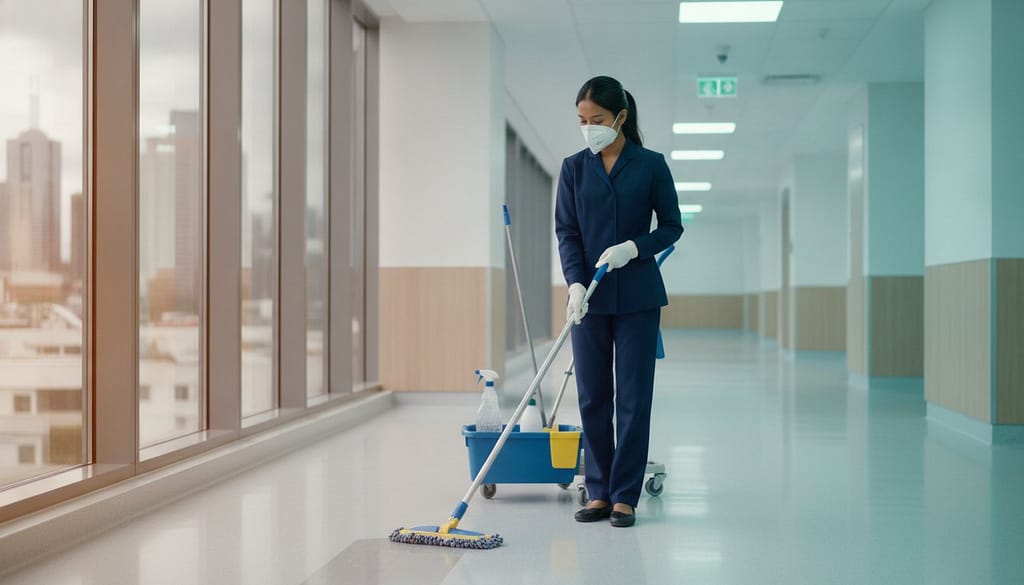
Could a single oversight in your daily sanitisation routine be the difference between a successful accreditation audit and a costly infection outbreak? For Melbourne facility managers, implementing rigorous aged care infection control cleaning protocols is no longer optional. You’re likely feeling the weight of the new Aged Care Act and the constant challenge of maintaining medical-grade standards without blowing your budget. It’s a difficult balance to strike, especially when resident safety depends on every square inch of your facility meeting rigorous benchmarks.
We understand that compliance isn’t just about ticking boxes; it’s about protecting the vulnerable people in your care. This guide helps you master the 2026 Australian standards to ensure resident safety and a professional environment. You’ll gain the clarity needed to lead your team with confidence and eliminate the fear of non-compliance. We’ll break down the latest regulatory requirements, essential training techniques, and the specialized cleaning methods needed to keep your Melbourne facility safe, professional, and fully compliant.
Key Takeaways
- Learn how the 2026 Aged Care Act shifts expectations from basic housekeeping to clinical-grade environmental cleaning.
- Understand the dual-layer approach of standard and transmission-based precautions to keep your facility safe during active outbreaks.
- Master the latest aged care infection control cleaning protocols by identifying the top ten high-touch surfaces and the science of biofilm removal.
- Discover a step-by-step framework for conducting facility-wide risk assessments and defining precise cleaning frequencies.
- See why specialized Melbourne cleaning expertise is the key to passing accreditation audits and maintaining a zero-outbreak environment.
Understanding 2026 Aged Care Quality Standards and Infection Control
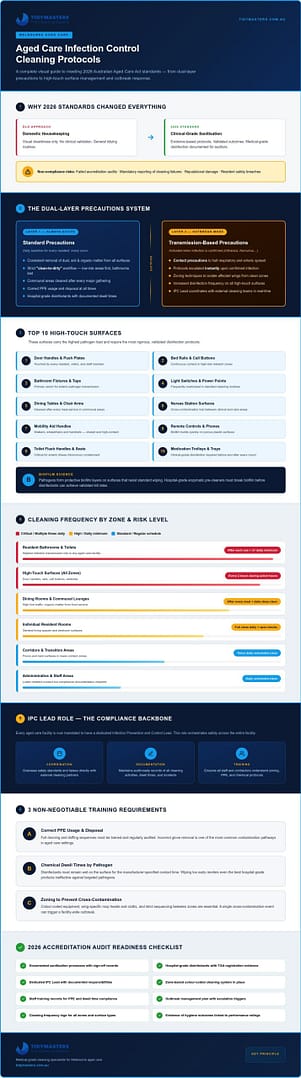
The 2026 Aged Care Act has fundamentally changed environmental standards for providers across Victoria. Compliance no longer relies on visual cleanliness alone. Instead, the focus has shifted toward clinical validation. Infection control is the systematic elimination of pathogens via validated cleaning and disinfection. For Melbourne facilities, this means moving away from traditional domestic-style housekeeping. You need a rigorous, medical-grade approach to survive the 2026 accreditation rounds.
Regulators are looking for more than just tidy rooms. They want to see evidence-based aged care infection control cleaning protocols in action. This heightened scrutiny in Melbourne reflects a broader national push for resident safety. If your facility doesn’t meet these heightened expectations, the risks include failed audits and significant reputational damage. It’s about building a culture of safety that residents and their families can trust.
The Impact of the New Aged Care Act on Cleaning
The new legislation places resident safety at the heart of every operation. It mandates a shift from general cleaning to high-level sanitisation. Under the 2026 framework, hygiene outcomes are directly linked to your facility’s performance rating. Mandatory reporting requirements now exist for cleaning failures that lead to infection risks. This means every surface must be treated with clinical precision to avoid compliance breaches.
Tidy Masters aligns perfectly with these legislative updates. We act as a silent achiever, working behind the scenes to ensure your facility meets every regulatory benchmark. Our teams focus on:
- Documented sanitisation processes that satisfy auditors.
- Use of hospital-grade disinfectants tailored for aged care environments.
- Rigorous adherence to the latest Australian health standards.
Infection Prevention and Control (IPC) Lead Roles
Every facility now requires a dedicated IPC lead to oversee safety standards. This role is pivotal in coordinating with professional cleaning partners like Tidy Masters. The IPC lead ensures that external teams understand the specific needs of high-risk zones. It’s a collaborative effort that requires clear communication and shared goals for medical-grade results. Without this synergy, even the most expensive cleaning contracts can fail to meet the required safety outcomes.
Training is the backbone of this partnership. Cleaning staff must be experts in:
- Correct PPE usage and disposal protocols.
- Chemical dwell times required to kill specific pathogens.
- Zoning techniques to prevent cross-contamination between wings.
By integrating expert aged care infection control cleaning protocols into your daily workflow, you support your IPC lead and protect your residents. We provide the dependable, professional presence needed to maintain these high-stakes environments without interruption to your daily care routines.
Standard vs. Transmission-Based Precautions: A Dual-Layer Approach
Effective aged care infection control cleaning protocols rely on a two-tier system. You shouldn’t treat an active outbreak with the same methods used for a routine Tuesday. Standard precautions serve as your daily baseline, protecting every resident through consistent, high-level hygiene. When a threat like Influenza or Norovirus is identified, your team must shift to transmission-based precautions. This dual-layer approach creates a resilient environment where safety is always the priority.
Daily Cleaning Protocols (Standard)
Standard precautions focus on the consistent removal of dust, soil, and organic matter from all surfaces. It’s the foundation of a healthy facility. Our teams follow a strict “clean-to-dirty” workflow to prevent cross-contamination between rooms. We start with low-risk surfaces and move toward high-risk zones like bathrooms. This methodical approach ensures that pathogens aren’t inadvertently spread through the building.
Frequency is key in communal areas. Dining rooms and lounges require attention after every major gathering to manage high foot traffic. It’s about maintaining a professional standard that residents and families can see. If you’re struggling to maintain this baseline, our aged care cleaning services provide the dependable support you need to stay compliant.
Outbreak Management Protocols (Transmission-Based)
When an infection is confirmed, protocols must escalate instantly. Transmission-based precautions involve “contact precautions” to halt the spread of respiratory or enteric illnesses. This isn’t just about cleaning more often; it’s about cleaning differently. Chemical selection becomes critical here. You need TGA-listed virucidal agents that are proven to eliminate specific pathogens on contact.
Isolation procedures require specialised training. Cleaning staff must use dedicated equipment for affected rooms and adhere to strict PPE disposal rules. This prevents the cleaning process itself from becoming a transmission risk. A proactive partner understands these nuances and can deploy rapid response teams before an outbreak spirals out of control. We take pride in our ability to manage these high-pressure scenarios with clinical precision and zero fuss.
High-Touch Surface Management and Advanced Disinfection Technologies
Visual cleanliness is deceptive. In 2026, aged care infection control cleaning protocols require a focus on the invisible microbial load. Pathogens often hide within biofilms, which are thin, resilient layers that protect bacteria from standard wiping. Removing these requires mechanical action combined with hospital-grade detergents. It’s a precise science that prevents high-traffic areas from becoming transmission hubs. We ensure every surface meets clinical standards to protect your residents from invisible threats.
Critical High-Touch Point Checklist
Identifying where pathogens aggregate is half the battle. Your team must prioritise surfaces that residents, staff, and visitors touch most frequently. We focus on a “Top 10” list that includes:
- Bed rails, call buttons, and over-bed tables.
- Door handles, light switches, and handrails.
- Shared medical equipment and medication trolleys.
- Tap handles and toilet flush buttons.
- Remote controls and shared electronic devices.
Routine disinfection of these points should occur multiple times daily. Integrating advanced technologies like UV-C light or electrostatic spraying adds an extra layer of security. These tools reach nooks and crannies that manual wiping might miss. This ensures total coverage and gives facility managers peace of mind during accreditation audits.
Soft Furnishings and Floor Care
Carpets and upholstery are often overlooked reservoirs for infection. Unlike hard surfaces, soft furnishings can trap pathogens deep within their fibres. This makes steam cleaning melbourne a vital component of your deep-cleaning schedule. High-temperature steam kills bacteria and viruses while removing the organic matter they feed on. It’s an essential step for maintaining a truly hygienic environment.
We apply the same medical centre cleaning rigor to aged care common areas. This ensures lounge rooms and dining spaces aren’t just comfortable; they’re clinically safe. Hard floors also require specialised attention. Over time, wax layers can chip and create microscopic traps for germs. Regular stripping and sealing processes eliminate these traps. This creates a smooth, non-porous surface that’s easy to sanitise. It’s a proactive approach that supports your overall aged care infection control cleaning protocols while extending the life of your facility’s assets.
Implementing a Robust Cleaning Schedule: From Compliance to Care
Mapping out your facility’s hygiene requirements is the first step toward total safety. You need a structured plan that leaves nothing to chance. A robust schedule transforms your aged care infection control cleaning protocols from a manual into a daily reality. This systematic approach ensures every wing, room, and common area receives the exact level of care it requires. It’s about moving beyond basic checklists to a dynamic, risk-based strategy.
Success involves five critical steps. First, conduct a facility-wide risk assessment to identify high-danger areas. Second, define precise cleaning frequencies based on traffic and clinical risk. Third, establish a rigorous auditing process to verify results. Fourth, commit to continuous staff training as regulations evolve. Finally, partner with a specialized cleaning company melbourne that understands the 2026 regulatory landscape.
Zone-Based Cleaning Strategies
Categorising your facility into zones ensures resources are allocated where they matter most. Red Zones represent high-risk clinical and isolation areas. These require the most frequent and intensive sanitisation protocols. Yellow Zones cover communal areas and shared bathrooms. Here, high foot traffic demands constant vigilance to prevent pathogen spread. Green Zones include administrative offices and low-traffic areas. By tailoring your approach to each zone, you maintain a safer environment while managing costs effectively. It’s a bespoke strategy that reflects the unique layout of your Melbourne facility.
Auditing and Quality Control
Visual inspections are necessary but often insufficient for clinical-grade results. To meet the 2026 Quality Standards, you need objective data. ATP bioluminescence testing provides an immediate, scientific measure of surface cleanliness. It detects organic residue that the human eye misses. We use these tests to provide a “silent achiever” level of reliability. You get proof, not just promises.
Resident feedback loops are also a critical component of modern auditing. They offer a human perspective on the cleanliness of their home. Combining scientific data with resident satisfaction creates a holistic view of your facility’s hygiene performance. This dual-verification method ensures you’re always prepared for unannounced accreditation audits. If you want to elevate your facility’s standards, book a consultation with Tidy Masters today.
Why Professional Medical-Grade Cleaning is Essential for Melbourne Aged Care
Relying on non-specialized general cleaners is a significant risk for any facility. General cleaning focuses on aesthetics, but aged care infection control cleaning protocols demand microbiological precision. A surface that looks clean can still harbour dangerous pathogens. This gap in expertise often leads to failed accreditation audits or, worse, avoidable infection outbreaks. Choosing a specialized partner removes this uncertainty and protects your residents’ health through proven, evidence-based methods. For providers seeking to align their environmental safety with high-quality clinical support, it is helpful to explore Alzheimer’s & Dementia Care resources that prioritize specialized resident needs.
Every facility has a unique layout and culture. Our cleaning plans respect resident privacy and dignity while maintaining clinical standards. We provide scalable support across both metropolitan Melbourne and Geelong sites. This ensures consistency whether you manage a single boutique home or a large multi-site provider. We even integrate high-end office cleaning melbourne standards into your administrative wings. This creates a professional, polished environment for staff and visitors without compromising the medical rigor required in clinical zones. It’s a bespoke approach that balances high-standard commercial rigor with an approachable, local attitude.
The Tidy Masters Dependability Promise
Our reputation is built on meticulous attention to detail and high-standard commercial rigor. Every team member undergoes rigorous vetting and specific infection control training before entering your facility. We don’t just clean; we maintain the integrity of your property through expert floor care and sanitisation. This proactive approach ensures you are always “audit-ready,” regardless of when the regulators arrive. We take pride in our workmanship and our role as your dependable partner in health and safety. Ensure your facility meets the highest 2026 standards with Tidy Masters and experience the relief of true professional support.
Elevate Your Facility Standards for 2026 and Beyond
Mastering aged care infection control cleaning protocols is about more than just compliance; it’s about providing a safe, dignified home for your residents. You’ve seen how the 2026 standards demand a shift from basic housekeeping to medical-grade precision. By implementing robust schedules and prioritizing high-touch surfaces, you create a zero-outbreak environment that stands up to the strictest accreditation audits. This proactive approach ensures resident safety remains your top priority while protecting your facility’s reputation.
Tidy Masters has been a trusted partner for Melbourne medical centres and schools since 2009. We specialize in high-standard clinical infection control and bring extensive experience with the 2026 Aged Care Quality Standards to every site. We act as your silent achiever, removing the burden of maintenance so you can focus entirely on resident care. Get a medical-grade cleaning audit for your Melbourne aged care facility today. You don’t have to navigate these complex regulatory changes alone. We’re here to help you build a safer, more professional environment for your community.
Frequently Asked Questions
What are the mandatory cleaning frequencies for aged care facilities in 2026?
Under the 2026 framework, frequencies are determined by a site-specific risk assessment. You must clean high-touch surfaces at least daily, but communal dining rooms and shared bathrooms often require sanitisation after every major use. Red zones with active infections need continuous attention. This tailored approach ensures your aged care infection control cleaning protocols meet the clinical needs of your specific Melbourne facility while maintaining high hygiene standards.
How do the 2026 Aged Care Quality Standards impact environmental cleaning?
The 2026 standards shift the focus from visual cleanliness to measurable hygiene outcomes. Regulators now look for clinical validation that pathogens are being effectively removed from the environment. This means your cleaning must be documented and verified through objective methods like ATP testing. It’s about ensuring every room is safe for vulnerable residents, moving beyond a simple tidy up to a rigorous, medical-grade sanitisation process that supports full compliance.
Can we use domestic cleaning products in an aged care setting?
You shouldn’t use domestic cleaning products because they lack the necessary TGA registration for clinical efficacy. Aged care environments require hospital-grade disinfectants that are proven to kill specific pathogens like Norovirus and Influenza. Domestic cleaners are often too weak to handle the microbial load found in high-traffic facilities. Using professional-grade chemicals ensures your team can achieve the sanitisation levels required by the 2026 Quality Standards without damaging surfaces.
What is the role of an IPC Lead in managing cleaning protocols?
An IPC Lead coordinates the relationship between clinical care and environmental services. They ensure that aged care infection control cleaning protocols are correctly implemented across all zones. This role involves identifying high-risk areas, monitoring staff compliance, and liaising with external partners like Tidy Masters. By having a dedicated lead, your facility can maintain a proactive stance on infection prevention, ensuring that cleaning efforts directly support broader health and safety goals.
How should cleaning protocols change during a COVID-19 or flu outbreak?
Protocols must escalate immediately to transmission-based precautions during an outbreak. This involves increasing the frequency of high-touch point disinfection and using specific virucidal agents listed by the TGA. Staff must also follow strict PPE and isolation room procedures to prevent cross-contamination. It’s a rapid response phase where every action focuses on containment. Having a partner who understands these triggers ensures your facility remains safe and operational during challenging periods.
Is steam cleaning effective for infection control in aged care?
Steam cleaning is highly effective for deep-cleaning soft furnishings and carpets that trap pathogens. High-temperature steam kills bacteria and viruses that chemical wiping might miss. It’s a critical tool for sanitising upholstery in common areas and lounges. For Melbourne facilities, regular steam cleaning supports a zero-outbreak environment by removing the organic matter that pathogens feed on, ensuring your deep-cleaning schedule is as thorough as possible.
What documentation is required for cleaning audits in Australian aged care?
Audits require comprehensive evidence of your cleaning activities. You must maintain detailed cleaning logs, chemical safety data sheets, and staff training records. Objective proof like ATP testing results or visual inspection checklists is also essential. Regulators want to see that your protocols are consistently followed and verified. Proper documentation demonstrates a high level of accountability and ensures your facility is always ready for unannounced visits from the Aged Care Quality and Safety Commission.
Why should Melbourne facilities outsource to a medical-grade cleaning service?
Outsourcing to a medical-grade service like Tidy Masters removes the internal management burden while ensuring expert compliance. We’ve supported Melbourne facilities since 2009 with specialized knowledge of clinical standards. You get a dependable partner who handles staff vetting, training, and equipment maintenance. This investment reduces the risk of costly outbreaks and failed audits, allowing your team to focus on delivering high-quality care to residents in a safe, professional environment. For those also exploring high-standard support in a home setting, you can learn more about domiciliary care options from providers like NeeryVille Care that prioritize resident safety and dignity.