
Pub and Club Cleaning Services Melbourne: The 2026 Venue Manager’s Checklist
September 15, 2026
Sustainable Office Cleaning: 2026 Melbourne Guide
September 16, 2026
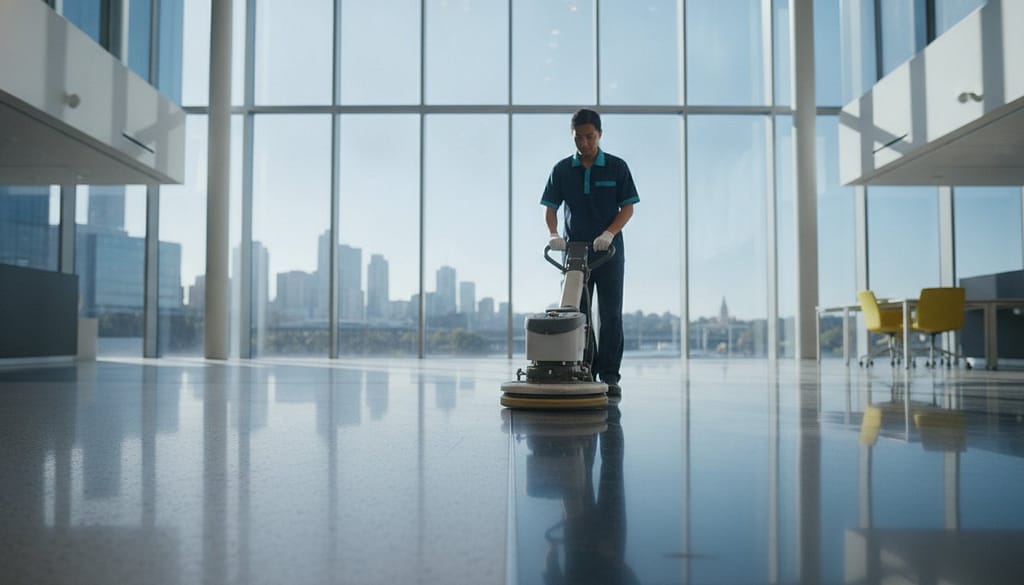
Did you know that an Australian corporation can now face penalties of up to A$18 million for industrial manslaughter under the latest WHS regulations? It is a sobering reality for Melbourne business owners who might overlook the condition of their walking surfaces. Your floors are the most used asset in your building, yet they’re often the most neglected until a crisis occurs. We understand the frustration of watching expensive flooring degrade rapidly under heavy footfall or dealing with the persistent anxiety of slip-and-fall liabilities. Standard mopping often fails to deliver the consistent, professional aesthetic your brand deserves, leaving you with mounting costs and lackluster results.
Effective high traffic area floor cleaning is a strategic asset management task, not just a daily chore. By mastering the science of soil interception and chemical precision, you can transform your busiest zones into safe, spotless environments. This 2026 guide provides the expert techniques and scheduling secrets needed to extend your floor’s lifespan while ensuring strict compliance with AS 4586:2013 standards. You’ll learn how to implement a cost-effective maintenance plan that balances high-standard commercial rigor with a welcoming, polished finish. We’ll cover everything from advanced stripping and sealing methods to the proactive routines that keep your facility functioning perfectly behind the scenes.
Key Takeaways
- Understand how abrasive grit acts as sandpaper on your floor finish and how to intercept it before permanent damage occurs.
- Learn to match specific cleaning chemistries to your floor material to ensure your high traffic area floor cleaning routine remains effective and safe.
- Master the “Zone Defense” strategy to protect transition areas and significantly extend the lifespan of your protective floor coatings.
- Follow a professional step-by-step process that prioritizes dry soil removal and optimal chemical dwell times for a consistently polished aesthetic.
- Discover how tailored stripping and sealing services help Melbourne businesses maintain compliance with current AS 4586:2013 slip resistance requirements.
The Science of Floor Wear in High-Traffic Commercial Zones
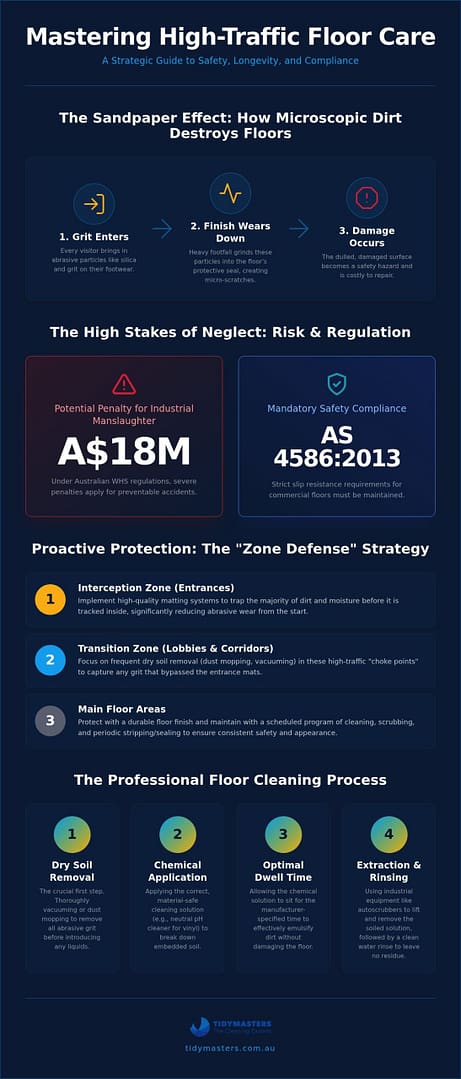
Commercial floors endure a constant bombardment of abrasive forces. Every person entering your Melbourne facility carries microscopic debris on their shoes. In high traffic areas, these particles act as sandpaper, grinding away at your protective seal with every step. The relationship between footfall volume and coating depletion is direct. As foot traffic increases, the sacrificial layer of floor finish thins. This wear is most aggressive at “choke points” like lift lobbies, reception desks, and main entryways. Neglecting these zones often leads to permanent substrate damage. It costs significantly more to repair structural floor layers than it does to maintain a proactive high traffic area floor cleaning schedule.
The Sandpaper Effect: How Dirt Destroys Finishes
Silica and grit are the primary enemies of a high-gloss finish. These hard minerals create micro-scratches that dull the surface and trap more contaminants. Melbourne’s climate adds unique challenges to this process. During dry summer months, fine dust infiltrates buildings. Winter brings abrasive mud and silt that clings to footwear. Standard mopping often exacerbates the problem by redistributing this grit into grout lines and corners. Professional floor cleaning methods focus on total soil removal rather than just surface agitation. Without high-standard extraction, you’re simply moving the “sandpaper” around, accelerating the destruction of your floor’s clarity and shine.
Safety Risks and Slip-and-Fall Liability
Safety is your highest priority. As floor finishes wear down, the Coefficient of Friction (COF) changes. This creates inconsistent grip levels across a single room. These uneven wear patterns are a primary cause of slips and falls in the workplace. Under the Australian Work Health and Safety Act 2011, Melbourne businesses face strict liability for preventable accidents. Compliance with AS 4586:2013 slip resistance requirements is mandatory for commercial foyers and public spaces. If your floors look dull or feel slippery, your protective coating has likely failed. Our specialized Hard Floor Stripping & Sealing service restores these critical safety levels. Proactive high traffic area floor cleaning protects your staff and your business from the severe A$18 million penalties associated with industrial manslaughter offences. We act as your silent achiever, ensuring your environment remains safe, compliant, and visually perfect every day.
Choosing the Right Cleaning Method for Your Floor Type
Effective high traffic area floor cleaning starts with a material-first mindset. You cannot apply a one-size-fits-all solution to diverse surfaces like LVT and natural stone. Maintenance falls into three distinct categories: routine daily removal of surface grit, interim scrubbing to lift embedded soil, and restorative stripping to completely reset the finish. Selecting the right equipment is equally vital for efficiency. We use industrial autoscrubbers for consistent soil extraction in large Melbourne warehouses. High-speed burnishers are reserved for hardening and polishing finishes in retail foyers to create a durable, mirrored shine.
Maintaining these standards isn’t just about aesthetics; it’s a regulatory necessity. While Australian standards are our primary guide, global benchmarks like OSHA’s general requirements for workplace floors highlight the universal importance of keeping walking surfaces clean, dry, and free of hazards. In medical grade environments across Melbourne, such as clinics in Parkville or East Melbourne, we implement documented cleaning protocols. These spaces demand hospital-grade disinfectants that kill pathogens without degrading the floor’s slip-resistance or clarity.
Vinyl, LVT, and Linoleum Protocols
Resilient floors are the workhorses of Melbourne’s schools and aged care facilities. They require a neutral pH cleaner to preserve the factory wear layer. Harsh, high-alkaline chemicals often cause brittle surfaces and unsightly yellowing over time. For busy retail aisles, spray buffing techniques help “heal” minor scuffs without requiring a full strip. However, when the protective finish is deeply compromised, our professional Hard Floor Stripping & Sealing service provides the necessary reset to protect your underlying substrate from permanent damage.
Hard Stone, Tile, and Terrazzo Care
Natural stone and terrazzo are porous materials that demand extreme care with chemical selection. Acidic cleaners can cause irreversible etching on marble or limestone substrates, ruining the stone’s natural beauty. In high-traffic medical centres, grout lines often become reservoirs for bacteria and dark soil buildup. Mechanical scrubbing with specialized cylindrical brushes is far more effective than aggressive chemical stripping for these porous surfaces. We focus on deep extraction to ensure your medical facility remains hygienic, compliant with health standards, and visually pristine for every patient who walks through the door.
Step-by-Step High-Traffic Floor Cleaning Process
Professional facility management requires more than just a quick mop. A disciplined, methodical process ensures that your floors remain durable and safe. We follow a rigorous sequence that prioritizes soil removal and chemical precision. This meticulous approach is what separates a standard janitorial job from expert high traffic area floor cleaning. By adhering to these technical stages, we protect your investment and maintain the aesthetic perfection your Melbourne business demands.
Phase 1: Soil Interception and Preparation
Dry soil removal is the most critical step in the entire process. We avoid using brooms because they often redistribute fine dust and allergens into the air. Instead, we utilize industrial-grade HEPA vacuums to extract grit from every crevice. This prevents the abrasive particles from damaging your floor’s clarity during the wet cleaning phase. During this stage, our technicians identify and pre-treat stubborn scuff marks or spills that require specific chemistry. We also define clear work zones using safety signage to ensure pedestrian safety and provide clear bypass routes for your staff and clients.
Phase 2: The Deep Clean and Extraction
Once the surface is clear of loose debris, we move to chemical application. Dwell time management is essential here. We allow the cleaning solution to sit on the surface for a calculated period to break down the molecular bonds of stubborn soil. We then calibrate our autoscrubbers to provide optimal pressure for soil suspension. For heavily soiled entrance ways, we employ the “Double Scrub” method. This involves an initial pass with the brushes down but the vacuum off, followed by a second pass to extract the suspended slurry. This technique ensures 100% moisture recovery, which is vital for preventing slip hazards and meeting Australian safety standards.
The final stage involves rinsing and neutralizing the surface. This prevents chemical residue buildup that can attract more dirt or cause a “sticky” feel underfoot. After the floor is completely dry, we conduct a post-cleaning inspection to verify that the finish is spotless and uniform. Only then do we remove the safety signage. This disciplined routine ensures that your high traffic area floor cleaning delivers consistent, professional results without disrupting your daily operations. Our goal is to act as your silent achiever, leaving behind nothing but a safe and pristine environment.
Preventive Strategies and Maintenance Schedules
Proactive floor care is a strategic financial decision. It’s far more cost-effective to prevent soil from entering your building than it is to remove it from deep within the substrate. We employ a “Zone Defense” approach that categorises your facility into three distinct areas: Entrance, Transition, and Interior. This method ensures that resources are allocated where they are needed most, preventing the rapid degradation of your floor’s protective seal. By focusing on soil interception, you maintain a consistently professional aesthetic while reducing the overall cost of high traffic area floor cleaning. This proactive approach is a hallmark of high-standard providers like That’s Cleaning, who emphasize the importance of preventative maintenance in commercial spaces.
The 15-Foot Rule for Entrance Matting
The first 15 feet of your entryway are your most critical line of defence. Industry data indicates that this specific distance is required to capture approximately 85% of incoming moisture and grit. Without adequate matting, these abrasives act as sandpaper on your internal floors. In Melbourne, where winter rain often carries silt and mud, a multi-stage matting system is essential. This includes a heavy-duty scraper mat outside, a wiper-scraper hybrid in the vestibule, and a high-moisture absorption wiper mat inside. This sequence ensures that shoes are dry and clean before they touch your primary flooring surface.
Zone-Based Cleaning Frequencies
A static cleaning schedule rarely works for dynamic Melbourne businesses. We customise frequencies based on your specific footfall counts and building layout to ensure optimal results.
- Daily: Focus on high-impact zones like foyers and lift lobbies. These areas require high traffic area floor cleaning every 24 hours to maintain safety and clarity.
- Weekly: Address transition areas such as main corridors and breakrooms. These zones experience moderate wear and benefit from interim mechanical scrubbing.
- Quarterly: Schedule restorative tasks to reset the sacrificial layer and maintain your floor’s structural integrity.
Strategic timing is also vital for operational efficiency. We perform deep cleaning at night to ensure zero disruption to your daily operations. Daytime spot cleaning remains focused on immediate spill management and safety compliance. If your current schedule isn’t delivering these results, you can book a professional floor assessment with our Melbourne team to build a bespoke maintenance plan that prioritises safety and aesthetic perfection.
The Tidy Masters Advantage: Professional Floor Care in Melbourne
Tidy Masters brings over 15 years of Melbourne metropolitan experience to every project. We don’t believe in generic checklists. Instead, we design bespoke maintenance plans that address the specific challenges of your facility’s layout and footfall. Our teams act as proactive partners, working behind the scenes to ensure your environment functions perfectly. We utilize state-of-the-art equipment, including high-performance autoscrubbers and precision burnishers, to deliver efficient, non-disruptive results. This high-standard approach ensures your high traffic area floor cleaning schedule remains cost-effective and results-driven. We provide clear accountability and a meticulous focus on detail that removes the burden of maintenance from your shoulders.
Local Expertise You Can Trust
We serve a broad range of sectors across Melbourne and Geelong, from busy medical centres to expansive industrial warehouses. Our local teams understand the regional environmental factors, such as Melbourne’s seasonal dust and winter silt, that impact floor longevity. We naturally integrate floor maintenance into your existing commercial cleaning schedule to minimize operational downtime. This seamless service delivery allows you to focus on your core business while we manage the complexities of facility hygiene and safety compliance. Our reputation as a silent achiever is built on reliability and a customer-first attitude that values your success as much as our own.
Restoring Your Floors to Perfection
Even the most resilient floors eventually show signs of wear. When standard high traffic area floor cleaning is no longer enough to mask scuffs and dullness, our specialized Hard Floor Stripping & Sealing service provides a complete revitalisation. We remove old, yellowed layers of finish and apply high-durability, eco-friendly polymers that provide a long-term protective barrier. These modern finishes are specifically selected for their resilience in high-volume environments like Melbourne offices and retail showrooms. Our process ensures your floors meet the highest standards of slip resistance and visual clarity. We take immense pride in delivering a service that balances high-standard commercial rigor with a genuine commitment to health, safety, and aesthetic perfection.
Secure Your Facility’s Future with Expert Floor Care
Mastering high traffic area floor cleaning is a critical commitment to safety, compliance, and long-term asset protection. By implementing a “Zone Defense” strategy and prioritizing soil interception, you can significantly extend the lifespan of your commercial floors. This proactive approach eliminates the constant worry of slip-and-fall liabilities while ensuring a consistently professional aesthetic for your clients and staff. You don’t have to manage these technical complexities alone.
Tidy Masters has been Melbourne-owned and operated since 2009, providing specialized expertise in medical and school compliance cleaning. We offer a full property maintenance suite, from professional painting to industrial pressure washing, to keep your entire facility in peak condition. Our team acts as your silent achiever, ensuring every square metre of your building meets the highest standards of safety and workmanship. Take the first step toward a more durable, cost-effective maintenance schedule today.
Request a Free High-Traffic Floor Audit from Tidy Masters to secure your facility’s future. We look forward to supporting your success with meticulous care and reliable service.
Frequently Asked Questions
How often should high-traffic floors be professionally cleaned?
High-impact zones like reception desks and lift lobbies require daily attention to maintain safety and aesthetic standards. For transition areas like corridors, a weekly professional scrub is usually sufficient. We recommend a full restorative service every three to six months depending on your specific footfall volume. This consistent high traffic area floor cleaning schedule prevents abrasive grit from permanently damaging your floor’s underlying substrate and protective coating.
What is the best cleaning solution for high-traffic vinyl floors?
Use a neutral pH cleaner to protect your vinyl’s factory finish and the integrity of the sealant. High-alkaline or acidic chemicals can cause resilient flooring to become brittle or yellow over time. Our Melbourne technicians select specialized solutions that effectively emulsify soil without leaving behind a dulling residue. This ensures your floors remain hygienic and slip-resistant while maintaining the polished, professional look your facility deserves.
How long does hard floor stripping and sealing take to dry?
Drying times vary based on Melbourne’s current humidity levels and the type of polymer used. Generally, each coat takes 30 to 60 minutes to become touch-dry. We recommend waiting at least four to eight hours before allowing light foot traffic on the new surface. For heavy equipment or full operational use, a 24-hour curing period is the safest standard to ensure the seal reaches maximum durability.
Can high-traffic floor cleaning be done during business hours?
While we can perform daytime spot cleaning using low-moisture techniques, we recommend scheduling deep restorative work after hours. Nighttime cleaning ensures zero disruption to your staff and clients while allowing for proper chemical dwell times. We always utilize high-visibility safety signage and barricades if work must occur during the day. This proactive approach minimizes the risk of slip-and-fall accidents in your busiest commercial zones.
What is the difference between floor buffing and floor burnishing?
The primary difference lies in the machine’s speed and the final finish achieved. Buffing uses a low-speed machine (175 to 350 RPM) to remove scuffs and restore a moderate gloss. Burnishing utilizes ultra-high-speed equipment (1500 to 3000+ RPM) to harden the finish and create a mirrored, “wet look” shine. We select the method based on your floor type and the level of aesthetic perfection required for your space.
How do I prevent scuff marks on my commercial office floors?
Implement high-performance walk-off matting at every entrance to capture scuff-inducing grit before it enters your building. You should also use felt pads or soft-wheeled casters on office furniture to prevent mechanical scratches. Regular spray buffing helps “heal” minor marks before they become permanent. Combining these preventive measures with a structured high traffic area floor cleaning routine will keep your office floors looking pristine for years; for those seeking similar professional care in the UK, you can discover Carpet Cleaner In Manchester for expert carpet and upholstery maintenance.
Commercial floors must comply with the AS 4586:2013 standard for slip resistance in both wet and dry conditions. Under the Australian Work Health and Safety Act 2011, Melbourne business owners face strict liability for preventable slip-and-fall accidents. Corporations can face penalties of up to A$18 million for serious breaches. We ensure your maintenance plan meets these rigorous safety requirements to protect both your people and your business.
Why do my floors look dull even after mopping every day?
Dullness is often caused by using dirty mop water or an incorrect chemical dilution that leaves a sticky residue. This residue acts like a magnet for fine dust and airborne contaminants, creating a cloudy appearance. Standard mopping also fails to extract embedded soil from grout lines and textured surfaces. A professional deep clean removes this buildup, restoring the floor’s original clarity and ensuring a safe, non-slip surface.