
Office Cleaning in Docklands: A Tailored Plan for Your Workplace
October 6, 2026
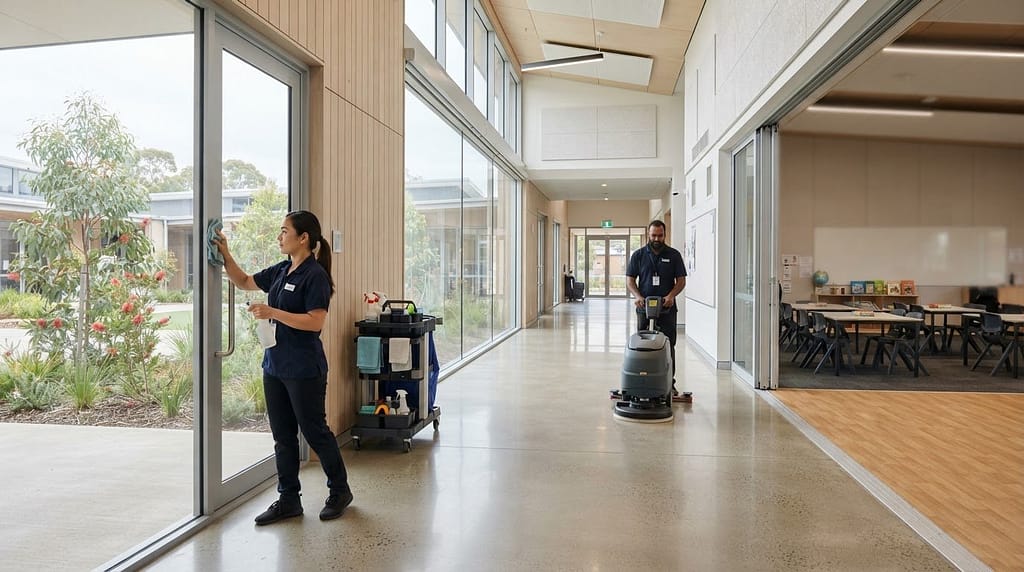
What if a clean campus could support the school day without interrupting it? Independent school cleaning services work best when they reflect how students and staff use each space, from busy classrooms and shared areas to amenities that need regular attention. A generic checklist can miss important differences: a corridor with steady foot traffic has different needs from a specialist room used at set times.
This guide explains how to plan a practical cleaning scope around your campus, student safety and school calendar. You’ll learn how to map spaces, set routines around school hours and term dates, and define clear expectations for reviewing the work. The aim is a clean, well-maintained school with cleaning that fits around learning.
Tidy Masters provides school and childcare cleaning in Melbourne, tailored to campus needs. Use the steps below to identify priorities, plan recurring and one-off cleaning, and set up a clear working routine for your school.
Key Takeaways
- Shape independent school cleaning services around how students and staff use different campus spaces, rather than relying on one generic checklist.
- Set priorities and cleaning frequencies according to room use, school routines and operational needs.
- Plan timing with access, noise and room availability in mind so cleaning fits around learning.
- Document specific tasks and observable service standards to make expectations easier to review.
- Tidy Masters provides recurring and one-off school cleaning tailored to Melbourne campuses and their agreed requirements.
Why Independent School Cleaning Services Need a Campus-Specific Plan
Independent school cleaning services work best when the plan reflects the campus, how each space is used and the school’s daily routines. A classroom, staffroom and sports hall serve different purposes, so they should not automatically receive the same tasks at the same frequency.
A campus-specific plan brings together four practical priorities: consistent cleanliness, predictable routines, minimal disruption to learning and clear communication about the work. The importance of school hygiene helps frame cleaning as part of a well-maintained learning environment, not simply a checklist to complete. In Melbourne, the right plan depends on each school’s facilities, timetable and operational requirements.
Which areas shape an independent school cleaning plan?
Start by listing the spaces included in the scope: learning areas, administration offices, staff facilities, shared spaces, circulation areas and amenities. For each space, note its typical use, level of foot traffic, surface types and any access constraints. This makes it easier to match tasks to actual needs. A busy corridor may need frequent attention, while a specialist room may need a routine shaped by its surfaces and how the school uses it.
Outdoor areas and event spaces can also be included when they form part of the agreed scope. Record each area separately, along with the tasks it needs and whether those tasks are routine, periodic or one-off. A room-by-room plan helps staff and the cleaning team understand what is covered and where extra attention may be needed.
How do school terms and daily routines affect cleaning?
Cleaning needs shift with the school calendar. Recurring work supports spaces in regular use, while periodic or one-off cleaning can address a specific need, such as preparing a hall after an event or refreshing rooms during a quieter period. Timetables, assemblies and school events affect when rooms are accessible and how work can be completed with minimal interruption.
Plan around room access, noise and staff routines, then agree on how schedule changes will be communicated. Term breaks may create different opportunities for cleaning, but the scope and timing should still reflect the school’s requirements. The school’s own policies and current Victorian guidance should inform planning, particularly where they affect access, safety or cleaning expectations.
This preparation gives the school and cleaning team a shared reference point. It supports consistent routines without assuming one timetable or checklist will suit every independent school in Melbourne.
What Independent School Cleaning Services Can Include
A useful cleaning scope describes work by space, rather than relying on a generic task list. Independent school cleaning services can cover learning areas, administration offices, staff facilities, shared spaces, amenities and circulation areas, with tasks and frequency set according to the school’s priorities and operating schedule.
For a broader overview of how professional cleaning can be scoped across different workplaces, see this guide to commercial cleaning in Melbourne.
Which routine tasks support clean, functional school spaces?
Routine tasks can include surface cleaning, floor care and waste handling. The scope should identify which tasks apply in each area. For example, classroom tasks might focus on desks, frequently used surfaces and floors; staff areas may need attention to shared work surfaces; and amenities may need a separate schedule based on use. Common rooms and corridors can be prioritised according to how heavily they’re used.
Set frequency according to need rather than assumption. A busy shared space may need more regular attention than a room used occasionally, while floor type and room function can affect the care required. Clear task descriptions help school staff understand what’s included and make service reviews more practical.
When might a school need periodic or one-off cleaning?
Some needs fall outside the recurring routine. A term break can provide an opportunity for deeper cleaning, while an event, refurbishment or specific site requirement may call for additional work. Agree on timing and tasks around access, the condition of the space and the school’s operational plans.
Tidy Masters provides recurring cleaning and one-off deep cleaning, so schools can plan regular care alongside occasional requirements. Steam cleaning can be included for particular surfaces or spaces when it suits the requested scope. Window cleaning is also available for schools that need it. Neither task needs to be treated as a universal requirement.
Keep the scope clear by recording the spaces, tasks, frequency and any planned periodic work. This gives school staff and the cleaning team a shared reference and makes it easier to adjust the plan when campus use changes. Explore Tidy Masters’ school cleaning for a tailored approach to your campus.
Will Professional School Cleaning Disrupt Learning?
Cleaning can be planned around school activity, but the schedule needs to account for access, timing, noise and room availability. A classroom in use may not be suitable for floor care, while a quieter shared area may be accessible at the same time. Independent school cleaning services should account for these practical trade-offs instead of assuming every task can happen at any time.
Agree on access arrangements and priority areas with the school’s nominated contact. This gives the cleaning team a clear picture of room availability and a reliable route for updates. Staff can also see which tasks are scheduled, where access is needed and who to notify if a room’s use changes.
How can cleaning routines fit around classes and school events?
Use the school calendar and timetable to identify suitable cleaning windows. Tasks that need a clear room, such as detailed floor care, can be scheduled when that space is available. Other routine work may fit into quieter periods in areas with less activity, depending on the scope and the school’s access arrangements.
Assemblies, performances, parent events and timetable changes can affect the plan. Agree on a simple way to notify the nominated contact so the team can respond before a change affects access. This will not remove every scheduling constraint, but it makes priorities visible and supports a more orderly routine.
What helps a school move to a new cleaning arrangement?
A smooth transition starts with useful site information. Document current routines, priority areas, access instructions and known constraints, such as rooms that are regularly booked or spaces that need to remain available. Then agree on the included tasks, how responsibilities are shared and who will communicate schedule updates.
This shared record gives the school and cleaning team a practical reference from the outset. It also helps identify gaps between existing expectations and the planned routine before work begins. Tidy Masters tailors school cleaning to the campus, agreed scope and operational requirements, helping Melbourne schools establish a workable arrangement based on clear information.
Keep communication open as school needs change. A nominated contact can pass on updates about events or room access, while the documented scope helps the cleaning team understand what to prioritise. For a tailored approach, see Tidy Masters school cleaning.

How to Set Cleaning Priorities and Review Service Delivery
A clear plan turns broad expectations into work the school can schedule and review. Use this sequence: map the spaces, set priorities, agree on timing, document tasks, then review results. It gives school leaders and the cleaning team a shared reference while leaving room to adjust as campus needs change.
How should a school define cleaning priorities?
Start with the busiest areas, school routines and practical concerns. Group tasks by space, then distinguish essential recurring work from periodic cleaning. A frequently used shared area, for example, may need a different routine from a room used occasionally. The scope should reflect how the campus operates, not assumptions about what every school needs.
Make instructions specific and easy to act on. Instead of asking for a space to be “spotless” or “comprehensive,” describe observable outcomes, such as floors being free of visible debris or specified surfaces being cleaned. Record access limits, sensitive areas and school-specific instructions alongside each task. This reduces ambiguity and makes later reviews more useful.
What can schools use to review cleaning consistency?
Use a task schedule that identifies the spaces, work and agreed frequency, then set review points that suit the site. A review can check whether scheduled tasks were completed and whether the agreed outcomes were met. Keep the process practical: note the issue, identify the affected area and task, and share it with the nominated contact for follow-up.
Regular communication helps surface changes early. Use one clear route to report missed tasks, upcoming events or emerging site needs, such as a change in room use. The nominated contact can relay relevant updates and help keep priorities aligned. Review the scope when campus routines change, rather than letting outdated instructions shape the service.
Tidy Masters tailors school cleaning plans to campus needs and agreed routines. A documented scope gives the school and cleaning team a clear starting point and a practical basis for reviewing service delivery. To discuss a cleaning plan for your school, contact Tidy Masters about school cleaning.
Independent School Cleaning Services in Melbourne: Working with Tidy Masters
Tidy Masters is a Melbourne-based cleaning and property-maintenance business established in 2009. Its school cleaning service is tailored to the campus and the school’s requirements, rather than applied as a fixed package. Campuses with similar facilities can still differ in how rooms are used, what needs priority and how cleaning fits around daily operations.
Recurring cleaning supports regular campus upkeep, while one-off deep cleaning addresses a specific need outside the usual routine. Tidy Masters shapes the scope, timing and tasks around the school’s requirements, so expectations are clear and responsibilities are easier to understand.
What makes a tailored school cleaning plan practical?
A practical plan brings the site layout, room use, cleaning priorities, access arrangements and school calendar into one agreed scope. This connects the cleaning routine to how the campus operates. For example, the school can identify areas that need regular attention, tasks that are periodic and access instructions for particular spaces.
Clear documentation also gives school staff and the cleaning team a shared reference when schedules or site needs change. The plan should reflect the school’s own policies and current guidance. Requirements around products, staff screening or cleaning procedures should be based on current, verified information rather than assumption.
What is the next step for a Melbourne school?
Start with a concise outline of your campus and priorities. Note the types of spaces in scope, how they’re used, any access considerations and the cleaning rhythm that best suits school operations. You don’t need a detailed specification to begin. A clear overview helps shape a scope around the school’s actual needs.
Tidy Masters tailors school cleaning to those requirements, whether your school needs a recurring routine, one-off deep cleaning or a combination of both. This creates a clear basis for discussing tasks, timing and responsibilities, with room to reflect how your campus operates.
Discuss a tailored school cleaning plan with Tidy Masters and outline what your Melbourne school needs.
Build a Cleaning Plan That Works for Your School
Dependable school cleaning starts with a scope that reflects how your campus is used. Map the spaces, agree on priority tasks and set a schedule around school routines, room access and the calendar. Clear task descriptions and regular communication help everyone understand what’s expected and respond when needs change.
These steps make independent school cleaning services easier to plan and review, without relying on a generic checklist or vague standards. Recurring cleaning supports everyday upkeep, while one-off deep cleaning addresses additional needs as they arise.
Tidy Masters is a Melbourne-based Australian cleaning and property-maintenance business established in 2009, and provides school cleaning tailored to campus and operational requirements. Discuss a tailored school cleaning plan and take the next step towards a cleaner, well-supported learning environment.
Frequently Asked Questions
What do independent school cleaning services include?
Independent school cleaning services can cover classrooms, administration spaces, shared areas, amenities, floors and other agreed campus spaces. Tasks and frequency depend on room use, school priorities and access arrangements, so there is no single checklist for every site. A plan can combine recurring cleaning for regular upkeep with periodic or one-off work for specific needs. Tidy Masters tailors school cleaning to the campus and its requirements.
How often should an independent school be cleaned?
Cleaning frequency should reflect room use, foot traffic, amenities and the school calendar. Routine tasks can be scheduled regularly, while other work may be periodic or planned for term breaks. No single frequency suits every campus. Set the schedule around the school’s priorities and operating needs, then communicate changes promptly when activities, room use or access arrangements shift.
Can school cleaning take place outside school hours?
Cleaning times can be planned around classes, events, access and the availability of each space. Before-school, after-school, holiday or other windows may suit particular tasks, depending on the campus and agreed requirements. Schools can help by identifying room access limits and sharing timetable changes through a nominated contact. Tidy Masters tailors cleaning arrangements to the school’s operational needs.
How can a school reduce cross-contamination during cleaning?
Schools can address cross-contamination risks by defining cleaning zones, task sequences, equipment handling and responsibilities in the site plan. The agreed approach should follow product directions, the school’s own policies and applicable current guidance. Keep instructions clear and specific to the campus. Tidy Masters shapes the cleaning scope around the school’s priorities and site requirements, without relying on an unverified method or a blanket assurance.
Are cleaning products safe to use in a school?
Product suitability depends on the task, surface, directions for use and the school’s policies. A product appropriate for one area or purpose may not suit another, so the cleaning plan should account for the relevant instructions and school requirements. Avoid assuming any product is universally safe. Health, environmental or child-safety claims should be specific and verified before they’re included in school guidance.
What should a Melbourne independent school include in its cleaning plan?
A practical plan should map campus spaces, how they’re used, priority tasks, access arrangements and the school calendar. Include an agreed schedule, clear responsibilities, a contact for changes and review points. Melbourne schools have different facilities and operating patterns, so a generic checklist may need adjustment. Tidy Masters tailors school cleaning scopes to campus and operational needs.
How much do independent school cleaning services cost?
The cost depends on the scope and service requirements, including site size, the number and type of spaces, cleaning frequency, access and any requested one-off work. There is no standard rate for every school. Outline your campus requirements and priorities to shape a suitable scope. Tidy Masters can tailor the cleaning plan and discuss an arrangement that fits your school’s needs.
Can Tidy Masters provide one-off as well as recurring school cleaning?
Yes. Tidy Masters provides recurring professional cleaning and one-off deep cleaning. A school may need an ongoing routine, additional work for a specific site need or a combination of both, shaped around the campus and schedule. The scope can be tailored to your requirements. Outline your school’s cleaning needs through the Tidy Masters website to discuss a suitable arrangement.