Office Cleaning Quotes Melbourne: The 2026 Guide to Professional Standards
September 12, 2026
How to Find the Best Retail Cleaning Services Near Me in 2026
September 14, 2026
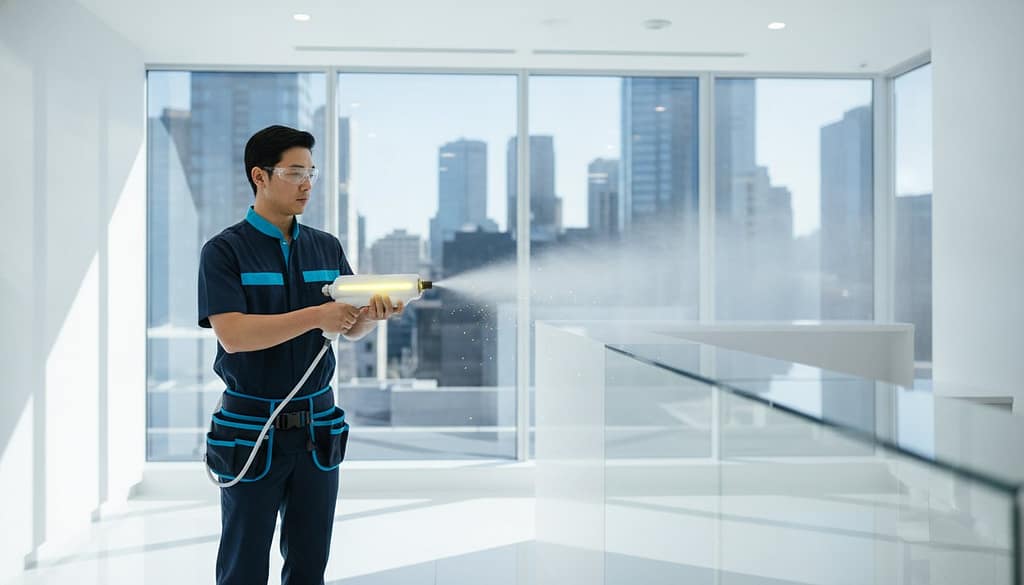
A standard deep clean is often just a surface-level solution for a microscopic problem. With Victoria facing a late-season surge in respiratory infections as of August 2026, relying on basic janitorial methods puts your facility and your reputation at risk. Professional infection control cleaning melbourne is not a luxury; it’s a clinical necessity that requires a rigorous, two-stage protocol. Most facility managers feel the weight of compliance audits and the constant fear of a Gastro or COVID-19 outbreak, yet they remain unsure if their current cleaners use TGA-approved chemicals or just standard detergents.
We know you want a pathogen-free environment that meets the highest Victorian Department of Health guidelines without the stress of constant oversight. This guide simplifies the complexities of medical-grade sanitisation to give you total peace of mind. You’ll learn exactly how to align with the April 2026 updated Australian Guidelines for infection control, the critical difference between cleaning and disinfection, and how to implement a bespoke plan that protects your staff and visitors every single day. It’s time to move beyond the mop and bucket toward a disciplined, expert approach to safety.
Key Takeaways
- Understand why a two-step process is mandatory for clinical success, ensuring disinfectants reach the surface without being blocked by physical debris.
- Navigate the specific requirements of the Public Health and Wellbeing Regulations 2009 to safeguard your business against compliance risks.
- Pinpoint the high-touch surfaces in your facility that require specialised infection control cleaning melbourne to break the chain of transmission.
- Learn to differentiate between porous and non-porous materials to select the correct TGA-listed chemicals for every area of your building.
- Identify the hallmarks of a professional cleaning partner who prioritises medical-grade results over standard commercial aesthetics.
What is Infection Control Cleaning and Why Does it Matter in Melbourne?
Infection control cleaning is a systematic, science-based discipline designed to eliminate harmful pathogens from a physical environment. To understand What is Infection Control, you have to look beyond the surface level. It’s not just about removing visible dust; it’s about breaking the chain of infection. In 2026, Melbourne businesses have moved past basic hygiene. Whether you manage a high-traffic office in the CBD or a childcare centre in the suburbs, the expectation has shifted from aesthetic tidiness to verified clinical safety.
Aesthetic cleaning makes a room look presentable, but clinical cleaning ensures it’s safe for human health. This distinction is vital because a sparkling floor can still host dangerous colonies of bacteria, viruses, and fungi. Effective infection control cleaning melbourne focuses on these invisible threats to prevent outbreaks before they start. By targeting the root cause of disease transmission, we protect the people who keep your facility running.
The Difference Between Cleaning, Sanitising, and Disinfecting
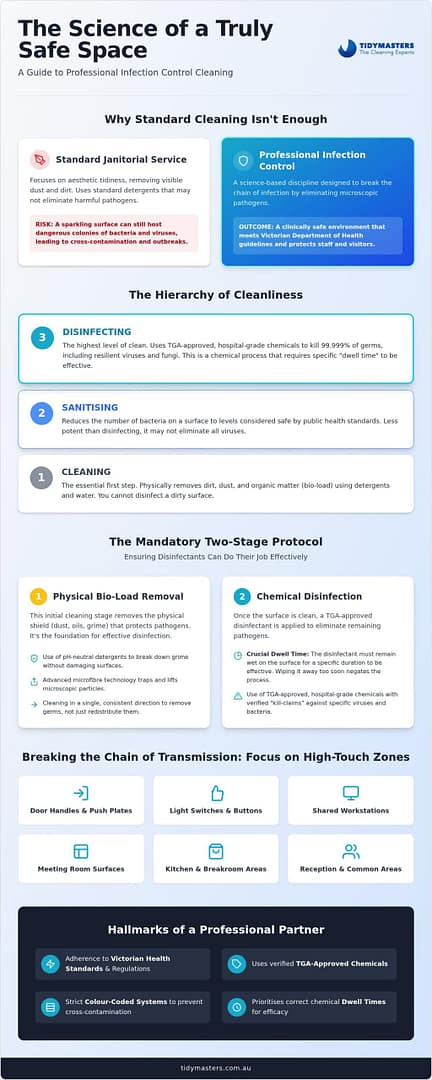
These terms are often used interchangeably, but they serve very different roles in a safety protocol. Cleaning is the physical removal of dirt, dust, and organic matter using detergents and water. It’s the essential first step because you can’t disinfect a dirty surface. Sanitising reduces the number of bacteria on surfaces to levels considered safe by public health standards. Disinfecting is the final, most rigorous stage. It involves using TGA-listed chemicals to kill 99.999% of germs, including resilient viruses that sanitisers often miss.
Why General Commercial Cleaning is Not Enough
Standard janitorial services usually lack the specialised training required for true pathogen elimination. General cleaners often use the same cloths across multiple zones, which leads to dangerous cross-contamination. Professional infection control cleaning melbourne relies on strict colour-coded systems to keep equipment separate and safe. Standard detergents don’t have a “kill-claim.” They move dirt around rather than destroying pathogens. True disinfection also requires specific dwell time, the duration a chemical must remain wet on a surface to be effective. If your cleaner wipes a disinfectant away immediately, it hasn’t done its job. Our approach ensures every protocol is followed to the second, providing a level of reliability that general services can’t match.
The Science of Sanitisation: The Two-Stage Cleaning Protocol
Disinfection is a chemical reaction. Like any reaction, it requires the right conditions to work. If a surface is covered in dust, oils, or organic matter, the disinfectant won’t reach the pathogens underneath. This is why professional infection control cleaning melbourne follows a mandatory two-stage process. You can’t skip the first step and expect the second to succeed. This methodical approach ensures your facility meets the highest Victorian workplace standards for safety.
We rely on Therapeutic Goods Administration (TGA) approved products. These aren’t your typical supermarket cleaners; instead, we utilise professional-grade solutions from manufacturers like Award Chemicals. They’re hospital-grade chemicals with verified kill-claims against specific viruses and bacteria. To apply these effectively, we use advanced microfibre technology. Unlike cotton rags that spread grime, microfibre traps microscopic particles within its structure. This physical removal is the foundation of a pathogen-free environment.
Step 1: Physical Bio-Load Removal
The first stage is all about removing the bio-load. Dust and grime act as a physical shield for bacteria. We use pH-neutral detergents to break down this barrier without damaging your surfaces. Our technicians are trained to clean in one direction. By wiping in a single, consistent motion, we ensure that germs are physically removed from the surface rather than being redistributed. This preparation stage is what allows the subsequent disinfection to be 100% effective.
Step 2: Chemical Disinfection and Dwell Time
After the surface is physically clean, we apply the targeted disinfectant. We choose the chemical based on your facility’s unique needs, whether you’re a high-risk medical clinic or a busy corporate office. The most misunderstood part of this process is dwell time. Dwell time is the duration a disinfectant must remain active on a surface to kill specific pathogens. Most medical-grade products need to stay wet for 5 to 10 minutes to achieve their full kill-rate. If a cleaner wipes the surface dry immediately, the pathogens often survive. Our team monitors these times meticulously to guarantee a clinical result. If you’re concerned about your current protocols, you can request a tailored cleaning plan to see the difference professional standards make.
Targeting High-Risk Zones in Your Melbourne Facility
Effective infection control cleaning melbourne requires a tactical approach to High-Touch Points (HTPs). These are the surfaces everyone touches but few think to sanitise frequently. Door handles, lift buttons, and shared tabletops act as transit hubs for pathogens. We categorise these surfaces into porous and non-porous materials. Non-porous surfaces like stainless steel are easier to disinfect, while porous fabrics require deep extraction to remove trapped microbes. Following the Australian National Infection Control Guidelines ensures every surface type receives the correct chemical treatment.
Beyond surfaces, air quality plays a critical role in modern infection control. Pathogens don’t just sit on desks; they linger in the air. We integrate ventilation awareness and air purification strategies into our bespoke plans. By addressing both the air and the environment, we create a multi-layered shield for your staff. Tidy Masters customises every plan to fit the specific layout and usage patterns of your Melbourne workplace.
Medical Centres and Aged Care Facilities
In clinical settings, the risk profile is significantly higher. Waiting room chairs and reception desks are primary vectors for transmission. We implement rigorous protocols for these areas, including the sanitisation of specimen handling zones and clinical waste areas. Our team understands the sensitivity required for these high-stakes environments. For a detailed look at our clinical standards, explore our medical centre cleaning services.
Childcare Centres and Schools
Hygiene in educational settings requires a delicate balance. We use effective but non-toxic sanitisers for play equipment and communal desks. High-traffic areas like kitchens and bathrooms are cleaned with hospital-grade disinfectants that remain safe for children. This ensures compliance with Victorian health standards while protecting young immune systems. You can read more about these specific requirements in our childcare cleaning guide.
Gyms and Fitness Centres
Gyms present a unique challenge: bio-film. This invisible layer of sweat and skin cells builds up on cardio equipment and free weights, protecting bacteria from standard sprays. We use specialised detergents to strip this film before disinfecting. Locker rooms and showers also receive intensive treatment to prevent the spread of fungal infections. Regular steam cleaning for gym mats is a non-negotiable part of our fitness centre protocols. This proactive maintenance keeps your members safe and your equipment in peak condition.
Compliance and Standards for Victorian Workplaces
Compliance in Victoria is governed by a strict legal framework that requires business owners to take proactive steps against health risks. The Public Health and Wellbeing Regulations 2009 dictate how facilities must manage hygiene to prevent the spread of infectious diseases. Professional infection control cleaning melbourne bridges the gap between these complex regulations and your daily operations. By implementing a medical-grade protocol, you satisfy your WorkSafe Victoria obligations to provide a workspace that is safe for employees and visitors alike. This isn’t just about avoiding fines; it’s about establishing a culture of safety that protects your most valuable assets. For comprehensive property recovery and safety solutions, TBC Restoration provides professional restoration services to ensure your commercial environment remains secure and compliant.
Meeting NSQHS Standards for Healthcare
Audit-Ready Documentation
When a health inspector or auditor visits your Melbourne facility, they’ll look for your documentation before they look at your floors. A compliant cleaning log is a detailed, chronological record of every sanitisation cycle. It must specify the date, the exact rooms treated, and the TGA-registered name of the disinfectants used. We also maintain accessible Safety Data Sheets (SDS) for all chemicals on-site to ensure full transparency and safety for your staff. This level of detail is what separates a professional service from a standard commercial cleaner.
Managing these records is a heavy administrative burden that many facility managers struggle to maintain. We simplify this process by providing digital or physical logs that meet the highest regulatory standards. This includes specific incident reporting protocols for high-risk events like blood or body fluid spills, which require immediate, specialised attention. If you want to ensure your facility is fully protected and audit-ready, book a compliance-focused cleaning assessment today. This expert oversight removes the stress of audits and lets you focus on running your facility with total confidence.
Choosing a Specialist Infection Control Partner in Melbourne
Selecting the right partner is a decision that impacts the health of your entire organisation. You need a team that understands the technical nuances of medical-grade sanitisation, not just a crew that empties bins. A local Melbourne partner offers a distinct advantage. They’re tuned into regional health trends, such as the late-season respiratory spikes seen in August 2026. This local expertise allows for proactive adjustments to your cleaning schedule when risks increase. At Tidy Masters, we integrate these high-level protocols into our standard commercial cleaning routines. We ensure that your facility remains clinical-grade without disrupting your daily workflow.
Professional infection control cleaning melbourne is defined by the expertise of the people on the ground. When you vet a provider, look beyond their price point. You should demand transparency regarding their staff training and chemical choices. It’s about finding a proactive partner who values your facility’s safety as much as you do.
Vetting Staff Training and Certification
Training is the most critical factor in infection prevention. Ask your provider if their technicians have completed specific “Infection Prevention and Control” modules. These certifications ensure they understand bio-load removal and the science of dwell time. We also mandate the use of colour-coded equipment. This simple but effective system prevents a cloth used in a bathroom from ever touching a desk in a clinical zone. Finally, verify that the company maintains comprehensive insurance and strictly adheres to the latest Australian Standards. These credentials provide the legal and operational safety net your business requires.
The Tidy Masters Advantage
We position ourselves as your facility’s “silent achiever.” Our team works meticulously behind the scenes to maintain an environment that functions perfectly. One of our key tools is professional steam cleaning. This technology provides thermal disinfection, killing pathogens with high-temperature vapor rather than relying solely on chemicals. It’s a bespoke approach that balances clinical rigor with environmental consciousness. We take the burden of maintenance off your shoulders so you can focus on your core business goals.
Before you sign your next contract, use this quick vetting checklist:
- Does the provider use TGA-listed disinfectants with verified kill-claims?
- Are staff specifically trained in clinical-grade infection control cleaning melbourne?
- Is there a clear, documented protocol for High-Touch Points?
- Do they provide audit-ready cleaning logs and Safety Data Sheets?
If you’re unsure about your current provider’s standards, we can help. Request an Infection Control Audit for your facility to identify gaps in your current protocol and ensure your workplace remains a safe, pathogen-free environment for everyone.
Elevate Your Facility’s Safety Standards Today
Mastering the science of infection control cleaning melbourne is about more than just aesthetics; it’s about verified clinical safety. You now understand the power of a two-stage protocol and the necessity of audit-ready documentation. These steps don’t just eliminate pathogens. They build a foundation of trust for your staff and visitors. By focusing on high-touch points and TGA-approved disinfectants, you transform your facility into a resilient environment capable of withstanding the health challenges of 2026.
Tidy Masters has been the silent achiever for Melbourne clinics and schools since 2009. We bring deep expertise in NSQHS compliance standards and use meticulous, TGA-approved sanitisation protocols to protect your space. Don’t leave your regulatory compliance or community health to chance. It’s time to partner with a team that values health and safety above all else. Secure your facility with Melbourne’s infection control experts at Tidy Masters and enjoy the peace of mind that comes with professional, medical-grade care. We’re ready to help you create a safer, healthier future for your facility.
Frequently Asked Questions
What is the difference between standard commercial cleaning and infection control cleaning?
Standard cleaning focuses on aesthetics and the removal of visible debris. Infection control cleaning is a clinical process designed to eliminate pathogens at a microscopic level. It follows a mandatory two-stage protocol: cleaning with detergent to remove bio-load followed by disinfection with TGA-listed products. This ensures surfaces aren’t just visually tidy but biologically safe. We use colour-coded equipment to prevent cross-contamination, a step often overlooked in basic commercial services.
How often should a Melbourne medical centre undergo infection control cleaning?
High-traffic medical centres require daily infection control cleaning to maintain safety and compliance. Clinical zones and waiting areas should be treated every night to break transmission chains. For high-risk periods, such as the respiratory infection surges seen in Melbourne during August 2026, additional midday touch-point sanitisation is recommended. We customise frequencies based on your patient volume and the specific risk profile of your clinic to ensure total protection.
Are the disinfectants used in infection control safe for childcare environments?
Yes, we select hospital-grade disinfectants that are highly effective yet safe for use around children. These products are TGA-listed and applied according to strict safety protocols to ensure no harmful residues remain on play equipment or communal surfaces. We often combine these with professional steam cleaning, which provides thermal disinfection without the need for excessive chemicals, keeping your Melbourne childcare centre both sterile and non-toxic for students and staff.
What are TGA-approved disinfectants and why are they necessary?
TGA-approved disinfectants are products listed on the Australian Register of Therapeutic Goods (ARTG). They’ve been rigorously tested to prove they actually kill specific pathogens, such as Influenza or COVID-19. Using these is essential for infection control cleaning melbourne because standard supermarket cleaners don’t have verified kill-claims. For regulatory compliance and audit readiness, your facility must use products with verifiable ARTG numbers that meet the latest Victorian health standards.
Can infection control cleaning help reduce staff sick leave in an office?
Absolutely. By systematically eliminating viruses and bacteria from high-touch points like keyboards, door handles, and kitchen surfaces, you significantly reduce the spread of illness among employees. Proactive sanitisation targets the root cause of office outbreaks, leading to a healthier workforce and fewer disruptions. Investing in a pathogen-free environment is a proven strategy for maintaining productivity and fulfilling your WorkSafe Victoria obligations to ensure staff wellbeing and safety.
Does Tidy Masters provide emergency cleaning for a viral outbreak?
We provide one-off deep cleaning services designed to respond to high-risk situations like viral outbreaks. While we don’t offer 24/7 emergency response, our team prioritises these critical requests to help Melbourne facilities regain control quickly. We implement a full terminal clean protocol, using TGA-listed disinfectants and advanced steam technology to ensure every surface is decontaminated and safe for re-entry as soon as possible, protecting your reputation and your people.
What documentation should I expect from my infection control cleaning provider?
You should receive detailed cleaning logs and Safety Data Sheets (SDS) for all chemicals used on-site. A compliant log must include the date and time of service, the specific areas treated, and the ARTG numbers of the disinfectants applied. These records are vital for passing audits from bodies like AGPAL or QIP. Tidy Masters ensures all documentation is meticulous and easily accessible for your next compliance review or health inspection.
Is steam cleaning effective for infection control in Melbourne businesses?
Steam cleaning is an exceptionally effective tool for thermal disinfection. It uses high-temperature vapor to kill bacteria and viruses trapped deep within porous surfaces like carpets and upholstery where liquid chemicals might not reach. This method is particularly useful for Melbourne gyms and medical waiting rooms. It provides a deep, chemical-free sanitisation that complements our two-stage chemical disinfection protocol for a truly comprehensive result that protects your facility’s users.