Aged Care Cleaning Services Melbourne: The 2026 Facility Hygiene Guide
July 2, 2026
Final Builders Clean Melbourne: The Strategic Guide to Flawless Handovers
July 4, 2026
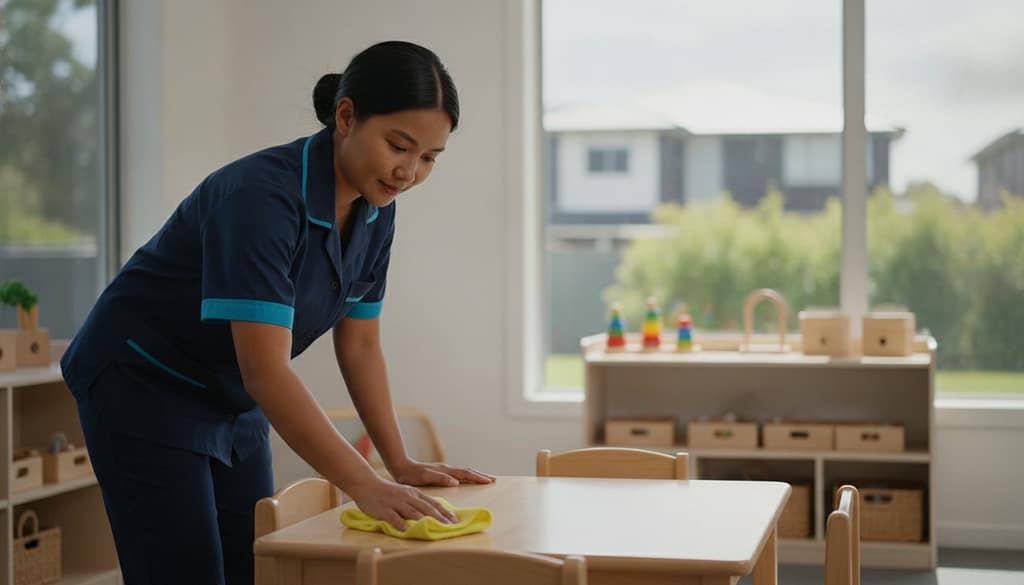
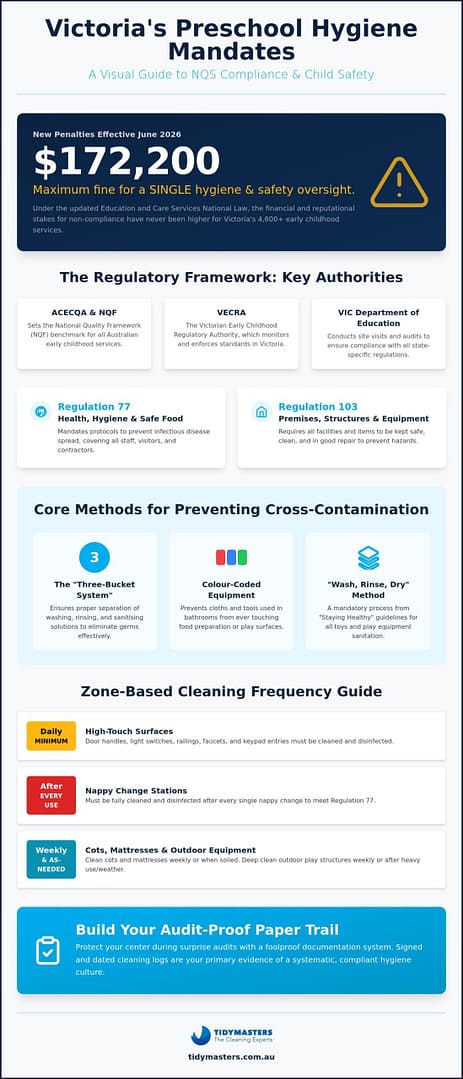
Did you know that a single oversight in your hygiene protocol could now result in a penalty of $172,200? Under the updated Education and Care Services National Law effective June 2026, the stakes for Victorian preschools have never been higher. Meeting the preschool cleaning requirements victoria mandates isn’t just about passing an audit; it’s about protecting the 4,600 early childhood services that form the heart of our community.
You likely feel the pressure of balancing the “Staying Healthy” 6th Edition guidelines with the latest VECRA modifications. It’s common to worry about spot-check audits or the confusion between National Regulations and Victorian health standards. This guide simplifies that complexity. You’ll gain a clear, actionable roadmap to ensure your facility remains compliant, safe, and impeccably clean for every child. We’ll preview the essential daily checklists and NQS strategies you need to reduce child absenteeism and lead your team with total confidence.
Key Takeaways
- Understand the 2026 updates to the National Law and how they specifically impact Victorian preschool hygiene assessments.
- Implement the “Three-Bucket System” and colour-coded equipment to meet the strict preschool cleaning requirements victoria and prevent cross-contamination.
- Align your daily hygiene protocols with the latest NHMRC “Staying Healthy” standards, focusing on the mandatory “Wash, Rinse, Dry” method for all play equipment.
- Build a foolproof documentation system with signed cleaning logs that protect your facility during surprise Victorian Department of Education audits.
- Discover how bespoke cleaning schedules tailored to Victorian term dates can help your center achieve an “Exceeding” National Quality Standard rating.
Understanding the Victorian Regulatory Framework for Preschool Hygiene
The regulatory landscape for Victorian preschools is rigorous and unforgiving. You must adhere to the Education and Care Services National Law Act 2010 and the National Regulations 2011. These aren’t mere suggestions; they are legal mandates. The Australian Children’s Education & Care Quality Authority (ACECQA) implements the National Quality Framework (NQF), which sets the benchmark for your facility. In Victoria, the Early Childhood Regulatory Authority (VECRA) monitors these standards with increasing scrutiny.
Standard commercial cleaning often fails to meet these demands. It lacks the clinical rigor required for Quality Area 2 (Children’s Health and Safety). While a general office cleaner might focus on aesthetics, preschool cleaning requirements victoria demand a focus on infection control and hazard reduction. You need a partner who understands that a smudge on a window is a minor issue, but an unsterilised high-chair is a major compliance breach. The Victorian Department of Education (DET) expects your facility maintenance to be proactive, documented, and flawless in 2026.
National Regulations: Reg 77 and Reg 103 Explained
Regulation 77 focuses on health, hygiene, and safe food practices. It requires every person at the service, including your cleaning contractors, to follow protocols that prevent the spread of infectious diseases. Regulation 103 mandates that your premises, structures, and equipment stay safe, clean, and in good repair. Victorian assessors don’t give warnings for “dirty” environments during unannounced site visits. They look for evidence of a systematic cleaning culture. If your playground equipment or indoor mats show signs of neglect, you risk an immediate non-compliance rating.
The 2026 Victorian Health Standards for Early Learning
The 2026 standards represent a significant shift in accountability. New Victorian Modifications effective June 11, 2026, have tightened the rules around infectious disease protocols. There is also a growing push from Melbourne councils for sustainable, non-toxic cleaning agents that protect developing respiratory systems. You must also maintain rigorous record-keeping. Any cleaning incident or localized outbreak requires mandatory reporting.
The financial stakes have also changed. As of January 2, 2026, maximum penalties for failing to protect children from harm and hazards have tripled to $172,200 for a single service. For larger providers, these fines can exceed $1 million. This makes professional, compliant cleaning a vital insurance policy for your business. We provide the expertise to ensure your facility meets every Victorian health mandate without compromise.
Area-Specific Cleaning Requirements for Victorian Preschools
Effective hygiene in a Victorian preschool requires more than a “one size fits all” approach. You must implement a zone-based strategy that separates high-touch, food-prep, and play areas. We utilise a strict “Three-Bucket System” alongside colour-coded equipment to eliminate the risk of cross-contamination. This ensures that a cloth used in a bathroom never touches a dining surface. These precise preschool cleaning requirements victoria demand a disciplined methodology that generic cleaners often overlook.
High-touch surfaces like door handles, light switches, and keypad entries require cleaning and disinfection at least daily to maintain a compliant environment. For outdoor zones, Victorian regulators expect sandpits to be covered when not in use and inspected daily for contaminants. Outdoor play equipment needs a weekly deep clean, or more frequent attention following heavy use or inclement weather. Adhering to the Staying Healthy 5th Edition guidelines provides the foundational framework for these area-specific tasks. While standards evolve, the core principles of separation and frequency remain the best defence against outbreaks.
Nursery and Sleep Rooms: Sanitisation Protocols
Nursery environments are high-risk zones. You must clean cots and mattresses weekly or whenever they are soiled, following SIDS-safe guidelines to ensure no toxic residues remain. Under Regulation 77, nappy change stations must be disinfected after every single use. Floors in “crawling zones” require daily cleaning with non-residual, child-safe detergents. This prevents infants from ingesting harmful chemicals while they explore their environment. It’s about creating a space where the youngest children can move safely.
Food Preparation and Communal Dining Areas
Your kitchen must satisfy both the Victorian Food Act and ECEC regulations. Surfaces must be sanitised before and after any food handling. Dining tables require a thorough “Wash, Rinse, Dry” cycle before and after every meal session. Meticulous waste management is equally vital. Food scraps and nappy waste must be removed promptly to prevent pest incursions and maintain air quality. If managing these schedules feels overwhelming, our professional school & childcare cleaning services can take the burden off your educators.
Bathrooms and Toilet Training Zones
Bathrooms require a dual-action approach: a daily deep clean and hourly spot checks. You must sanitise potty chairs and tapware using hospital-grade, kid-safe disinfectants that kill pathogens without irritating sensitive skin. Proper ventilation is essential to manage air quality and reduce the risk of airborne transmission. We focus on these high-odour zones to ensure they remain fresh and hygienic throughout the day. It’s a proactive way to maintain a polished, expert standard across your entire facility.
Infection Control and the Staying Healthy 5th Edition Standards
Preschool cleaning requirements victoria dictate that your hygiene practices must align with the National Health and Medical Research Council (NHMRC) guidelines. Specifically, the Staying Healthy 5th Edition serves as the primary manual for infection control in Victorian early learning centres. We apply these clinical standards to every site we service. It’s not just about removing visible dirt; it’s about breaking the chain of infection before it spreads through your classrooms.
The “Wash, Rinse, Dry” method is the only approved way to clean toys and equipment under these guidelines. You must first wash items in warm water and detergent to remove organic matter. Follow this with a thorough rinse in clean water to remove soap residue. Finally, allow items to air dry completely. This process is non-negotiable for high-touch play items. Skipping any step compromises the safety of the children in your care. It’s a methodical process that ensures no bacteria survive on play surfaces.
During local Melbourne outbreaks, we implement “Zoned Cleaning” protocols. This involves using dedicated equipment for an affected room to prevent cross-room transmission of illnesses like Norovirus or Hand, Foot, and Mouth Disease. You must select disinfectants that are specifically proven to kill these resilient pathogens. Standard cleaners won’t suffice when a virus is present. Our team ensures that the products used are both effective and safe for the preschool environment, providing a high level of accountability for your facility.
Toy and Equipment Sanitisation Schedules
Consistency is the key to compliance. You should schedule a deep clean of all communal toys at least weekly. However, any item that a child places in their mouth requires immediate removal and sanitisation. Soft toys, rugs, and cushions present a different challenge. These porous materials trap allergens and bacteria easily. We recommend professional steam cleaning Melbourne for quarterly fabric sanitisation. This high-heat method kills dust mites and bacteria without leaving chemical residues behind.
High-Level Disinfection vs. Routine Cleaning
Knowing when to escalate your cleaning is vital. Routine cleaning uses detergent for surface-level grime. High-level disinfection requires TGA-approved products designed for clinical environments. You must respect the “Contact Time” specified on the label. If a disinfectant requires five minutes to kill a virus, wiping it away too early renders the process useless. Finally, all cleaning chemicals must be stored in locked areas with zero child access. This is a strict requirement under Regulation 106. We provide the documentation to prove your storage and usage meet these high-stakes safety standards.
Documentation and Audit-Readiness: The Paper Trail
Audits happen. When a Victorian Department of Education (DET) assessor arrives at your gate, they aren’t just looking for sparkling surfaces; they are looking for the story of how those surfaces stayed that way. A signed, dated cleaning log is your strongest defence during an unannounced inspection. It transforms an invisible service into a verifiable record of safety. Without this paper trail, you cannot prove you have met the preschool cleaning requirements victoria mandates, regardless of how clean the facility looks.
Your 2026 preschool cleaning service plan must be comprehensive. It should include a detailed scope of works, frequency of tasks, a full chemical register (SDS), and emergency contact protocols. You also need to document “one-off” events with precision. Whether it is a deep clean during the term break or a reactive sanitisation following an infectious outbreak, every action needs a corresponding entry. In Victoria, you are legally required to retain these cleaning logs and maintenance records for a minimum of three years to remain compliant with Regulation 183.
Daily and Weekly Cleaning Checklists
Accountability starts with visibility. We recommend maintaining a dual logging system that covers both internal staff tasks and external contractor duties. While digital logging is gaining traction for its ease of tracking, many Victorian assessors in 2026 still appreciate a physical, on-site folder that is immediately accessible during a spot check. For a structured approach to these records, refer to our childcare cleaning guide for a downloadable compliance framework. It helps ensure no high-touch surface is ever missed.
Contractor Compliance: Insurance and Police Checks
Your cleaning partners must be as compliant as your educators. In Victoria, every person providing a cleaning service on your premises must hold a valid Working with Children Check (WWCC). This is non-negotiable. You should also verify that your partners maintain current Public Liability Insurance and WorkSafe compliance. Finally, keep an “Induction Record” for every cleaner. This document proves they have been trained in your specific site hygiene policy and understand the unique risks of an early learning environment. If you want to simplify your audit preparation, partner with a compliant cleaning expert who manages this documentation for you.
Partnering with Professional Preschool Cleaners in Melbourne
Managing a facility while educating children is a heavy lift. Professional cleaning isn’t just a service; it’s a strategic partnership. It supports your goal of achieving an “Exceeding” National Quality Standard (NQS) rating. Assessors notice when hygiene is ingrained in the facility’s culture rather than a last-minute effort. We build customized cleaning plans that align with Victorian term dates, ensuring deep cleans happen exactly when you need them. This methodical approach removes the burden of maintenance from your educators. It allows them to focus on what they do best: teaching.
We take pride in being a proactive partner for your centre. By outsourcing to experts, you reduce the administrative pressure of managing internal cleaning staff and WWCC compliance. You gain a dependable system that functions perfectly behind the scenes. Our goal is to provide a sense of relief and total confidence in your facility’s safety. Meeting the preschool cleaning requirements victoria mandates becomes a seamless, automated process rather than a daily stress.
Why Tidy Masters is the Preferred Choice for Victorian ECEC
Our team brings refined expertise in finding the best cleaning company in Melbourne specifically for educational settings. We use GECA-certified products to ensure no harsh chemical residues affect the sensitive respiratory systems of young children. We strictly follow the latest Victorian DET and Staying Healthy protocols. This proactive approach ensures you always meet the preschool cleaning requirements victoria demands without the guesswork. We are the silent achievers working to keep your environment pristine and compliant.
Getting Started: Your 2026 Hygiene Audit
Every partnership begins with a site-specific risk assessment. We identify high-traffic zones and potential hygiene gaps unique to your floor plan. Moving from in-house cleaning to a professional service is a seamless transition. We handle the induction, the equipment, and the documentation. You get a compliant, audit-ready environment that protects your reputation and your students. We provide the expert emotional style and commercial rigor your facility deserves. Ensure your preschool meets every Victorian requirement with Tidy Masters.
Secure Your Facility’s Future with Proactive Hygiene
Achieving total compliance in 2026 means moving beyond basic cleaning toward a systematic, documented hygiene culture. You’ve learned how to align your facility with the National Law, implement area-specific protocols, and maintain the rigorous paper trail Victorian auditors expect. Mastering the preschool cleaning requirements victoria mandates is the most effective way to safeguard your reputation and the health of your students. It’s about creating a dependable environment where safety is never left to chance.
Our WWCC-cleared professional cleaners ensure full compliance with Victorian DET and National Regulations using GECA-certified non-toxic cleaning products. This proactive approach removes the stress of audits and allows your educators to remain focused on teaching. We work as your silent partner behind the scenes to ensure your environment functions perfectly every single day. Request a Compliance-Focused Cleaning Quote for Your Preschool to secure your facility’s safety. You’ve built a space where children thrive; we’re here to ensure it stays that way.
Frequently Asked Questions
What are the mandatory cleaning frequencies for Victorian childcare centres?
High-touch surfaces like door handles and light switches require daily cleaning and disinfection. Food preparation areas and nappy change stations must be sanitised after every single use. Floors in play areas need daily vacuuming and mopping. Maintaining these frequencies is a core part of meeting the preschool cleaning requirements victoria mandates for a safe environment. It keeps your facility audit-ready at all times.
Do preschool cleaners in Melbourne need a Working with Children Check?
Yes, every person providing a cleaning service in a Victorian preschool must hold a valid Working with Children Check. This is a legal requirement under the Worker Screening Act 2020. We ensure all our personnel are fully cleared and documented before they enter your facility. It’s a non-negotiable standard that protects your centre’s compliance and child safety. You should keep copies of these checks on-site for assessors.
What is the “Staying Healthy” 5th edition and how does it affect cleaning?
The “Staying Healthy” 5th edition is the official guide from the National Health and Medical Research Council for preventing infectious diseases in early childhood settings. It dictates specific methods like the “Wash, Rinse, Dry” protocol for toys and equipment. Following these guidelines ensures your centre adheres to best-practice infection control. It is the gold standard for Victorian health assessments and provides a clear framework for your hygiene policy.
Can we use bleach to disinfect toys in a Victorian preschool?
You should generally avoid using bleach for routine toy cleaning. The NHMRC recommends detergent and warm water followed by air drying for everyday maintenance. Bleach is typically reserved for infectious outbreaks and must be used in specific dilutions while children are away. We use GECA-certified, non-toxic products instead to ensure no harmful chemical residues remain on play surfaces. This keeps the environment safe for curious infants.
How does cleaning impact our NQS Rating in Victoria?
Hygiene standards directly influence your rating in Quality Area 2 (Children’s Health and Safety) and Quality Area 3 (Physical Environment). An “Exceeding” rating requires evidence of a systematic, proactive cleaning culture. Consistent, documented hygiene practices demonstrate a commitment to child wellbeing. It shows assessors that you prioritise a healthy environment for every child in your care. This level of detail sets your facility apart from standard providers.
What documentation does a Victorian Department of Education auditor look for?
A Victorian Department of Education auditor looks for signed daily cleaning logs, a comprehensive service plan, and a current SDS register. They also verify that all contractors have valid Working with Children Checks and current insurance. Having these records organised in an audit-ready folder establishes immediate trust. It proves you have met the preschool cleaning requirements victoria regulators demand. It shows your facility is managed with professional rigor.
Is steam cleaning required for preschool carpets and rugs?
While not a daily mandate, professional steam cleaning is highly recommended for quarterly fabric sanitisation. Carpets and rugs trap allergens and bacteria that standard vacuuming cannot reach. High-heat steam effectively kills dust mites and pathogens without the need for harsh chemicals. It’s a proactive step that maintains a clinical standard of hygiene in your high-traffic crawling zones. This ensures the air quality and floor safety remain at peak levels.
How often should preschool sandpits be cleaned and turned in Victoria?
You must inspect sandpits daily for contaminants and ensure they are covered when not in use. The sand should be turned over daily to expose it to the sun and air. A full clean or replacement of the sand should occur at least annually, or more frequently if it becomes heavily soiled. This prevents the buildup of harmful bacteria in outdoor play zones. It’s a simple way to maintain a safe outdoor environment.