
Retail Shop Cleaning Prices Melbourne: 2026 Cost Guide for Business Owners
May 11, 2026
Warehouse Cleaning Price Per Square Foot: 2026 Melbourne Pricing Guide
May 13, 2026

Is your facility truly ready for the strengthened Aged Care Quality Standards, or are you just one audit away from a compliance crisis? With the new Aged Care Act in full effect since November 2025, the margin for error has vanished. You know that maintaining clinical-grade hygiene is about more than just passing a spot check. It’s about protecting the 259,592 Australians in residential care while ensuring their comfort and dignity. We understand the stress of managing staff consistency in high-pressure environments where infection control is a constant priority.
We’re here to help you regain control and confidence. This guide provides a comprehensive aged care cleaning checklist built for 2026 requirements. You’ll receive a tailored framework that ensures full compliance with Standard 4 and significantly reduces your administrative burden. We’ll preview the specific daily protocols, TGA-approved disinfection requirements, and auditing methods that make your facility maintenance hassle-free. It’s time to trade audit anxiety for a safer, healthier environment for every resident under your roof.
Key Takeaways
- Learn how to align your facility with the 2026 Aged Care Quality Standards to ensure total compliance and resident safety.
- Implement a comprehensive aged care cleaning checklist that prioritizes high-touch disinfection without disrupting daily life.
- Discover how to sanitize private resident rooms and en-suites effectively while respecting the dignity of their personal space.
- Identify when specialized maintenance, like hard floor stripping and sealing, is required to prevent biofilm and maintain a spotless environment.
- Master the auditing techniques, including ATP testing, needed to verify disinfection results and breeze through unannounced accreditation audits.
The High Stakes of Aged Care Hygiene and Compliance
Aged care cleaning is a highly specialized discipline. It requires a delicate balance between clinical-grade safety and the comfort of a residential home. While standard commercial cleaning focuses on visual appeal, aged care demands a much deeper level of sanitization. You aren’t just managing a building; you’re protecting a community of vulnerable individuals. A generic approach to maintenance is insufficient because it fails to address the specific biological risks present in high-density senior living. Every surface in your facility is a potential touchpoint for transmission, making a meticulous strategy essential for daily operations.
The consequences of poor hygiene are severe and immediate. Without a disciplined approach, your facility faces several critical risks:
- Rapid infection outbreaks that endanger resident lives.
- Significant legal litigation and financial penalties.
- Failed accreditation audits that threaten your license to operate.
- Irreparable damage to your reputation among Melbourne families.
We understand the pressure of maintaining these standards. Our goal is to act as your proactive partner, taking the burden of maintenance off your shoulders so you can focus on care. We take pride in delivering a spotless environment that meets the highest commercial rigor while remaining approachable for your residents.
Meeting Australian Aged Care Quality Standards
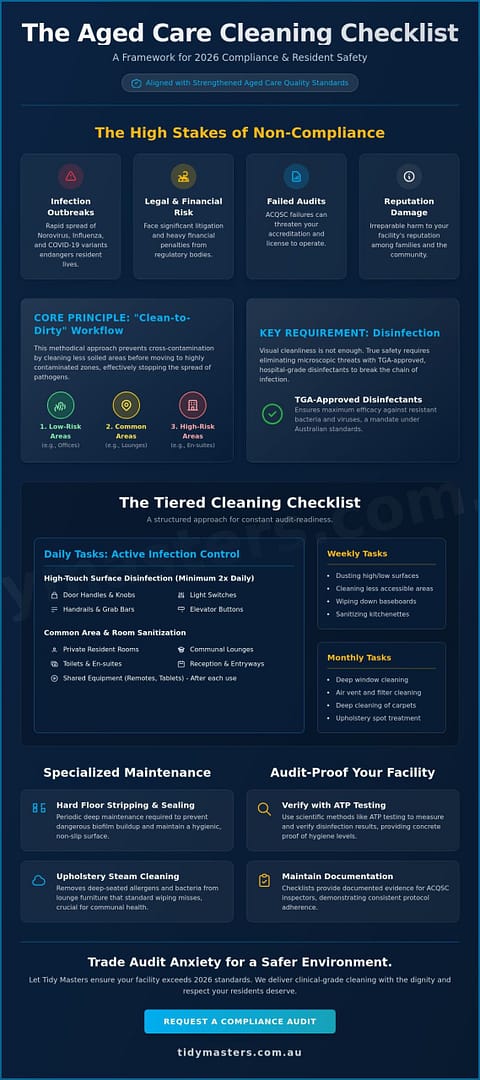
The regulatory environment in 2026 is stricter than ever. Under the strengthened standards, Standard 3 specifically addresses personal and clinical care hygiene. It mandates that providers minimize infection-related risks through effective clinical practices and environmental cleanliness. Using a structured aged care cleaning checklist is your best defense during an Aged Care Quality and Safety Commission (ACQSC) audit. It provides the documented evidence inspectors need to see that your protocols are followed consistently across all wings. Compliance is a continuous process of verification and improvement, ensuring your facility remains a safe haven every day of the year.
The Health Impacts of Infection Control (IPC)
Residents remain highly susceptible to Norovirus, seasonal Influenza, and various COVID-19 variants. These pathogens can sweep through a facility in days if hygiene protocols slip. Environmental cleaning is the primary tool for breaking the chain of infection. It’s vital to remember that a “spotless” surface isn’t always a “hygienic” one. True safety comes from applying core infection control principles to eliminate microscopic threats that the naked eye cannot see. By focusing on high-touch areas and using commercial-grade disinfectants, you create a barrier against disease. This level of detail isn’t just about passing audits; it’s about the health and dignity of every person in your care.
The Daily Aged Care Cleaning Checklist: High-Touch and Common Areas
Efficiency starts with a clear structure. A robust aged care cleaning checklist categorizes every task to ensure nothing is missed. Daily requirements focus on active infection control. Weekly tasks address buildup in less accessible areas. Monthly tasks involve restorative work like deep window cleaning. This tiered approach keeps your facility in a state of constant audit-readiness without overwhelming your staff.
High-touch surfaces are the primary vectors for disease. Door handles, light switches, and handrails require disinfection at least twice daily. To achieve clinical-grade results, our teams utilize a “clean-to-dirty” workflow. This method involves cleaning the least contaminated zones first before moving to higher-risk areas; it effectively stops the spread of pathogens between rooms. Following national guidelines for prevention, we use only TGA-approved hospital-grade disinfectants to ensure maximum efficacy against resistant bacteria.
Reception and Communal Living Spaces
First impressions matter, but safety matters more. Reception desks, entryways, and elevator buttons are high-traffic zones that demand frequent attention. We pay special care to communal lounges where residents gather. Beyond surface wiping, we recommend scheduled steam cleaning for lounge furniture and upholstery. This removes deep-seated allergens and bacteria that standard wiping misses. Shared equipment, such as remote controls, tablets, and activity kits, must be sanitized after every use to protect the group.
Dining Rooms and Kitchenettes
Dining areas present unique challenges. Tables must be thoroughly sanitized between every sitting to prevent cross-contamination. Floor maintenance is equally critical in these high-traffic zones; it prevents slip hazards from food or liquid spills. Shared kitchenettes require a specialized approach. You must use food-safe disinfectants in these areas to maintain a hygienic environment without introducing harmful chemical residues to food preparation surfaces. This level of detail ensures your dining spaces remain both welcoming and safe for everyone.
Personal Resident Rooms: Balancing Clinical Safety with Dignity
A resident’s room is more than just a clinical space; it is their home. Balancing medical-grade hygiene with the personal dignity of a resident requires a nuanced approach. While common areas follow a high-traffic protocol, private quarters demand a resident-centric strategy. This means performing essential tasks without intruding on the individual’s sense of privacy or comfort. Our teams act as silent achievers, working meticulously to ensure every corner meets the highest standards of safety while respecting personal belongings. We understand that a cluttered bedside table often holds precious memories, so we clean with care and precision.
Effective maintenance in these spaces relies on a specialized aged care cleaning checklist that accounts for the specific needs of senior residents. This includes “Terminal Cleaning” protocols. When a resident is discharged or transferred, the room undergoes an intensive deep clean. Every surface, curtain, and vent is sanitized to reset the environment for the next occupant. This process ensures no lingering pathogens remain, providing a fresh start for new residents. Following the Aged Care Infection Prevention and Control Guide, we ensure these procedures are documented and verifiable. It’s about creating a safe, welcoming environment that feels like home from the moment they arrive.
En-suite Bathroom Disinfection
Bathrooms are high-risk zones for biofilm build-up and cross-contamination. Daily disinfection must focus on the “critical three”: toilets, grab rails, and emergency call buttons. These are touched constantly and require commercial-grade attention. Beyond daily wipes, a weekly deep clean of shower recesses and floor drains is vital to prevent mould and bacterial growth. We also prioritize anti-slip floor treatments during the cleaning process. This ensures that while the tiles are spotless and hygienic, they remain safe for residents with mobility challenges. Meticulous bathroom care is the foundation of infection prevention in private quarters.
High-Touch Points in Private Bedrooms
The bedroom itself contains numerous high-touch surfaces that require daily sanitization. Bed rails, bedside tables, and light switches are often overlooked but carry significant viral loads. Meticulous dusting is equally important. It supports the respiratory health of seniors by removing allergens and particulates from the air. We also emphasize the importance of window cleaning. Clean windows maximize natural light, which significantly impacts a resident’s mental well-being and circadian rhythm. A clear view of the outside world provides a sense of connection and peace, proving that aesthetic perfection and health go hand in hand.
Specialised Maintenance: Beyond the Daily Checklist
Daily sanitization keeps pathogens at bay, but long-term facility health requires technical expertise. Your aged care cleaning checklist must include scheduled deep-cleans that go beyond surface wiping. These tasks require industrial machinery and specialized chemicals that standard teams don’t typically carry. Professional maintenance ensures your facility doesn’t just look clean; it functions at a commercial-grade level of safety. We act as your silent achiever, handling the heavy-duty work behind the scenes to keep your business running perfectly.
Odor management is a significant challenge in high-occupancy environments. Low-pile carpets and common area upholstery trap bacteria and organic matter over time. Standard vacuuming is insufficient for these porous surfaces. We utilize high-temperature steam cleaning to extract deep-seated contaminants and neutralize odors at the source. This process improves indoor air quality and extends the life of your assets, providing a sense of relief for staff and residents alike.
Floor Care and Slip Prevention
Floor safety is a non-negotiable priority in residential care. Professional hard floor stripping and sealing is vital for aged care safety because it restores the slip-resistant properties of your vinyl and tiles. Over time, old wax and grime create slick surfaces that increase fall risks for vulnerable seniors. We manage various floor types, from healthcare-grade vinyl to non-slip tiles, ensuring every corridor is secure. Our team schedules these deep cleans during low-activity periods to ensure a hassle-free experience with zero resident disruption.
External Facility Maintenance
The exterior of your facility sets the tone for families and regulators. Professional window cleaning ensures a welcoming facade and maximizes natural light, which we know is essential for resident well-being. We also provide pressure washing for common courtyards, smoking areas, and entryways to remove stubborn grime and moss. This prevents slippery pathways and maintains an image of aesthetic perfection across the entire property. Our comprehensive approach includes structured rubbish removal protocols to handle large-scale facility waste efficiently. If you want to ensure every inch of your facility is audit-ready, partner with Tidy Masters for a tailored solution that covers every specialized need.
How to Audit Your Checklist for Audit Success
A well-executed aged care cleaning checklist is your foundation, but consistent verification is what secures your accreditation. You need a systematic way to prove your facility meets the 2026 standards. Start by conducting unannounced visual inspections across all facility wings. These spot checks reveal the true state of your hygiene protocols when staff aren’t prepared for an audience. It’s the most effective way to identify recurring problem areas before they become audit failures.
Don’t rely on sight alone. Use ATP testing or fluorescent marking to verify surface disinfection at a microscopic level. This data-driven approach provides objective proof that your cleaning agents are working effectively. You should also review staff training logs and PPE compliance every month. Ensure every team member understands the latest infection control protocols. Finally, cross-reference your cleaning logs with infection rate data. If outbreaks occur in specific zones, your logs will help identify gaps in the schedule. For total peace of mind, partner with a cleaning company in Melbourne that provides transparent, real-time reporting.
Documentation and Proof of Compliance
Documentation is your best friend during an ACQSC assessment. Move beyond paper and maintain digital logs for real-time hygiene tracking. These records offer a clear, timestamped history of every task completed. Don’t overlook the importance of physical “Sign-off” sheets in communal areas; they provide immediate reassurance to residents and visitors. Keep a dedicated “Hygiene Folder” updated with these reports, safety data sheets, and audit results. This level of organization shows assessors that your facility treats compliance as a disciplined, proactive process. It turns a stressful audit into a routine verification of your excellence.
Why Tidy Masters is Melbourne’s Trusted Aged Care Partner
We bring a tailored approach to both medical centre cleaning and aged care environments. Our team understands that every facility has unique layouts and resident needs. We offer a hassle-free transition from in-house management to our professional, commercial-grade service. You gain a partner committed to the highest standards of safety and resident dignity. We act as your silent achievers, ensuring your aged care cleaning checklist is executed perfectly every single day. Let us take the burden of maintenance off your shoulders so you can focus on providing world-class care to your residents.
Secure Your Facility’s Future with Clinical-Grade Excellence
Maintaining a clinical-grade environment in 2026 requires more than just good intentions. It demands a disciplined approach to infection control and a meticulous aged care cleaning checklist that evolves with new standards. You’ve seen how balancing medical safety with resident dignity transforms a facility from a clinical space into a true home. By implementing rigorous auditing and specialized maintenance, you protect your residents and your reputation simultaneously. This proactive strategy ensures your facility remains audit-ready and safe every day of the year.
Tidy Masters has served as Melbourne’s trusted cleaning experts since 2009. We specialize in medical and aged care compliance, providing the commercial rigor your facility needs to thrive. Our team delivers hassle-free, tailored solutions that allow you to focus on care while we handle the microscopic details. Don’t wait for your next audit to discover gaps in your process. We take pride in our workmanship and provide the reliable, expert partnership you need to succeed. Get a Tailored Aged Care Cleaning Quote for Your Melbourne Facility today. Your residents deserve a spotless environment that prioritizes their health, safety, and aesthetic perfection.
Frequently Asked Questions
What are the 2026 Aged Care Quality Standards for cleaning?
Standard 4 of the strengthened Aged Care Quality Standards mandates that the environment must be safe, clean, and well-maintained. Effective infection prevention and control (IPC) is now a core requirement under the new Aged Care Act. Your facility must demonstrate documented evidence of cleaning frequencies and responsibilities to meet these expectations. This level of compliance ensures every resident lives in a hygienic space that supports their overall health and dignity.
How often should high-touch surfaces be disinfected in aged care?
High-touch surfaces like door handles, bed rails, and light switches should be disinfected at least twice daily. During periods of increased illness or outbreaks, this frequency must increase to ensure resident safety. Using a structured aged care cleaning checklist helps your staff track these repetitions and ensures no critical touchpoint is missed. Regular disinfection is the most effective way to break the chain of infection in communal living environments.
What is terminal cleaning in an aged care setting?
Terminal cleaning is an intensive deep-cleaning process performed after a resident is discharged, transferred, or deceased. This protocol involves sanitizing every surface in the room, including walls, curtains, and vents, to eliminate any potential pathogens. It resets the environment to a clinical-grade standard for the next occupant. This thorough approach prevents cross-contamination and provides peace of mind for incoming residents and their families.
Can we use eco-friendly cleaning products in aged care facilities?
You can use eco-friendly products, provided they are TGA-approved hospital-grade disinfectants. Modern cleaning technology allows for sustainable solutions that don’t compromise on hygienic rigor. We prioritize eco-friendly options that are effective against resistant bacteria while remaining safe for residents with respiratory sensitivities. This balanced approach ensures a spotless facility that aligns with your environmental goals without risking compliance or resident health.
How do we manage cleaning during an infectious disease outbreak?
During an infectious disease outbreak, you must immediately increase cleaning frequencies and implement specialized disinfection protocols. This involves using TGA-approved chemicals specifically rated for the pathogen in question, such as Norovirus or COVID-19 variants. Staff must strictly adhere to PPE requirements and “clean-to-dirty” workflows to prevent further spread. Transparent reporting and documented logs become even more critical during these high-pressure periods to satisfy health department requirements.
Why is professional floor sealing important for nursing homes?
Professional floor sealing is vital because it creates a non-porous barrier that prevents bacteria and biofilm from becoming trapped in floor surfaces. It also restores the slip-resistant properties of vinyl and tiles, which is essential for preventing falls among seniors. A sealed floor is easier to maintain and keep spotless, ensuring long-term durability and aesthetic perfection. This proactive maintenance step significantly reduces the risk of environmental contamination in high-traffic corridors.
What should be included in a weekly aged care cleaning audit?
A weekly aged care cleaning checklist audit should include visual inspections of all wings, a review of daily sanitization logs, and verification of chemical storage safety. You should also use objective testing methods, like fluorescent markers, to check the effectiveness of surface disinfection on high-touch points. Auditing ensures that staff are following protocols consistently and helps identify any training gaps before they lead to accreditation issues or health risks.
How does Tidy Masters ensure resident privacy during cleaning?
We ensure resident privacy by training our staff to act as silent achievers who respect the room as a private home. Our teams follow strict codes of conduct that prioritize resident dignity and minimize disruption to their daily routines. We schedule deep cleans and specialized maintenance during low-activity hours to ensure a hassle-free experience. This tailored approach allows us to maintain the highest clinical standards while fostering a warm, respectful environment for every resident.