Function Venue Cleaning Melbourne: The Complete 2026 Event Venue Guide
September 22, 2026
A successful aged care facility cleaning tender measures clinical governance, not just square-metre scrubbing. For aged care providers across Australia, the stakes have never felt higher. Unannounced visits from the Aged Care Quality and Safety Commission demand flawless environmental hygiene, yet evaluating whether bidding contractors possess genuine medical-grade capabilities remains a persistent headache. A single cleaning oversight doesn’t just risk non-compliance; it threatens vulnerable residents with preventable viral and bacterial outbreaks.
You shouldn’t have to gamble with resident well-being or regulatory penalties. In this guide, you’ll master every compliance benchmark, scope requirement, and evaluation metric needed to run or execute an aged care cleaning tender under the Strengthened Aged Care Quality Standards. We’ll examine how to build a watertight Scope of Work, establish an objective scoring matrix, and partner with a team that delivers audit-ready outcomes every single day.
Key Takeaways
- A well-structured aged care facility cleaning tender establishes legally binding infection control standards while protecting resident comfort and dignity.
- Tender specifications must align directly with the strengthened Aged Care Quality Standards to eliminate audit risks during unannounced regulator visits.
- Clear operational protocols, including multi-zone colour coding and mandatory high-touch disinfection schedules, effectively halt cross-contamination.
- A balanced scoring matrix prioritises clinical competency and realistic staff-to-bed ratios over cut-rate pricing bids.
- Partnering with an experienced, locally managed commercial cleaning specialist delivers rapid communication and reliable, audit-ready documentation.
Essential Elements of an Aged Care Facility Cleaning Tender
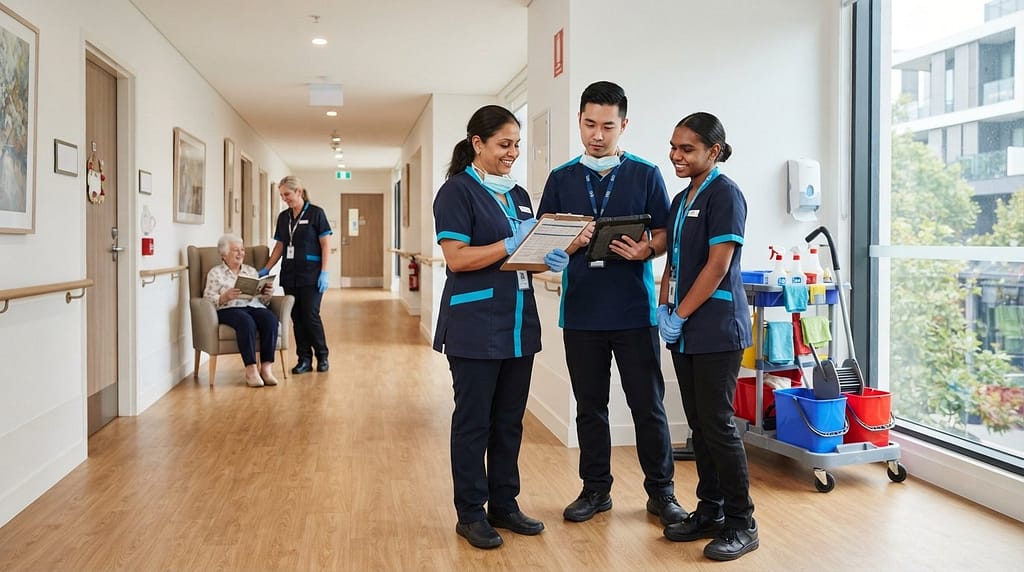
An aged care cleaning tender is fundamentally an infection-control partnership between a residential care provider and a specialised contractor, translating clinical governance into measurable daily routines. Unlike generic commercial contracts, an aged care facility cleaning tender establishes legally binding sanitation benchmarks that directly safeguard human lives. Procurement teams must balance resident dignity with uncompromising clinical standards. These facilities are homes first and foremost, which means cleaning protocols must remain discreet and respectful while maintaining hospital-grade hygiene behind the scenes.
A strong tender explicitly dictates service frequencies tailored to each functional zone. Resident rooms need methodical daily sanitisation that respects personal space. Dining halls require rapid turnover and floor treatments between meal services. High-traffic lounges and entry foyers demand continuous touch-point maintenance to keep shared spaces pristine and safe.
Key Objectives of Residential Care Cleaning Contracts
Every commercial cleaning specification in aged care centres around three primary operational goals:
- Infection prevention: Minimising healthcare-associated infections (HAIs) and halting respiratory outbreaks by embedding proven infection control principles into every shift.
- Regulatory assurance: Maintaining verifiable, audit-ready shift logs and chemical dilution records that satisfy quality assessors without administrative scramble.
- Resident comfort: Eliminating stubborn biological odours and keeping communal areas spotless, creating a fresh, welcoming environment where residents feel at home and families feel confident.
Defining General vs. Clinical Sanitation Zones
A tender document must segment the physical facility into distinct risk zones, directing labour where contamination threats are highest:
- Low-Risk Zones: Administrative corridors, reception desks, and boardrooms. These areas need standard commercial care, including dust control, vacuuming, and general surface sanitisation.
- Medium-Risk Zones: Communal dining rooms, recreational areas, and allied health therapy rooms. These spaces require routine disinfection of shared tables, armrests, and exercise equipment between gatherings.
- High-Risk Zones: Resident ensuites, dirty utility pan rooms, medication suites, and palliative care wings. These spaces require single-use microfibre routines, mandatory chemical dwell times, and clinical disposal procedures to prevent pathogen transfer.
Regulatory Standards and Compliance Criteria for Tenderers
A rigorous aged care facility cleaning tender separates casual commercial cleaners from clinically capable providers. In residential aged care, regulatory compliance isn’t optional paperwork; it’s a daily operational safeguard. Contractors bidding for your facility must demonstrate active adherence to the national Aged Care IPC Guide and have validated Safe Work Method Statements (SWMS) ready before setting foot on site. Many of the required sanitation benchmarks reflect the exacting procedures used in medical centre cleaning, where zero margin for error exists.
Aged Care Quality Standards Alignment
Bidders must show clear compliance pathways for the physical service environment under the Strengthened Aged Care Quality Standards. Providers face intense scrutiny during unannounced regulatory audits. Tenderers should demonstrate:
- Documented cleaning checklists mapped directly to environmental inspection criteria.
- Transparent feedback loops that resolve maintenance or sanitisation defects immediately.
- Strict operational routines that preserve resident privacy and dignity during room cleaning.
Workforce Screening and Legal Vetting
Your tender specifications must demand full transparency regarding on-site personnel. A trustworthy cleaning contractor protects resident safety through meticulous staff vetting. Tender submissions should require evidence of current National Police Certificates, NDIS Worker Screening clearances where applicable, and verified immunisation records. In addition, tenderers must produce up-to-date staff training logs covering infectious waste handling, blood-spill management, and chemical dilution safety.
Chemical Safety and TGA Registration Requirements
Aged care cleaning requires specialised chemistry. Contractors must exclusively utilise hospital-grade disinfectants registered with the Therapeutic Goods Administration (TGA), proven effective against norovirus, influenza, and coronavirus. Every chemical store room must feature an accessible, updated Safety Data Sheet (SDS) register. Bidders must also avoid heavily scented formulations that trigger respiratory irritation among vulnerable residents. If your facility requires experienced clinical sanitation partners who handle these regulatory burdens seamlessly, consider consulting Tidy Masters commercial cleaning services to support your compliance objectives.
Drafting the Scope of Work: Critical Cleaning Protocols
Writing a bulletproof Scope of Work transforms a standard aged care facility cleaning tender into an airtight operational roadmap. A vague scope invites service drift and compliance failures. Instead, your tender specifications should map out five critical protocol tiers: multi-zone colour coding, high-touch disinfection, routine floor maintenance, restorative fabric care, and emergency outbreak surge deployment.
Touchpoint and Environmental Disinfection Protocols
Frequently touched surfaces require methodical attention. Handrails, nurse call pendants, light switches, lift buttons, and bed adjustment rails demand systematic disinfection at least twice daily. Cleaning personnel must adhere strictly to chemical contact dwell times, ensuring disinfectants remain wet on surfaces long enough to destroy resistant pathogens. Every shift must conclude with digital supervisor sign-offs, creating an electronic audit trail for regulatory reviews.
Cross-Contamination Controls and Colour-Coding
To eliminate cross-contamination risks, tenders must mandate strict microfibre and mop colour-coding aligned with the national Aged Care Infection Prevention and Control Guide. Cleaning gear must never cross zone thresholds:
- Red: Sanitary areas, ensuite bathrooms, toilets, and sluice rooms.
- Yellow: Infectious isolation rooms, respiratory outbreak zones, and biohazard cleanups.
- Blue: General administrative areas, corridors, and communal living rooms.
- Green: Kitchen prep spaces, tea stations, and resident dining rooms.
Periodic Floor Maintenance and Restorative Care
Facility flooring takes heavy punishment from mobility aids, spills, and foot traffic. A detailed tender schedules periodic scrub drying, strip-and-seal treatments, and non-slip finishes to keep vinyl walkways clean and slip-free. For soft furnishings, common rugs, and carpeted wings, the contract must incorporate scheduled deep extraction. Utilizing specialized commercial steam cleaning melbourne services removes embedded biological matter, allergens, and persistent odours without lingering moisture.
Outbreak Readiness and Surge Deep Cleaning
When viral gastroenteritis or respiratory illness appears, standard routines won’t suffice. The tender must lock in rapid contractor escalation windows within hours of notification. Personnel must deploy dedicated personal protective equipment (PPE), follow clinical waste bagging procedures, and perform terminal cleaning across all affected rooms and high-risk communal touchpoints before normal service resumes.

How to Evaluate and Score Cleaning Contractor Tender Bids
Selecting the right service partner requires a balanced scoring matrix rather than defaulting to the lowest quote. An aged care facility cleaning tender carries severe clinical stakes. If a contractor underbids by stripping away operational labour hours, resident safety pays the price. Review panels should establish weighted evaluation pillars: 40% clinical capability and infection control history, 30% operational resourcing and staff ratios, 15% quality assurance systems, and 15% commercial pricing.
Assessing Operational Capacity and Staff Ratios
Scrutinise the labour calculations behind every proposal. Superficial speed cleans fail audit standards and spread contaminants. Tender review teams should test submissions against operational realities:
- Room cleaning allocations: Ensure the tenderer assigns sufficient minutes per resident suite to complete thorough sanitisation without rushing.
- Relief personnel pools: Validate that the bidder maintains a pre-vetted, trained backup roster to cover unexpected absenteeism immediately.
- Supervisory oversight: Confirm dedicated area supervisors conduct regular on-site quality spot checks rather than relying purely on remote monitoring.
Quality Assurance Systems and Audit Readiness
Modern clinical cleaning demands verifiable data. Look for contractors utilising objective surface verification, such as ATP bioluminescence testing, to validate bio-burden removal on critical touchpoints. Bidders should provide a cloud-based reporting portal giving facility managers real-time visibility over completed tasks, supervisor sign-offs, and consumable stock levels. Corrective action reporting should include guaranteed rectification turnaround times for any logged issue. Reviewing the criteria for appointing a dependable cleaning company melbourne aged care providers trust will clarify what genuine contractor accountability looks like.
Risk Management and Insurance Verification
Healthcare facilities require comprehensive commercial protection. Contractors must hold verified public liability insurance specifically endorsed for healthcare and aged care environments. Tender panels must confirm active WorkCover certificates, robust incident reporting procedures, and established business continuity plans designed to sustain full staffing levels during seasonal influenza surges or wider public health challenges. Ready to partner with a vetted team that meets every clinical benchmark? Request a compliant cleaning proposal from Tidy Masters today.
Procuring Reliable Aged Care Cleaning Services in Melbourne
Awarding an aged care facility cleaning tender shouldn’t lock you into a frustrating cycle of delayed communications and inconsistent service. Too often, national brokerage firms subcontract jobs out, leaving residential care managers to deal with impersonal call centres and unverified relief crews. Partnering directly with a dedicated Melbourne commercial cleaning provider gives you immediate access to operational decision-makers who understand Victorian healthcare expectations and care about your facility’s reputation.
The Advantage of Dedicated Local Management
Proximity drives accountability. When emergency biohazards occur or sudden clinical spills require urgent sanitisation, local management can coordinate immediate assistance without administrative delays. Direct communication with your regional operations manager keeps service adjustments quick and painless. Dedicated local teams also foster stability; consistent, vetted cleaners become familiar, respectful faces who understand how to work quietly around residents and their daily routines.
Seamless Onboarding and Contract Transition
Transitioning between service providers requires careful operational planning to avoid disrupting resident comfort. A structured onboarding process ensures safety and service continuity from day one:
- Environmental baseline audits: Conducting comprehensive site inspections before commencing work to record existing surface conditions and identify high-priority hygiene risks.
- Customised shift scheduling: Aligning daily floor sweeps, high-touch sanitisation, and waste removal around meal services, clinical rounds, and resident quiet hours.
- Progress review milestones: Establishing structured 30, 60, and 90-day performance check-ins to evaluate operational KPIs and ensure service delivery meets promised scope requirements.
Partnering for Audit Readiness and Safe Living
Unannounced visits from regulatory bodies demand permanent readiness. Your cleaning provider should act as a natural extension of your clinical team, maintaining accessible shift logs and chemical dilution records ready for inspection at any moment. Seamlessly blending daily infection control with comprehensive commercial cleaning protocols ensures every corner of your facility remains safe, fresh, and welcoming. Take the guesswork out of procurement: Contact Tidy Masters for a specialized aged care cleaning proposal designed around your community’s unique compliance and living requirements.
Secure Flawless Environmental Compliance for Your Facility
Executing a successful aged care facility cleaning tender is about far more than managing routine service contracts; it safeguards the health, comfort, and dignity of every resident in your care. When your procurement criteria demand clear clinical governance, strict colour-coded zoning, and realistic staff-to-bed ratios, you eliminate the shortcuts that lead to failed audits and preventable viral outbreaks.
The right cleaning partnership turns daily maintenance into effortless compliance. With specialized healthcare and clinical cleaning expertise across Melbourne, fully vetted personnel, and transparent digital quality assurance reporting, Tidy Masters delivers the dependable rigor your community deserves. You don’t have to face unannounced inspections with uncertainty. Request a Tailored Aged Care Cleaning Consultation with Tidy Masters today and build a safer living environment with complete confidence.
Frequently Asked Questions
What key criteria should be included in an aged care facility cleaning tender?
An aged care facility cleaning tender must include clinical governance standards, multi-zone colour-coded microfibre protocols, and defined high-touch disinfection schedules. The tender should also outline mandatory workforce screening, verifiable staff-to-bed ratios, and digital quality auditing systems. Including clear outbreak escalation plans and Therapeutic Goods Administration chemical parameters ensures bidding contractors can meet stringent infection control benchmarks without service gaps.
How often should an aged care facility undergo deep environmental cleaning?
Aged care facilities should schedule deep environmental cleans quarterly or biannually, alongside immediate terminal cleans when residents relocate. High-traffic communal carpets, dining upholstery, and non-slip vinyl corridors require periodic restorative extraction and machine scrub drying to strip away biological contaminants. Additionally, facilities require one-off deep sanitisation immediately following any declared infectious viral or gastroenteritis outbreak to restore complete clinical safety.
What qualifications and background checks must aged care cleaning staff possess in Australia?
Cleaning personnel in Australian aged care must clear an Australian Federal Police National Police Check and hold an NDIS Worker Screening clearance where mandated. Workers must provide current immunisation histories, including annual influenza and COVID-19 vaccinations. Contractors must also verify comprehensive internal training in biohazard management, infection prevention principles, blood-spill management, and safe chemical dilution before assigning staff to Melbourne residential facilities.
How do cleaning contractors comply with Aged Care Quality Standard 5?
Contractors comply with environmental standards by executing detailed daily cleaning schedules that maintain safe, clean, and comfortable living spaces. Compliance involves documenting shift logs, logging chemical dwell times, and keeping real-time digital auditing trails ready for unannounced regulatory visits. Beyond physical sanitisation, cleaners support resident dignity by respecting personal privacy, reducing equipment noise, and quickly addressing maintenance hazards such as wet floors or worn carpets.
What is the difference between general commercial cleaning and medical-grade aged care cleaning?
Medical-grade aged care cleaning targets microscopic pathogens and cross-contamination rather than mere cosmetic appearance. While standard commercial cleaning focuses on emptying bins, vacuuming, and general wiping, aged care sanitation requires hospital-grade TGA-registered disinfectants, strict four-colour zoning systems, and documented dwell times. It demands trained personnel who understand healthcare infection transmission pathways and work discreetly around frail, vulnerable residents in their permanent homes.
How quickly must a contracted cleaner respond during a gastroenteritis or viral outbreak?
A contracted cleaning partner should mobilise an outbreak surge response within two to four hours of notification. When a facility declares an outbreak, dedicated personnel arrive equipped with clinical PPE, hospital-grade sporicidal disinfectants, and specialized equipment. They execute comprehensive terminal cleans across affected resident suites, dirty utility rooms, and communal touchpoints, creating an immediate containment barrier that stops infectious spread across other facility wings.
Can aged care cleaning tenders include specialized floor maintenance and upholstery steam cleaning?
Yes, a comprehensive aged care facility cleaning tender should bundle specialized periodic maintenance into the routine scope of work. Combining regular housekeeping with scheduled hard floor stripping, non-slip vinyl sealing, and hot-water carpet steam cleaning avoids the expense of juggling multiple external contractors. In Melbourne, experienced commercial providers handle both routine daily clinical sanitation and heavy periodic floor restoration under a unified quality assurance framework.