Aged Care Facility Cleaning Tender: The 2026 Procurement & Compliance Guide
September 23, 2026
The Importance of Hygiene in Childcare Centres: A Practical Guide
September 25, 2026
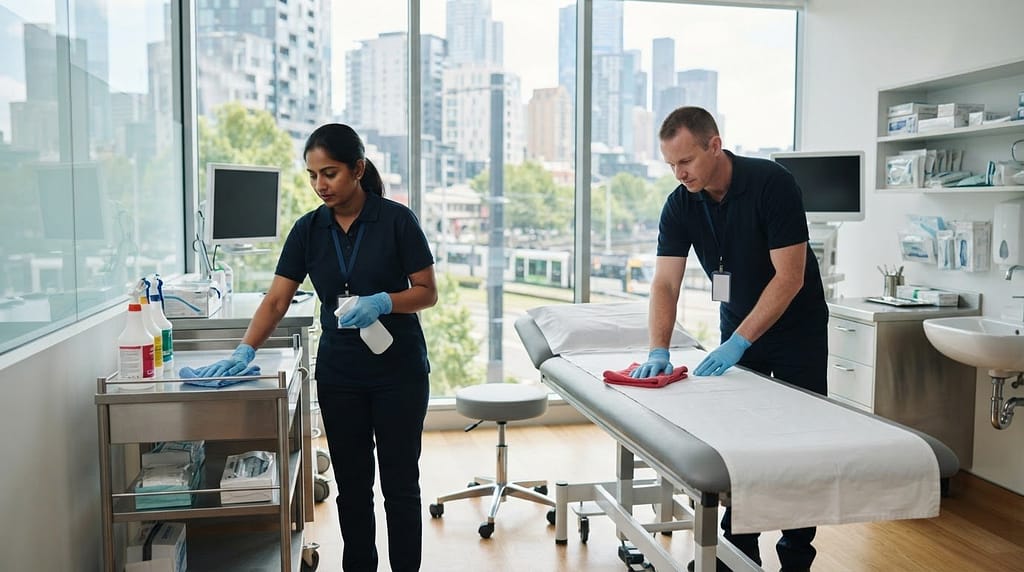
A sparkling consultation room can still fail an infection control audit. If you manage a healthcare practice in Melbourne, you already know the quiet frustration when a regular commercial cleaner wipes down an examination bed with the same cloth used on the reception desk. Clinical environments are not standard offices. Effective specialist medical suite cleaning is clinical risk mitigation, serving as your frontline defence against cross-contamination, healthcare-acquired infections, and compliance breaches under RACGP and NSQHS standards.
You shouldn’t have to spend your evenings auditing treatment surfaces or chasing missing compliance logs. This 2026 Melbourne buyer’s guide equips you to make an informed, confident decision when hiring specialist cleaners. We break down hospital-grade sanitisation protocols, verified TGA-aligned disinfectants, and the exact qualifications your practice needs to guarantee uncompromising patient safety and seamless audit readiness.
Key Takeaways
- Understand why specialist medical suite cleaning focuses on microscopic pathogen eradication and clinical risk management rather than standard cosmetic tidying.
- Master the non-negotiable decontamination protocols, from strict four-colour coding systems to TGA-aligned contact dwell times.
- Use a comprehensive evaluation checklist to verify cleaner credentials, bloodborne pathogen training, and audit trail reliability.
- Learn how to structure custom daily disinfection routines and periodic deep-clean schedules that match your patient volume.
- Discover the operational criteria Melbourne practice managers prioritise when choosing a dependable, accredited local cleaning partner.
Specialist Medical Suite Cleaning vs General Commercial Cleaning
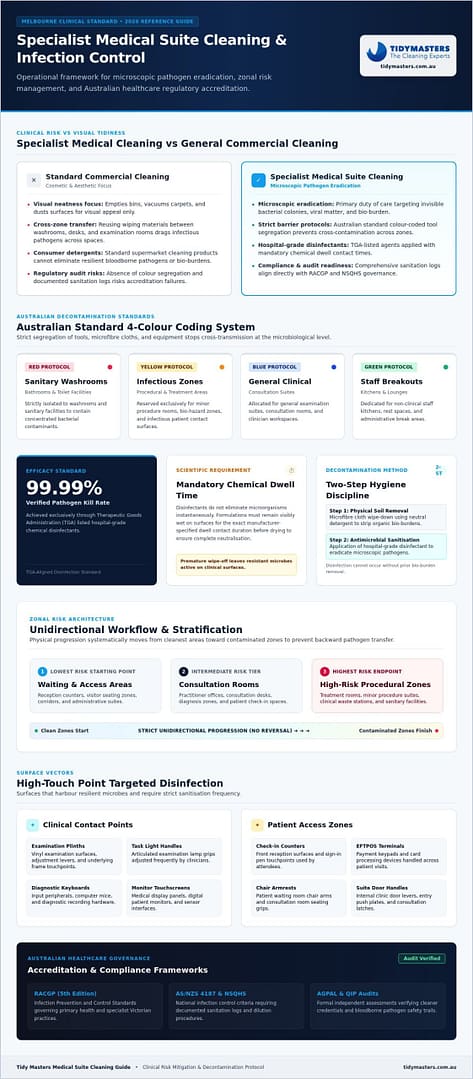
Commercial office cleaning focuses primarily on visual appearance. Cleaners empty waste bins, vacuum carpets, and dust desks so a workplace looks neat. Specialist medical suite cleaning operates on a fundamentally different standard: its objective is microscopic pathogen eradication and active infection prevention. A treatment surface can look spotless while harbouring dangerous bacterial colonies or viral matter. Treating clinical suites like ordinary commercial offices introduces immediate cross-contamination risks. For private healthcare providers across Victoria, clinical sanitation is not a cosmetic task; it represents a primary duty of care that protects vulnerable patients and shields practice owners from regulatory liabilities.
The Clinical Cost of Standard Office Cleaning Shortcuts
High-touch clinical surfaces, such as examination plinths, lamp handles, and diagnostic gear, harbour resilient microbes for days if cleaners cut corners. Untrained janitors often wipe multiple rooms using the same damp rag, dragging infectious pathogens directly into clean consulting zones. Implementing disciplined terminal cleaning protocols prevents this dangerous transfer through systematic decontamination. Standard consumer detergents cannot eliminate bloodborne pathogens or stubborn bio-burdens. Specialist medical suite cleaning demands hospital-grade disinfectants applied with precise contact dwell times to achieve verified pathogen kill rates.
- Surface persistence: Viruses and bacteria survive on unsterilised clinical vinyl, laminate, and plastics for extended periods.
- Cross-zone contamination: Reusing wiping materials between washrooms and consultation suites spreads clinical hazards.
- Ineffective chemical agents: Non-hospital-grade supermarket cleaners fail to neutralise clinical pathogens.
Regulatory Compliance and Australian Healthcare Standards
Victorian specialist suites must adhere to rigorous governance frameworks. Practices must align their physical hygiene routines with RACGP Infection Prevention and Control Standards (5th edition) and national AS/NZS 4187 infection control requirements. Standard commercial cleaning contractors rarely understand these accreditation benchmarks. Without verified sanitation logs, colour-coded tool segregation, and documented dilution procedures, clinics risk audit failures during AGPAL or QIP assessments. Working with qualified healthcare cleaners provides the transparent compliance documentation your practice needs to pass formal inspections with total confidence.
Core Components of Compliant Medical Suite Cleaning Protocols
Specialist medical suite cleaning relies on methodical, repeatable scientific processes rather than guesswork. Every protocol must stop cross-transmission at the microbiological level. This discipline starts with the Australian standard four-colour coding system: red for sanitary washrooms, yellow for infectious or procedural zones, blue for general clinical areas, and green for staff breakout areas. Cleaners must pair this colour segregation with Therapeutic Goods Administration (TGA) listed hospital-grade disinfectants evaluated to achieve a verified 99.99% pathogen kill rate. Disinfectants don’t eliminate pathogens instantly. Cleaners must maintain mandatory chemical dwell times, allowing agents to sit wet on surfaces for the specified contact duration before drying.
Zonal Risk Management: Stratifying Clean Zones vs Contaminated Areas
Clinical layouts demand strict physical stratification. Specialist suites divide into three primary risk tiers: high-risk procedural zones, consultation rooms, and lower-risk waiting areas. Cleaners execute an uncompromising unidirectional workflow, moving systematically from clean zones toward contaminated areas. This methodical progression prevents infectious matter from being transferred backward into clean patient care spaces. Dedicated general waste handling protocols ensure everyday suite rubbish is tied off and removed without contaminating clinical zones.
High-Touch Point Disinfection Protocols
Effective infection control separates physical soil removal from antimicrobial sanitisation. Cleaners first remove surface bio-burden with microfibre cloths and neutral detergents, then apply hospital-grade disinfectants. Targeted protocols focus heavily on high-touch contact points:
- Clinical contact points: Examination plinths, task lighting handles, diagnostic keyboards, and monitor touchscreens.
- Patient access zones: Reception check-in counters, EFTPOS payment terminals, chair armrests, and suite door handles.
Specialised Floor Care and Air Quality Management
Clinical hard floors require microfibre flat-mop systems charged with hospital-grade neutral detergents to trap contaminants without generating airborne dust. High-filtration commercial vacuums equipped with certified HEPA filters safeguard indoor air quality by trapping sub-micron allergens and spores. For fabric seating in reception areas, scheduled professional steam cleaning extracts embedded contaminants that regular vacuuming can’t eliminate. Melbourne healthcare practices seeking rigorous infection control can partner with Tidy Masters to establish these high-standard decontamination workflows.
How to Choose a Specialist Medical Suite Cleaner: Evaluation Checklist
Selecting a commercial cleaning contractor for a healthcare environment requires far greater scrutiny than vetting an office cleaner. Practice managers carry ultimate accountability for facility hygiene and patient welfare. When evaluating candidates for specialist medical suite cleaning, look past generic marketing claims and demand verifiable proof of healthcare competency. A dependable provider acts as a proactive partner, demonstrating transparency through structured training records, certified compliance checklists, and auditable quality assurance systems.
Assessing Healthcare Competency and Staff Onboarding
General janitorial cleaners rarely understand the clinical risks present in medical environments. Healthcare cleaners must receive dedicated instruction in environmental hygiene and bloodborne pathogen protocols. Vetting procedures must confirm that personnel understand the physical boundaries separating general waste from hazardous clinical materials. Prior to assigning staff to your facility, a provider should provide verified compliance documentation covering:
- Clean criminal records: Current National Police Checks for all operatives entering your suites.
- Confidentiality agreements: Signed non-disclosure deeds protecting sensitive patient health information and consulting notes.
- Immunisation compliance: Documented vaccination records aligning with Victorian healthcare occupational health standards.
- Infection control competencies: Formal assessment in chemical handling, personal protective equipment (PPE) application, and cross-contamination mitigation.
Digital Quality Control, Logs, and Audit Trail Verification
Audit readiness depends entirely on consistent documentation. If a sanitisation procedure isn’t recorded, accrediting surveyors treat it as undone. Reliable cleaning partners use digital management platforms that capture GPS-verified sign-ins, time-stamped task checklists, and supervisory sign-offs. These digital logs deliver an unbroken audit trail for formal AGPAL or QIP accreditations. Inquire directly about the company’s escalation protocols. Your provider should maintain a clear, immediate procedure for reporting physical maintenance issues, plumbing leaks, or accidental biohazard containment breaches, ensuring potential clinical hazards are rectified before your first patient arrives.
Structuring Your Customised Medical Suite Cleaning Schedule
A generic cleaning checklist doesn’t protect a busy clinical practice. High patient throughput requires a tailored scope of work aligned with consultation volumes, room turnover rates, and operating hours. Executing specialist medical suite cleaning after hours prevents operational friction. It provides dedicated technicians uninterrupted access to treatment rooms without compromising patient privacy or disrupting doctor workflows.
Daily Sanitation Routines for High-Throughput Practices
Daily cleaning sets your facility’s baseline hygiene defence. Every evening, cleaning teams must methodically reset consultation rooms, procedure spaces, and reception zones before the next morning’s clinics. Core daily procedures include:
- Clinical surface decontamination: Disinfecting examination tables, operator chairs, diagnostic keyboards, and task lamp handles with verified hospital-grade agents.
- Terminal washroom sanitisation: Scouring and decontaminating patient and staff restrooms from top to bottom.
- Consumables replenishment: Restocking hand hygiene stations, paper towels, couch rolls, and clinical-grade hand washes.
- Routine rubbish removal: Clearing non-regulated general waste receptacles, sanitising bins, and installing fresh liners.
Periodic Deep Cleans and Facility Maintenance Schedules
Daily routines manage immediate bio-burden, but scheduled deep cleans preserve the long-term integrity of your clinical infrastructure. Heavy foot traffic gradually erodes protective floor coatings, creating micro-crevices where bacteria multiply. Incorporating scheduled hard floor stripping & sealing keeps vinyl surfaces smooth, non-porous, and impervious to pathogens.
Monthly and quarterly schedules should target high-level ceiling vents, air return grilles, and internal partition glass. Dust accumulation in HVAC diffusers compromises indoor air quality and introduces unnecessary airborne contaminants into sterile consulting rooms. Integrating routine room maintenance into a comprehensive program for medical centre cleaning ensures every corner of your facility satisfies Victorian health standards. To design an infection control schedule tailored to your consulting hours, request a custom site appraisal with Tidy Masters.
Why Melbourne Practice Managers Rely on Tidy Masters
Managing an accredited clinical facility demands total confidence in your environmental hygiene. Established in Melbourne in 2009, Tidy Masters delivers tailored specialist medical suite cleaning designed around the daily realities of modern healthcare. Our disciplined approach removes the administrative burden of sanitation management, allowing practice managers and clinicians to focus entirely on patient outcomes.
Bespoke Care for Melbourne Specialist Consulting Suites
Every medical facility possesses unique layout considerations and patient exposure levels. Tidy Masters supports healthcare providers across Melbourne metropolitan areas and Geelong healthcare precincts with dedicated, hospital-grade cleaning programs. We deploy consistent cleaning teams to your practice rather than rotating unfamiliar subcontractors. This consistency preserves strict patient confidentiality, builds operational familiarity with your consulting rooms, and ensures precise adherence to site protocols.
Quality control remains active and measurable. Experienced supervisors conduct routine on-site inspections using structured clinical checklists. They review surface decontamination, chemical contact times, and stock levels to guarantee your suites remain consistently audit-ready.
- Local accountability: Australian-owned commercial cleaning partner supporting Victorian clinics since 2009.
- Dedicated healthcare teams: Fully vetted, police-checked cleaners trained in infection prevention and clinical site etiquette.
- Supervisory oversight: Regular quality audits verifying compliance with RACGP and NSQHS environmental standards.
- Regional coverage: Reliable service delivery across greater Melbourne and Geelong medical corridors.
Seamless Onboarding and Tailored Site Consultations
Switching your cleaning provider shouldn’t cause operational friction. The onboarding process begins with a comprehensive, on-site walkthrough of your premises. We assess your physical floor plan, identify high-touch clinical surfaces, review procedural zones, and map cleaning schedules around your patient consultation hours. Whether you require evening sanitisation or early morning resets, the scope aligns with your practice flow.
Protect your patients, support your clinicians, and safeguard your accreditation records with proven specialist medical suite cleaning. Contact the Tidy Masters team today to arrange a confidential on-site medical suite assessment for your practice.
Secure Seamless Clinical Compliance for Your Melbourne Practice
Maintaining flawless infection control doesn’t have to be an administrative headache. Clinical excellence demands more than surface-level appearance; it requires rigorous pathogen eradication, strict colour-coded segregation, and verifiable digital documentation that easily satisfies RACGP and NSQHS audits. Investing in dedicated specialist medical suite cleaning protects your patients, safeguards your clinical reputation, and restores your team’s focus entirely to patient care.
As an Australian-owned provider established in Melbourne in 2009, Tidy Masters delivers the dependable commercial rigor your healthcare environment deserves. Our fully vetted, police-checked cleaning specialists enforce strict TGA-aligned sanitisation standards and proactive supervisory oversight on every visit. Take the uncertainty out of practice compliance. Request a Tailored Medical Suite Cleaning Consultation today and provide your consulting suites with the disciplined, professional maintenance they require.
Frequently Asked Questions
How does specialist medical suite cleaning differ from ordinary commercial office cleaning?
Specialist medical suite cleaning focuses on active infection control and pathogen eradication rather than cosmetic tidying. Standard commercial cleaners concentrate on visual tasks like emptying wastebaskets and vacuuming floors. Specialist cleaners execute clinical decontamination using TGA-listed hospital-grade disinfectants, strict contact dwell times, and mandatory colour-coded cloths. This targeted approach actively eliminates microbial hazards on examination tables, diagnostic equipment, and patient touchpoints to prevent cross-contamination.
What Australian standards govern environmental cleaning in private medical suites?
Environmental cleaning in private suites is governed by national guidelines and Victorian health standards. Primary benchmarks include the RACGP Infection Prevention and Control Standards (5th edition), the National Safety and Quality Health Service (NSQHS) Standards, and AS/NZS 4187. In Victoria, practices must also adhere to state environmental health guidelines. These frameworks require verifiable sanitisation logs, strict colour-coded segregation, and the documented use of ARTG-registered hospital-grade disinfectants.
Do cleaners in medical suites handle biohazardous waste or sharps disposal?
Commercial cleaning operatives do not handle regulated biohazardous waste or sharps containers. Specialist cleaners manage general facility rubbish removal, including emptying lined office bins and non-clinical reception waste receptacles. Regulated clinical waste and used sharps require handling by clinical staff and disposal through licensed medical waste contractors. This strict boundary protects cleaning personnel and ensures compliance with Victorian environmental protection regulations.
What chemicals and disinfectants are approved for use in specialist clinical rooms?
Specialist clinical rooms require disinfectants evaluated and listed on the Australian Register of Therapeutic Goods (ARTG) as Hospital Grade. Approved formulations include broad-spectrum bactericidal and virucidal solutions, such as accelerated hydrogen peroxide and quaternary ammonium compounds. Cleaners must maintain precise dilution ratios and manufacturer chemical dwell times to achieve a verified 99.99% pathogen kill rate without causing surface degradation on medical plinths or diagnostic gear.
How do you ensure cleaning staff do not compromise patient confidentiality?
Patient privacy is safeguarded through structured staff vetting, background checks, and non-disclosure agreements. Cleaning personnel undergo National Police Checks and complete training regarding Australian privacy principles. Teams work methodically around clinical desks, observing a strict hands-off policy regarding patient charts, pathology forms, and digital screens. This protocol guarantees your consulting suites remain secure and confidential during every after-hours visit.
Can specialist cleaning schedules be customised around morning and evening patient consults?
Specialist medical suite cleaning schedules can be tailored directly around your practice hours. Most Melbourne specialist suites schedule cleaning early in the morning or discreetly after hours. This flexible scheduling ensures consulting rooms, treatment suites, and patient reception lounges are thoroughly decontaminated without interrupting doctor appointments or disrupting patient care. Scopes can also scale dynamically between high-volume procedural suites and standard consultation spaces.
What documentation is provided to support healthcare practice accreditation audits?
Accredited cleaning partners provide digital quality logs, time-stamped operational checklists, and supervisory audit reports. These records document daily disinfection routines, scheduled periodic floor maintenance, and chemical safety data sheets. Providing these transparent records during formal AGPAL or QIP surveys delivers concrete evidence that your practice continuously adheres to RACGP environmental infection control standards, ensuring smooth accreditation sign-offs.