
Signs You Need a New Office Cleaner: 8 Checks for 2026
October 3, 2026
Warehouse Racking Cleaning: A Practical Checklist for Melbourne Facilities
October 5, 2026
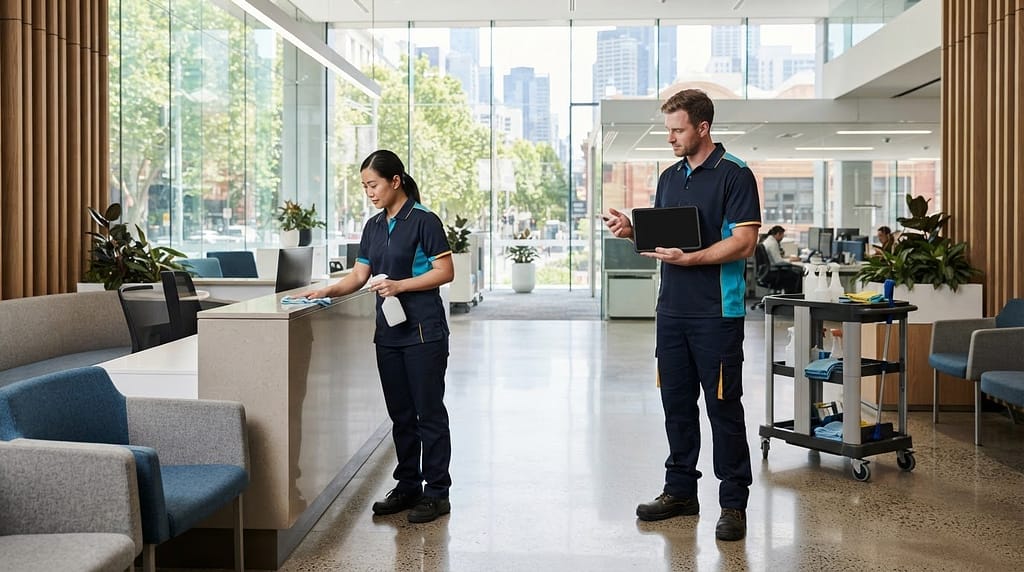
A generic task list won’t keep every government building consistently clean. Effective government building cleaning services start with the site itself: its public areas, staff spaces, daily foot traffic and operating hours. The plan also needs to fit around the work happening inside, not disrupt it.
Dependable cleaning starts with clear responsibilities. Set out what gets cleaned, how often, who oversees the work and how issues are communicated. Document site procedures and check applicable requirements against the relevant contract documents so the cleaning plan reflects the facility’s actual arrangements.
This guide explains how to assess a cleaning scope, account for different building uses and schedules, and establish communication and accountability. A tailored plan is more practical than a one-size-fits-all checklist. Tidy Masters provides commercial cleaning across Melbourne, including for offices, schools, medical centres and aged-care facilities. Recurring and one-off cleaning options can be shaped around a site’s needs, helping keep spaces clean and welcoming while daily operations continue.
Key Takeaways
- Shape the cleaning scope around each area’s use, separating routine tasks from periodic deep cleaning and specialist maintenance.
- Assess government building cleaning services by comparing the proposed scope, schedule, supervision and service-review process.
- Document site access steps and operational constraints so cleaning can be coordinated with occupancy and public-facing activity.
- Map each zone to its tasks, frequency, responsible party and review method to make service expectations easier to track.
- Use completed tasks, reported issues and follow-up actions to review performance and refine the cleaning plan over time.
What should government building cleaning services cover?
Government building cleaning is a planned service shaped by who uses the facility, which spaces it contains and how it operates. A busy public counter, a staff office and a meeting room have different cleaning needs. A clear scope turns those differences into practical tasks and priorities instead of relying on a generic checklist.
At its simplest, the process of cleaning supports hygienic, safe and presentable spaces by removing unwanted substances. For a government facility, the plan should also reflect documented site procedures, access arrangements and operational requirements. The scope should be specific to the building, not based on floor area alone.
Which areas belong in a government building cleaning scope?
Start by mapping the spaces: entrances, reception areas, offices, meeting rooms, amenities and shared areas such as kitchens or corridors. Then consider how people use each one. Public-facing areas may need particular attention to visible presentation, while staff workspaces and shared amenities have different practical priorities. Identify high-traffic floors and frequently touched surfaces so the scope can specify suitable cleaning attention.
Consider the facility’s daily pattern. A building with regular public appointments may have different cleaning priorities from one used mainly by staff. Base the tasks and frequency on actual traffic and activities rather than assuming every government site needs the same schedule.
How does routine cleaning differ from periodic deep cleaning?
Routine cleaning maintains day-to-day cleanliness between deeper visits. Depending on the agreed scope, recurring tasks may include cleaning floors, wiping surfaces, attending to amenities and removing general rubbish. Periodic deep cleaning addresses needs that build over time or require a more intensive visit. Separate attention may also be scheduled for carpets, hard floors or windows, depending on their condition and use.
Keep these activities distinct in the plan. Specify which tasks recur, which are periodic and how each fits the building’s operating requirements. Tidy Masters offers recurring cleaning and one-off deep cleaning tailored to facility needs. For broader service context, read the commercial cleaning services FAQ.
How to assess government building cleaning providers in Melbourne
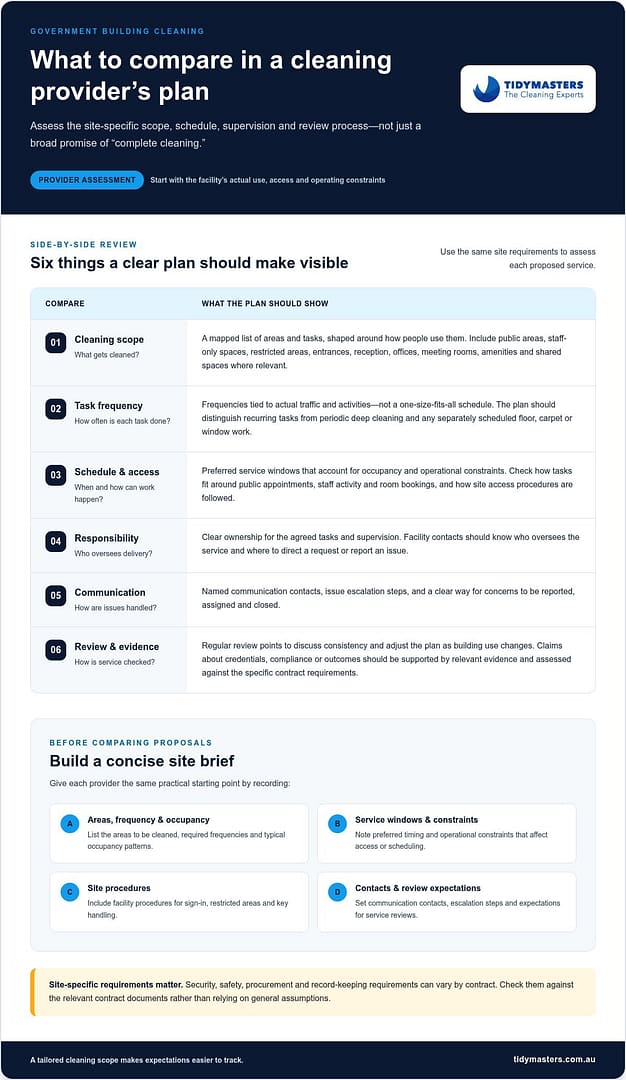
A useful assessment starts with the site, not a broad promise of “complete cleaning”. Before comparing government building cleaning services, document the building’s access process, occupancy patterns and operational constraints. Include public areas, staff-only spaces, restricted areas and periods when cleaning could interfere with building activities. This gives each proposed plan the same practical starting point.
Compare more than task lists. Check how the proposed schedule fits the site, who supervises delivery, how staff communicate and how service is reviewed. A well-defined arrangement makes responsibilities clear: the cleaning team knows the agreed tasks, and facility contacts know where to direct a request or report an issue.
What should a government cleaning services brief include?
A concise brief makes the building’s requirements easier to assess and discuss. Record:
- Areas to be cleaned, required frequencies and typical occupancy patterns.
- Preferred service windows and operational constraints that affect access or timing.
- Facility-supplied procedures for sign-in, restricted areas and key handling.
- Communication contacts, issue escalation steps and expectations for service reviews.
Use the facility’s own documents to define site procedures. Security, safety, procurement and record-keeping requirements can vary by contract, so assess them against the relevant contract documents instead of relying on general assumptions.
How can buyers compare service quality and accountability?
Match each proposed task list to the building’s documented priorities. Check that the plan explains what is scheduled, who oversees delivery and how recurring concerns are handled. Claims about credentials, compliance or outcomes should be supported by relevant evidence and assessed against the requirements for the specific contract.
Agree on how issues are reported, assigned and closed, then set regular review points to discuss consistency and adjust the plan as building use changes. Tidy Masters provides commercial cleaning in Melbourne for offices, schools, medical centres and aged-care facilities, with plans tailored to each site’s needs. For broader selection guidance, see this Melbourne commercial cleaning company guide. You can also explore Tidy Masters’ Melbourne cleaning services.
How should cleaning services work around government building operations?
Cleaning should fit the building’s daily rhythm, not compete with it. Start by briefing the cleaning team on the site and agreeing on the scope. Schedule tasks around occupancy, then review how the arrangement is working. This gives facility contacts and cleaning staff a shared understanding of what happens, where and when.
For government building cleaning services, planning should account for public-facing activity as well as staff operations. A reception area may be busiest during appointment periods, while meeting rooms may only be available between bookings. Reflect these patterns in the schedule by assigning tasks to suitable windows and reducing avoidable disruption.
How can cleaning schedules minimise disruption?
Map each task to the building’s hours, busy periods and area availability. Some work, such as attending to shared spaces, may be possible during occupancy when access and activity allow. Tasks that create noise, restrict movement or require an area to be clear may be better scheduled for a quieter window agreed with the facility.
Build the schedule around known routines, then set a simple process for changes. If a meeting room becomes unavailable or public activity shifts, the facility contact and cleaning supervisor should communicate the adjustment, its effect on scheduled tasks and any follow-up needed. Make changes clear to everyone responsible for delivery.
How should access, safety and site procedures be coordinated?
Use the facility’s own access instructions, induction processes and site documents as the source of truth. These may explain sign-in steps, restricted areas, key handling or how to manage spaces that are temporarily unavailable. Don’t assume that procedures at one government building apply to another.
Before service begins, agree how updates will reach the cleaning team. Identify who communicates that a room is closed, how that notice is shared and whether the affected task should be rescheduled. Check applicable safety, security and record-keeping requirements against current contract and site documentation.
Good reporting closes the loop. When a task is missed or a site need changes, staff should know how to report it, who will take responsibility and how the outcome will be recorded or communicated. Regular service reviews can identify recurring issues and help refine schedules while keeping the agreed scope in view. With clear coordination, cleaning can support the facility as its core work continues.
What should a government building cleaning plan measure and review?
A useful review makes service delivery visible. For government building cleaning services, track whether agreed tasks are completed, what issues are reported and what follow-up occurs. Keep measures practical and tied to the building’s scope. The purpose is to support clear discussion and informed adjustments, not to promise a particular result.
Which service indicators help assess cleaning consistency?
Use a simple table to connect the plan to day-to-day delivery. Include the building zone, agreed tasks, frequency, responsible party and review method. For example, a shared amenities row might list scheduled tasks, their expected frequency and how completion or exceptions are recorded.
Useful indicators include:
- Task completion: Record completed scheduled work and note exceptions.
- Reported issues: Log the location, task and date so recurring concerns are easier to identify.
- Follow-up actions: Note who is responsible for addressing an issue and whether the agreed follow-up has taken place.
Look for patterns rather than treating each report in isolation. If the same concern appears repeatedly in one area, consider whether the task, frequency, access window or communication process needs adjustment. Keep records factual and focused on the agreed service.
How often should the cleaning plan be reviewed?
Set review intervals to suit the contract arrangements and the building’s operations. Also allow for a review when occupancy, access or the use of a space changes. For instance, a room used for a new purpose may need different cleaning tasks or timing. Agree who provides feedback and how proposed changes are recorded.
Use feedback to refine the service plan, then make sure updates are understood by the people coordinating and delivering the work. This keeps the scope relevant as the facility changes and preserves a clear record of decisions and follow-up. For related workplace considerations, see the office cleaning guide for Melbourne.
Once your scope, review priorities and site procedures are clear, discuss a tailored cleaning plan with Tidy Masters for your Melbourne facility.
Choose government building cleaning services with a clear next step
Choosing government building cleaning services is easier when the decision is grounded in a clear site brief. Define the facility’s needs, document its procedures, compare how proposed services will be delivered and agree on how they’ll be reviewed. This gives everyone a practical basis for discussing the scope and keeps expectations clear from the outset.
What information should buyers prepare before requesting a proposal?
A useful brief doesn’t need to be complicated. Share enough detail to show how the building works and what the cleaning arrangement needs to support. Include:
- Building overview: Facility type, approximate areas, operating hours and anticipated service frequency.
- Site procedures: Access and sign-in instructions, restricted areas, relevant contacts and known scheduling constraints.
- Cleaning priorities: Required tasks and priority areas, along with preferred communication and review arrangements.
Where requirements are set by a contract or facility procedure, include the relevant documents or instructions in the brief. This helps shape a scope around the site rather than assumptions. If some details are still being finalised, identify them so they can be resolved during planning.
How can Tidy Masters support a tailored cleaning plan?
Tidy Masters tailors commercial cleaning scope and scheduling around each facility’s spaces, use and operating requirements. Planning considers what needs to be cleaned, how frequently tasks should be scheduled, and how communication and service reviews will work. This approach can account for public-facing areas and staff spaces without treating every facility as though it operates in the same way.
Tidy Masters has provided cleaning and property maintenance in Melbourne since 2009, with experience across offices, schools, medical centres and aged-care facilities. This commercial background brings practical context to planning around different users, spaces and routines. A clear scope and communication process help keep the service arrangement aligned as needs evolve.
Bring your building overview, site procedures and priority tasks together, then discuss a tailored cleaning plan with Tidy Masters. A clear starting brief makes it easier to plan a practical arrangement for your Melbourne facility.
Set up a cleaning plan that fits your building
Reliable government building cleaning services start with a clear picture of the facility: its spaces, users, operating hours and site procedures. Define the scope, coordinate cleaning around daily activity, then agree how completed tasks, reported issues and follow-up will be reviewed. These steps provide a clear basis for service communication and ongoing adjustments.
Tidy Masters is a Melbourne-based cleaning and property-maintenance business operating since 2009. Its commercial cleaning includes offices, schools, medical centres and aged-care facilities, with recurring cleaning and one-off deep-cleaning options tailored to site needs. This experience informs a considered approach to different building needs and routines.
Ready to discuss a plan for your facility? Discuss a tailored government building cleaning plan with Tidy Masters. A well-defined scope is a practical first step towards cleaner, more welcoming spaces and a service arrangement that supports your building’s daily operations.
Frequently Asked Questions
What do government building cleaning services typically include?
Government building cleaning services typically cover agreed tasks across public areas, staff spaces, amenities and shared rooms. The scope may include routine floor and surface cleaning, attention to frequently touched areas and general rubbish removal. Exact tasks depend on the building’s use, occupancy and documented site procedures. Periodic work, such as carpet steam cleaning, window cleaning or hard-floor maintenance, can be scheduled separately to suit the facility’s needs.
How often should a government building be professionally cleaned?
Cleaning frequency should reflect how each space is used, how much foot traffic it receives and the facility’s operating pattern. A busy reception or shared amenity may need more frequent attention than a room used occasionally. Set frequencies by zone in the cleaning scope, then review them if occupancy or building use changes. This is more practical than applying one frequency across every area.
Can cleaning be scheduled outside public opening hours?
Cleaning windows can be planned around public opening hours and building activity. Some tasks may fit during quieter periods, while work that restricts access or interrupts operations may suit another agreed window. Account for site access instructions, staff activity and public-facing services. Agree and communicate timing arrangements clearly so facility contacts and cleaning staff understand when and where work is expected.
How do you manage cleaning in restricted-access government areas?
Use the facility’s documented access procedures as the source of truth. The brief should identify restricted spaces, applicable sign-in or induction processes, key-handling instructions and the facility contact responsible for access information. Agree how staff will receive updates if an area becomes temporarily unavailable or its access status changes. Base the cleaning plan on the relevant facility and contract documents, as requirements can differ between sites.
What should a government building cleaning brief include?
A useful brief sets out the building type, approximate areas, operating hours and anticipated cleaning frequency. It should also describe priority zones, access procedures, restricted spaces, scheduling constraints and site contacts. Include required tasks and preferred communication and review arrangements. Clear details help shape a plan around actual site operations and give both parties a shared reference for discussing delivery and changes.
How can a government department assess cleaning service quality?
Assess service against observable, agreed measures rather than general claims. Track scheduled tasks and exceptions, log reported issues by location and date, and record follow-up actions and their status. Review recurring concerns with the cleaning provider and decide whether the scope, timing or communication needs adjustment. Keep the process straightforward, with clear responsibility for reporting and follow-through. This creates a practical record of service discussions without assuming a particular performance outcome.
Are government building cleaning requirements the same across Victoria?
No, requirements can vary according to the facility, its operations and the terms of its contract. A government office, school or public-facing service site may have different cleaning priorities, access procedures and documentation needs. Develop the scope around the specific building and check applicable safety, security, procurement and record-keeping requirements against current site and contract documents. Don’t assume that a procedure used at one Victorian facility applies to another.