
Dental Clinic Cleaning in Melbourne: A Practical Guide
October 2, 2026
Government Building Cleaning Services: A Melbourne Buyer’s Guide
October 4, 2026

What if one poor clean isn’t the real problem, but part of a pattern? The signs you need a new office cleaner rarely come down to one dusty ledge or missed bin. They’re more likely to show up as the same areas being overlooked, staff complaints resurfacing, or cleaning visits and communication becoming unreliable.
It’s reasonable to give a cleaner the chance to put things right. An occasional miss can happen, and changing providers takes planning. Look for repeated, observable issues and whether clear feedback leads to lasting improvement.
This guide walks you through eight practical checks to help distinguish a one-off lapse from an ongoing service problem. You’ll learn when to reset expectations, when it may be time to move on, and how to plan a change with minimal disruption to your Melbourne workplace. If your needs have shifted, tailored office cleaning or a one-off deep clean may also help get the workplace back on track.
Key Takeaways
- Use the signs you need a new office cleaner checklist to spot recurring misses, declining results and other patterns worth documenting.
- Compare how often an issue occurs, its impact on the workplace and the response to feedback before deciding whether to reset expectations or change cleaners.
- Plan a smoother transition by recording cleaning priorities, building access needs and the routines of your Melbourne workplace.
- A tailored cleaning arrangement can reflect how your office is used, which areas need priority and whether a one-off deep clean could help reset the space.
Signs You Need a New Office Cleaner: Is It a Pattern or One Bad Clean?
Recurring cleaning frustrations can make a change feel overdue. But replacing a cleaner takes planning, and one missed task doesn’t necessarily mean the arrangement has failed. A more useful warning sign is a problem that repeats across scheduled visits or remains unresolved after you’ve raised it.
Consider the difference: a bin missed once may be an isolated lapse. The same bin left full on several visits, or missed tasks appearing in multiple shared areas, points to a pattern worth addressing. The scope of commercial cleaning can vary by workplace, so compare results with the tasks and priorities agreed for your office, rather than an assumed one-size-fits-all standard.
How many missed cleans suggest a recurring problem?
There’s no universal number of misses that proves a service is underperforming. Frequency and repetition matter more than a single incident. Compare what you observe across scheduled visits: does the same area keep being missed, or does the issue move around and improve after feedback? A short record can reveal a pattern more clearly than relying on memory.
For each concern, note the date, location, task and impact. For example: “Tuesday, meeting room, table not wiped; room was used for a client meeting.” Record whether you reported it and what changed afterwards. These details help distinguish a recurring service gap from a one-off oversight and give you a clear basis for discussing expectations.
Which office cleaning problems deserve attention first?
Start with issues that affect shared spaces, staff experience or your workplace’s professional appearance. Repeatedly dirty kitchen surfaces, dusty reception furniture or overflowing general-use bins are visible concerns, especially when employees and visitors use those areas. A lingering odour or persistent dust may also need investigation, rather than another quick surface tidy.
Separate presentation concerns from hygiene issues that need prompt attention. A streak on a low-traffic window is different from a shared surface that appears unclean and is used throughout the workday. If your workplace is a medical centre, school or another specialist setting, cleaning priorities should suit the environment and its established guidance.
Use the checks that follow to assess the wider pattern, not to judge a service on one imperfect visit. Record what happened, where it happened and how it affected staff or daily operations. That evidence will help you decide whether the signs you need a new office cleaner are persistent, or whether a clear reset of priorities could put the arrangement back on track.
Eight Signs Your Office Cleaner May No Longer Be Meeting Expectations
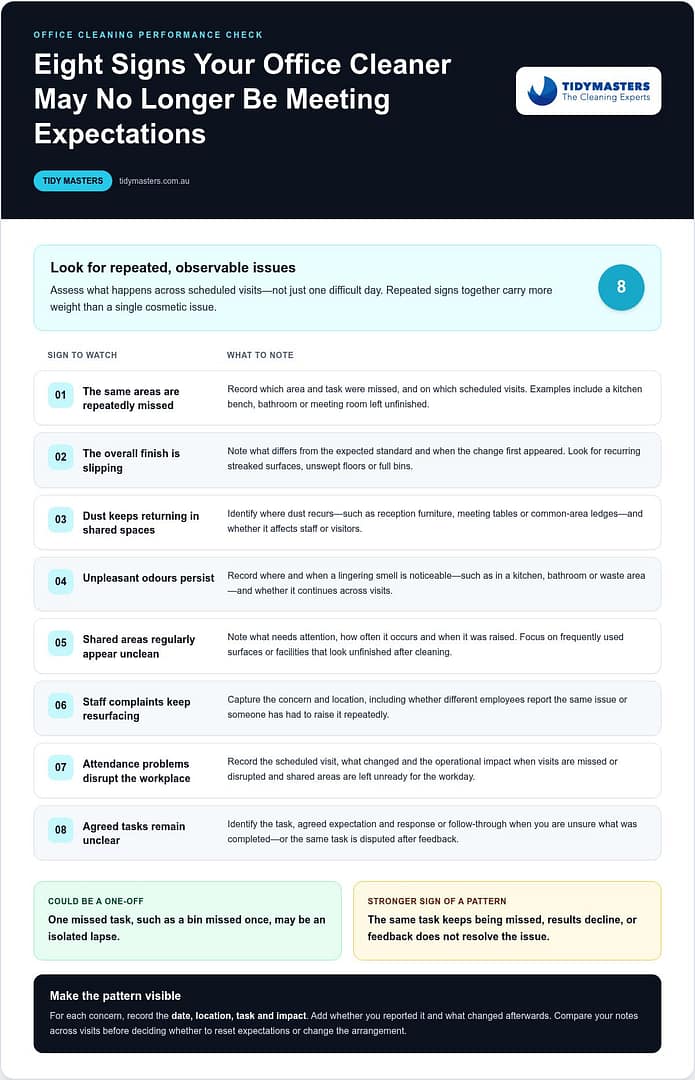
Use this checklist to assess what happens across scheduled visits, not just what you notice on one difficult day. For each concern, record the date, location, agreed task and effect on staff or daily operations. Several repeated signs together carry more weight than one cosmetic issue.
- The same areas are repeatedly missed. A kitchen bench, bathroom or meeting room is left unfinished on multiple visits. Note: which area and task were missed, and on which scheduled visits?
- The overall finish is slipping. Rooms that were previously clean now regularly have streaked surfaces, unswept floors or full bins. Note: what differs from the expected standard, and when did you first notice the change?
- Dust keeps returning in shared spaces. Reception furniture, meeting tables or common-area ledges are visibly dusty after cleaning. Note: where does dust recur, and does it affect staff or visitors?
- Unpleasant odours persist. A lingering smell in a kitchen, bathroom or waste area remains despite scheduled cleaning. Note: where and when is it noticeable, and does it continue across visits?
- Shared areas regularly appear unclean. Frequently used surfaces or facilities look unfinished after cleaning, affecting staff confidence in the space. Note: what needs attention, how often does it occur, and when was it raised?
- Staff complaints keep resurfacing. Different employees report the same cleanliness concern, or the same person has to raise it repeatedly. Note: capture the concern, location and whether it was reported before.
- Attendance problems disrupt the workplace. Visits are repeatedly missed or disrupted, leaving shared areas unready for the workday. Note: record the scheduled visit, what changed and the operational impact.
- Agreed tasks remain unclear. You’re unsure what was completed, or the same task is repeatedly disputed after feedback. Note: identify the task, the agreed expectation and what response or follow-through occurred.
A single dusty ledge may be a one-off. A pattern of missed tasks, declining results and unresolved feedback is stronger evidence that the arrangement needs attention. Compare your notes across visits and consider whether workplace needs have changed. If they have, tailored office cleaning can align priorities with how your Melbourne workplace is used.
Should You Replace Your Office Cleaner or Reset the Cleaning Arrangement?
A disappointing result doesn’t automatically mean you need a new cleaner. First, compare what was expected with what happened, how the issue affected the workplace and whether clear feedback led to a practical improvement. The judging and assessing cleaning performance guidance from ISSA also highlights the value of evaluating cleaning against defined standards, rather than relying on a general impression.
| Situation | Evidence and workplace impact | Reasonable next step |
|---|---|---|
| Isolated issue | One task is missed, with no wider pattern and little ongoing disruption. | Raise the specific miss and monitor the next scheduled visits. |
| Correctable scope gap | Expectations have changed, or the current task list no longer fits how the office is used. | Clarify priorities, access or timing, then review the results. |
| Repeated unresolved failure | Important problems recur after clear feedback and affect staff, visitors or daily operations. | Consider whether changing cleaners is the more practical option. |
When might a service reset solve the problem?
A reset makes sense when the arrangement and the workplace have drifted out of step. A growing team may use the kitchen more heavily, meeting rooms may be booked throughout the day, or access arrangements may limit which areas can be reached during a visit. These factors can create a mismatch without proving that the cleaner is unwilling or unable to meet expectations.
Write down updated priorities, including which spaces matter most and what tasks are expected. Discuss relevant access or scheduling constraints, then compare the results against those priorities over subsequent visits. If the office needs a broader reset, a one-off deep clean may help address built-up dirt before a tailored ongoing plan takes over.
When does the evidence point towards changing cleaners?
Consider a change when the same important issues return after you’ve clarified expectations and allowed a reasonable opportunity to address them. Give greater weight to problems that repeatedly affect shared spaces, staff experience or the professional presentation of the office than to a minor, isolated cosmetic miss.
Keep your decision grounded in a simple record: what went wrong, how often it recurred, what impact it had and how the cleaner responded. If the evidence shows a persistent service failure despite clear feedback, the signs you need a new office cleaner may be strong enough to plan a transition. If the evidence instead points to unclear priorities or changed workplace needs, reset the arrangement first and assess whether the outcome improves.
How to Change Office Cleaners Without Disrupting Your Melbourne Workplace
A planned handover helps protect daily routines and gives a new cleaning arrangement a clear starting point. If the signs you need a new office cleaner have become a consistent pattern, use these steps to move from decision to transition with less disruption.
- Document needs, access and priorities. List the rooms and tasks that matter most, recurring problem areas, preferred cleaning windows and relevant site instructions. Include how staff use shared spaces such as kitchens, bathrooms and meeting rooms.
- Map the workplace routine. Note operating hours, occupancy patterns and high-use areas. In a Melbourne office, building entry procedures, shared facilities and access restrictions can affect how a cleaning visit fits around normal operations.
- Prepare a clear handover. Share relevant information about the site, priority tasks and access process with the incoming cleaning team. Keep keys, alarm details and other security information within your workplace’s approved access procedures, and provide only what’s needed.
- Agree how communication will work. Set a straightforward process for reporting missed tasks, raising concerns and sharing relevant updates. Make sure the person responsible for the site knows where to direct feedback.
- Plan the first clean and review. Decide which areas need attention first and how you’ll assess the result. If the office has accumulated dirt or needs a fresh start, a one-off deep clean may help reset the space before regular priorities take over.
What should an office manager prepare before the change?
Keep the handover practical. Identify rooms that support daily operations, such as reception, staff kitchens and meeting spaces, then note the essential tasks for each. Add recurring concerns and explain how the space is used. An office cleaning checklist can help organise priorities and make the agreed scope easier to follow.
Give access details the same care as cleaning instructions. Record building entry arrangements and relevant site procedures, then share them through appropriate workplace channels. Avoid circulating sensitive access information more widely than necessary.
How can Melbourne businesses maintain continuity during a change?
Coordinate the transition around occupancy and operating hours, and give extra attention to shared or high-use areas. A clear start date, agreed priorities and a known contact for feedback can reduce confusion for staff and building contacts. Review early results against the documented needs, then refine the plan if office use or priorities have changed.
For a tailored approach to your Melbourne workplace, see Tidy Masters office cleaning.
What a More Reliable Office Cleaning Arrangement Should Deliver
A dependable cleaning arrangement should make the essentials clear: which tasks matter most, how often they’re expected and how concerns will be communicated. Consistency comes from agreed priorities that fit the workplace, not a generic task list that overlooks how the office is used.
How should office cleaning reflect the way your workplace operates?
Start with the pattern of daily use. A busy kitchen or shared bathroom may need different attention from a quiet meeting room. Occupancy, visitor traffic, operating hours and access arrangements all shape which areas should take priority and when cleaning can happen with minimal interruption.
The service scope should be easy to understand. Staff and the cleaning team should know which spaces and tasks are included, what takes priority, and how to raise a concern if an agreed task is missed. As your team or use of the office changes, revisit those priorities so the cleaning plan stays relevant. A Melbourne office cleaning guide can provide broader context for planning a suitable arrangement.
What can Tidy Masters help Melbourne offices address?
Tidy Masters is a Melbourne commercial cleaning and property maintenance company, privately owned and operated in Australia. Its tailored office cleaning is designed around commercial workplaces, helping align regular cleaning priorities with office size, shared facilities and operating patterns.
If accumulated dirt or a change in workplace use calls for a fresh start, a one-off deep clean can help reset the space before ongoing tasks continue. The aim is a clear, workable arrangement, with agreed priorities and a straightforward way to discuss changing needs.
If the signs you need a new office cleaner point to a need for a more tailored arrangement, learn about tailored office cleaning from Tidy Masters.
Set Your Melbourne Office Up for a Cleaner, More Reliable Routine
One missed task doesn’t necessarily mean it’s time to switch. Look for issues that repeat, affect staff or workplace presentation, and remain unresolved after you’ve clarified expectations. Those patterns are the clearest signs you need a new office cleaner. If priorities have changed, a service reset may be enough. If important problems keep returning, a planned transition can help restore confidence in your cleaning arrangement.
Start with clear priorities, practical access arrangements and a handover that fits your team’s routine. The right plan should reflect how your office is used, not force your workplace into a generic schedule. A one-off deep clean may also help reset a space before ongoing cleaning begins.
Tidy Masters provides commercial cleaning and property maintenance in Melbourne, including tailored office cleaning and one-off deep cleans. Discuss tailored office cleaning with Tidy Masters and take a considered next step towards a cleaner, more dependable workplace.
Frequently Asked Questions
What are the clearest signs you need a new office cleaner?
The clearest signs are repeated missed areas, declining results, persistent odours or dust in shared spaces, unreliable attendance, unresolved feedback and confusion about agreed tasks. The signs you need a new office cleaner usually form a pattern, rather than appearing in one imperfect clean. Record dates, locations and effects on staff or daily operations. If important problems continue after you’ve clarified expectations, the evidence may point towards changing the arrangement.
How many cleaning complaints should trigger a change?
There’s no universal number of complaints that should trigger a change. Consider whether concerns recur, involve the same important tasks and affect staff or workplace operations. A single complaint about a minor miss may need a quick correction, while repeated reports about an unclean shared area deserve closer review. Track each concern and whether it was addressed. That record helps you judge the service on repeated outcomes rather than complaint totals alone.
Should I speak to my current office cleaner before switching?
Yes, if the concerns are safe and practical to address through a clear conversation. Share specific examples, identify the agreed task or expectation, and explain the impact on the workplace. Then allow an appropriate opportunity to respond and assess whether the issue improves. If priorities have changed, clarify the updated scope. When important problems persist despite clear feedback, you’ll have stronger evidence to support a decision to switch.
Can a new office cleaner improve staff complaints about cleanliness?
A new cleaner may help if the complaints stem from recurring gaps in cleaning quality, missed tasks or unclear priorities. A change alone won’t resolve the issue unless the new arrangement addresses the causes. Identify which areas staff use most, what they’re reporting and what outcome they expect. Share those priorities in the cleaning plan, then review whether concerns reduce. This turns general dissatisfaction into practical feedback the service can act on.
How do I change office cleaners without disrupting work?
Prepare a simple handover before the change. List priority rooms, recurring problem areas, essential tasks, preferred cleaning windows and relevant building access arrangements. Plan around operating hours and busy shared spaces, and decide how staff should report concerns. Share only necessary access details through your workplace’s appropriate processes. Agree on the new arrangement’s priorities before cleaning starts, then review the results against your documented needs.
What should I look for in a new office cleaning arrangement?
Look for clear priorities, understandable agreed tasks and a straightforward way to raise concerns. The arrangement should reflect your office’s size, occupancy, shared facilities and operating patterns, rather than rely on a generic scope. Confirm which areas need the most attention and how changes in workplace use will be communicated. For Melbourne offices, include relevant building access arrangements and preferred cleaning windows in the plan.
Is a one-off deep clean a good alternative to changing office cleaners?
A one-off deep clean can help reset a workspace if built-up dirt is the main concern and your regular cleaning arrangement is otherwise working. It won’t necessarily solve recurring missed tasks, unreliable attendance or unresolved communication problems. Consider whether the issue is a temporary condition or a persistent service pattern. A deep clean may be a useful reset, while ongoing concerns may call for clearer priorities or a new tailored office cleaning arrangement.