
Small Office Cleaning in Melbourne: The Essential 2026 Hiring Checklist
July 14, 2026
Aged Care Cleaning Melbourne: Professional Facility Standards for 2026
July 16, 2026
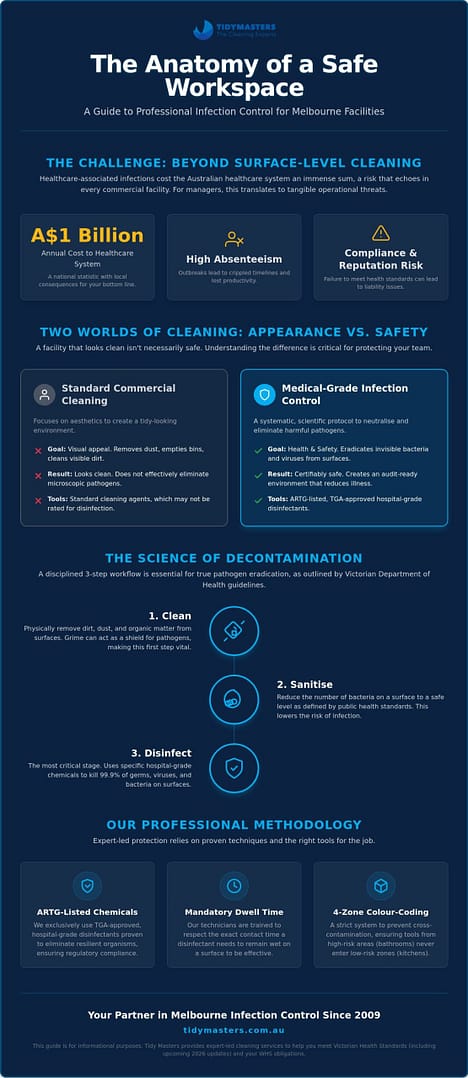
Healthcare-associated infections cost the Australian healthcare system approximately A$1 billion annually. For local facility managers, this isn’t just a clinical statistic; it’s a direct threat to your operational continuity and staff wellbeing. High absenteeism and the constant pressure of Victorian health standards can make facility management feel like a losing battle. You likely worry about the gap between a standard tidy-up and true infection control cleaning Melbourne. We understand that maintaining a certifiably safe environment is non-negotiable for your reputation and your bottom line.
Professional hygiene is your strategic shield against these risks. Since 2009, Tidy Masters has partnered with local facilities to bridge the gap between basic janitorial tasks and rigorous clinical hygiene. In this guide, you’ll learn how to navigate the latest April 2026 Australian Guidelines and the February 2026 Victorian Health Updates. We’ll clarify the distinction between standard and hospital-grade cleaning while showing you how to achieve audit-ready compliance. You’ll discover how a proactive approach to disinfection protects your team, satisfies regulators, and prevents costly facility-wide outbreaks.
Key Takeaways
- Understand the critical “Clean-Sanitise-Disinfect” workflow and why ARTG-listed chemicals are essential for true decontamination.
- Learn how to mitigate seasonal illness risks in high-density environments through specialised infection control cleaning melbourne.
- Identify the key differences between standard commercial cleaning and medical-grade pathogen eradication to ensure your facility remains safe.
- Discover how to build a site-specific infection control plan using structured risk assessments and tiered cleaning schedules.
- Ensure your workplace meets the latest 2026 Victorian health standards with a partner backed by over a decade of local expertise.
Why Infection Control Cleaning is Vital for Melbourne Businesses
Infection control cleaning is a systematic protocol designed to identify, neutralise, and eliminate harmful pathogens from high-touch surfaces. It’s far more than a simple wipe-down with a damp cloth. In a high-density environment like the Melbourne CBD, where thousands of commuters share lifts, desks, and kitchenettes, the risk of viral transmission is constant. Standard janitorial services often focus on aesthetics, but The Science of Decontamination requires a more rigorous methodology. Effective infection control cleaning melbourne ensures that invisible threats like bacteria and viruses are eradicated before they can disrupt your operations.
A facility that looks clean isn’t necessarily safe. Dust-free shelves and empty bins don’t prevent the spread of seasonal illnesses. True hygiene focuses on the microbial level, targeting the “hot zones” where pathogens thrive. By prioritising health over just appearance, you create a certifiably safe environment. This proactive approach offers a significant return on investment. It reduces staff sick leave, maintains business continuity, and fosters a culture of care that employees notice and appreciate. When your team feels safe, they’re more productive and engaged.
The Cost of Inadequate Infection Control
Melbourne businesses face unique challenges during Victorian winter peaks and seasonal gastro outbreaks. When one staff member falls ill, a shared office environment often acts as a catalyst for rapid spread. Pathogen transmission in a shared office space occurs when microscopic infectious agents move from a contaminated surface or person to another individual through common touchpoints like door handles, keyboards, or kitchen taps. This leads to a spike in absenteeism that can cripple project timelines and client delivery. Beyond the immediate loss of productivity, workplace-linked outbreaks can cause lasting reputational damage and potential liability issues if health standards aren’t met.
Meeting Victorian Health Standards
Compliance with local regulations isn’t optional. The Public Health and Wellbeing Regulations 2009 set clear expectations for safety and hygiene within the state. While these standards are most stringently applied in medical centre cleaning, the principles of risk management apply to every commercial facility in Victoria. Professional cleaning supports your Work Health and Safety (WHS) obligations by providing a documented, audit-ready environment. Tidy Masters has been helping Melbourne firms meet these rigorous requirements since 2009. We move beyond surface-level tidying to ensure your facility remains a safe space for staff and visitors alike, providing you with the peace of mind that comes from expert-led protection.
The Science of Decontamination: How Professional Cleaners Work
Mastering the science of infection control cleaning melbourne requires a disciplined approach to the ‘Clean-Sanitise-Disinfect’ workflow. Many people use these terms interchangeably, but they represent distinct levels of protection. Cleaning involves the physical removal of dirt and organic matter. This is a vital first step because grime can act as a shield for pathogens. Sanitising then reduces the number of bacteria to a safe level. The final, most critical stage is disinfection. This process uses specific chemicals to kill 99.9% of germs on surfaces. Our methodology aligns with the Victorian Department of Health guidelines, ensuring every step meets the highest safety benchmarks.
Chemical selection is the foundation of our success. We exclusively use TGA-approved disinfectants that are listed on the Australian Register of Therapeutic Goods (ARTG). These hospital-grade solutions are proven to eliminate resilient organisms. However, even the best chemicals fail without proper dwell time. Dwell time is the exact duration a surface must remain wet with a disinfectant to be effective. If a product requires five minutes to kill a specific virus, wiping it away after thirty seconds leaves your facility at risk. Our technicians are trained to respect these contact times, ensuring the chemical actually does its job. We also utilise a strict 4-Zone colour-coded system. This prevents cross-contamination by ensuring tools used in high-risk areas like bathrooms never enter your kitchen or workspace.
High-Touch Point Disinfection Protocols
We prioritise ‘hot zones’ where pathogens spread most rapidly. These include lift buttons, door handles, shared kitchenettes, and light switches. These surfaces see hundreds of touches daily, making them primary highways for transmission. For sensitive environments, our specialised childcare cleaning protocols offer extra protection for vulnerable children. To move beyond guesswork, we use ATP testing. This technology measures microbial energy on a surface, providing instant, data-driven proof that a zone is truly decontaminated. If you need this level of verified safety, you can learn more about our bespoke service plans designed for Melbourne businesses.
Advanced Equipment: Electrostatic Spraying and Fogging
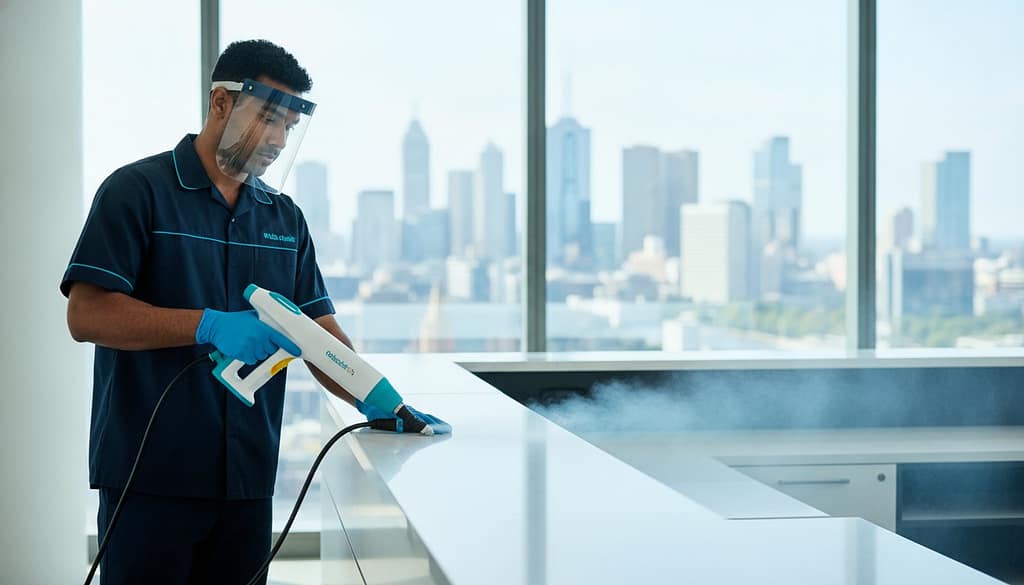
Manual cleaning has its limits, especially with complex shapes and large areas. Electrostatic spraying solves this by adding an electric charge to the disinfectant droplets. As they leave the nozzle, they seek out and wrap around surfaces, providing 360-degree coverage. This reaches the undersides of desks and the backs of chairs that traditional wiping misses. For rapid, facility-wide treatment, we employ fogging technology. This creates a fine mist that penetrates every corner of a room. We follow rigorous safety protocols for these treatments, including clear ventilation periods. This ensures your team returns to a workspace that isn’t just clean, but clinically safe.
Commercial vs. Infection Control Cleaning: A Comparison
Understanding the distinction between standard maintenance and clinical decontamination is vital for any facility manager. While both services aim to improve the workspace, they serve different masters. Standard commercial cleaning focuses on aesthetics. It removes visible dirt, empties bins, and ensures floors look polished. This creates a professional atmosphere, but it doesn’t guarantee a safe one. In contrast, infection control cleaning melbourne targets what you can’t see. It focuses on pathogen eradication, using scientific protocols to destroy bacteria and viruses at a microbial level.
The tools and chemicals used in these two approaches differ significantly. General janitorial work typically relies on neutral detergents. These are excellent for breaking down surface oils and dust but have little effect on resilient germs. Infection control requires hospital-grade disinfectants. These chemicals must align with the National Australian infection control guidelines to be considered effective. Training also sets these services apart. A general cleaner might not understand the complexities of cross-contamination zones or the necessity of specific dwell times. Our team at Tidy Masters brings specialised expertise developed since 2009, ensuring every surface is treated with clinical rigour rather than just a quick wipe.
When Does Your Business Need More Than ‘Standard’ Cleaning?
Most Melbourne facilities require a baseline of daily maintenance to stay functional. However, certain periods demand a higher level of protection. During Melbourne’s peak winter flu and gastro seasons, the risk of rapid transmission in high-density offices increases sharply. Sectors like medical centres, aged care, and high-traffic fitness centres require permanent infection control protocols as a standard operating procedure. These environments see a constant rotation of people, making them prime targets for outbreaks. If your facility houses vulnerable populations or experiences high staff density, a targeted outbreak prevention cycle is a necessary investment in business continuity.
The Limitations of Domestic-Style Cleaning in Offices
It’s a common mistake to assume that supermarket-grade “spray and wipe” products are sufficient for a commercial setting. These domestic cleaners often lack the concentration required to kill pathogens in high-traffic environments. Furthermore, improper techniques like reusing the same cloth across different desks or using standard vacuum filters can actually spread germs rather than remove them. ARTG-listed disinfectants are required for commercial compliance because they have been independently verified by the Therapeutic Goods Administration to kill specific pathogens at stated concentrations. Using unverified products leaves your facility legally and biologically vulnerable. Professional infection control ensures that your cleaning regime meets the strict regulatory standards expected in 2026.
Implementing an Infection Control Plan in Your Melbourne Facility
A robust infection control strategy is the backbone of a resilient business. It moves beyond reactive measures and establishes a proactive shield for your environment. Creating this plan requires a methodical approach tailored to your specific layout and traffic patterns. By following a structured implementation process, you ensure that infection control cleaning melbourne becomes a seamless part of your daily operations rather than a disruptive event.
- Step 1: Conduct a site-specific risk assessment. Identify every high-traffic zone, from reception desks to communal staff rooms. Focus on bottleneck areas where people naturally gather.
- Step 2: Establish a tiered cleaning schedule. Define what happens daily, weekly, and during a deep clean. High-touch surfaces need attention multiple times a day, while deep disinfection might be scheduled monthly or during peak illness seasons.
- Step 3: Train staff on hygiene and reporting. Your plan only works if your team participates. Establish clear protocols for hand hygiene and reporting symptoms immediately.
- Step 4: Partner with a specialised provider. Choose a partner with a proven track record in Melbourne since 2009. Expertise in medical-grade standards ensures your commercial site gets the same level of care as a clinic.
- Step 5: Document for compliance. Maintain digital logs of all cleaning activities. This documentation is essential for health audits and demonstrating your commitment to Victorian safety standards.
Sector-Specific Requirements: From Gyms to Schools
Different facilities face unique microbial challenges. In gyms, the focus shifts to sweat-borne pathogens and porous equipment surfaces that require specialised, non-corrosive disinfectants. Schools demand a careful balance. You must use products that are effective enough to stop the spread of childhood illnesses but safe enough for sensitive environments. Aged care facilities represent the highest risk tier. Here, rigorous surface control is vital to protect residents with compromised immune systems. Each sector requires a bespoke approach that respects its specific operational needs.
This level of precision is common in the healthcare sector; for instance, you can visit Hunters Corner Dental to see how a dedicated dental practice implements these high standards of clinical hygiene for its patients.
Auditing Your Cleaning Provider
You shouldn’t take a provider’s claims at face value. A professional partner should readily provide certifications, Safety Data Sheets (SDS), and detailed training logs for their staff. Local Melbourne expertise is critical because it allows for a rapid response if a local outbreak occurs. Effective infection control cleaning melbourne relies on a partner who understands the specific geographic and regulatory landscape of Victoria. It’s often beneficial to integrate your standard office cleaning with these deep-clean cycles. This creates a unified hygiene strategy that covers both aesthetics and safety. If you’re ready to secure your facility, you can request a bespoke infection control plan from our expert team today.
Tidy Masters: Your Partner in Melbourne Infection Control
Choosing a cleaning partner is a decision that impacts the health of your staff and the continuity of your business. Since 2009, Tidy Masters has protected Melbourne workplaces with a level of precision that generic janitorial services cannot match. We don’t just “tidy up”. We apply medical-grade clinical rigour to every commercial environment we service. This heritage of excellence means we understand the stakes. Whether you manage a high-traffic office in the CBD or a local retail showroom, our team brings the same meticulous attention to detail used in sterile clinical settings. Our reputation is built on being a silent achiever, working behind the scenes to ensure your environment functions perfectly every single day.
We reject the “one-size-fits-all” approach typical of the industry. Every facility has a unique microbial footprint and traffic flow. Generic packages often overlook the specific high-risk zones that lead to outbreaks. Our infection control cleaning melbourne is entirely bespoke. We identify your facility’s specific risks and build a service plan that targets them directly. This ensures you aren’t paying for unnecessary tasks while leaving critical touchpoints exposed. The Tidy Masters guarantee is simple: we provide professional, punchy, and dependable service that removes the burden of maintenance from your shoulders.
Our Specialist Expertise in High-Risk Environments
Our teams are specifically trained to handle environments where safety is paramount. We have a proven track record in Melbourne medical centres and aged care facilities where compliance isn’t just a goal; it’s a requirement. For healthcare providers who also require precision in their administrative workflows, Tausch Medical offers specialized medical billing and outsourcing services. We understand the technical nuances of TGA-approved chemicals and the necessity of exact dwell times. You won’t have to worry about whether a surface was properly decontaminated. We provide proactive communication and transparent reporting. This gives facility managers the data-driven proof they need for internal audits and regulatory peace of mind. We act as your local partner, staying ahead of Victorian health trends to keep your site compliant and safe.
Get Started with a Custom Hygiene Audit
Transitioning from a standard cleaning model to a robust infection control framework is straightforward with the right partner. We begin with a comprehensive hygiene audit of your facility. Our experts assess unique touchpoints and traffic patterns to see where your current regime might be failing. We then create a roadmap to elevate your standards without disrupting your daily operations. This structured transition ensures that your facility is protected against the health challenges of 2026 from day one. It’s time to replace uncertainty with confidence. Request a professional infection control quote for your Melbourne facility today.
Secure Your Facility’s Future with Expert Hygiene
Maintaining a safe workplace in 2026 requires more than a visual tidy-up. It demands a science-backed approach that targets pathogens at the microbial level. By prioritising TGA-approved disinfection and strict dwell times, you protect your team from seasonal outbreaks and ensure your facility remains compliant with Victorian health regulations. This proactive stance reduces absenteeism and builds long-term trust with your staff and visitors. It’s a vital investment in your operational continuity and your reputation.
Implementing a professional strategy for infection control cleaning melbourne is the most effective way to eliminate invisible risks. Since 2009, Tidy Masters has served as a dependable partner for local businesses. Our specialised expertise in medical and aged care cleaning means we bring hospital-grade rigour to every site we manage. We exclusively utilise TGA-approved disinfection protocols to ensure your environment is decontaminated to the highest standards. You can rely on our bespoke service plans to provide the exact level of protection your facility needs.
Your facility deserves a standard of care that prioritises health and safety above all else. Let’s work together to create a healthier, more resilient environment for everyone who walks through your doors.
Frequently Asked Questions
What is the difference between sanitising and disinfecting?
Sanitising reduces the number of bacteria on surfaces to a safe level, while disinfecting uses specific chemicals to kill pathogens entirely. It’s a matter of microbial reduction versus total eradication. Most commercial spaces require sanitisation for general surfaces but need disinfection for high-touch “hot zones.” Using the right process ensures your facility meets the rigorous standards expected in modern Melbourne workplaces.
How often should my Melbourne office undergo infection control cleaning?
Frequency depends on your daily foot traffic and current seasonal health risks in Victoria. High-traffic Melbourne offices typically benefit from daily high-touch disinfection and weekly deep-clean cycles. During peak flu seasons or local outbreaks, you should increase the frequency of infection control cleaning melbourne to prevent rapid transmission. We customise every schedule to match your facility’s specific layout and occupancy levels.
Are the chemicals used in infection control cleaning safe for staff?
Yes, we exclusively use TGA-approved chemicals that are safe for office environments when applied by trained professionals. Every product comes with a Safety Data Sheet (SDS) that outlines proper handling and ventilation requirements. We ensure all surfaces are dry and safe before staff re-enter the workspace. Our commitment to safety balances high-standard clinical rigour with a healthy, approachable environment for your team.
Does infection control cleaning protect against COVID-19 and the flu?
Professional disinfection is highly effective against respiratory viruses like COVID-19 and the flu. We use hospital-grade disinfectants listed on the Australian Register of Therapeutic Goods (ARTG) specifically for their virucidal properties. These chemicals destroy the outer shell of the virus on contact. When combined with correct dwell times, this process significantly reduces the risk of facility-wide outbreaks and keeps your business productivity high.
How do I know if my cleaning company is actually using TGA-approved products?
You should request the ARTG registration number and the Safety Data Sheet (SDS) for every chemical used in your facility. A reputable provider will offer these documents transparently as part of your compliance audit. TGA-approved products have been independently verified to kill 99.99% of pathogens as claimed. If a company cannot provide this documentation, they likely aren’t meeting the standards required for infection control cleaning melbourne.
Can infection control cleaning be done during business hours?
Basic high-touch disinfection can occur during business hours with minimal disruption to your team. However, more intensive methods like electrostatic spraying or fogging are best performed after hours to allow for proper dwell times and ventilation. We work around your operational schedule to ensure maximum safety without interrupting your workflow. Our goal is to be a silent partner in your facility’s ongoing health and safety.
What should I look for in a medical-grade cleaning contract?
A robust contract should specify the use of TGA-approved chemicals and outline clear training protocols for all staff. Look for detailed reporting requirements, including digital logs of high-touch point treatment. It must also address cross-contamination prevention through colour-coded equipment systems. Ensure the provider has experience in high-risk environments like medical centres or aged care to guarantee they understand the technical requirements of clinical hygiene.
Is electrostatic spraying necessary for every office clean?
Electrostatic spraying isn’t required for daily maintenance but is highly recommended for periodic deep-cleaning or outbreak responses. This technology provides 360-degree coverage on complex surfaces like keyboards, chair undersides, and shared equipment. It ensures that no area is missed during the disinfection process. Integrating this technology into your hygiene plan provides a superior level of protection that manual wiping alone cannot achieve.