
Sports Centre Cleaning in Melbourne: How to Choose the Right Service
October 1, 2026
Signs You Need a New Office Cleaner: 8 Checks for 2026
October 3, 2026
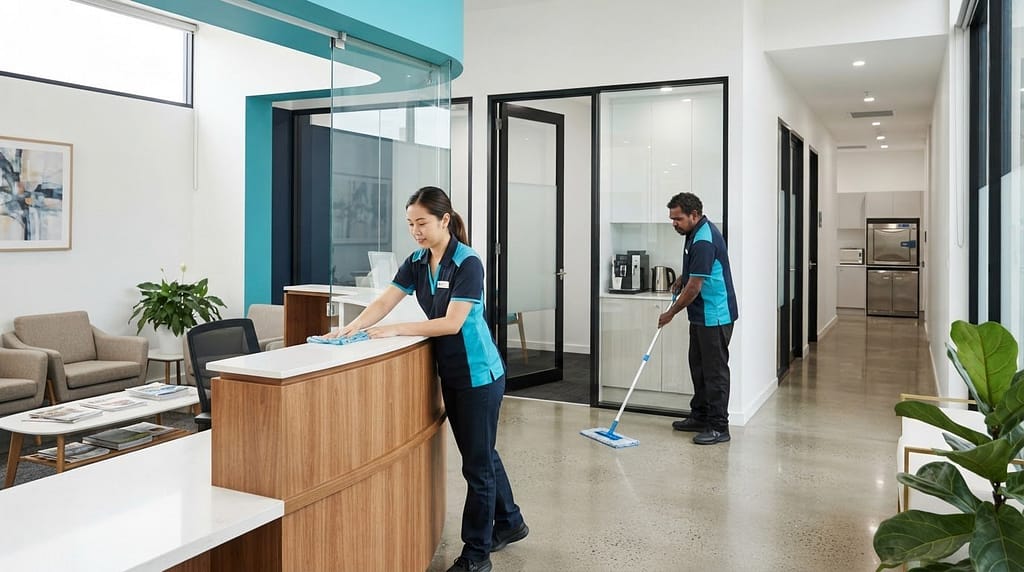
A clean dental clinic depends on two distinct jobs: maintaining the premises and managing clinical infection control. Confusing them can leave practice teams unsure what a commercial cleaner should handle. For dental clinic cleaning Melbourne practices can rely on, the scope needs to suit the space and support day-to-day operations.
It’s understandable to want reception, waiting rooms, staff areas and shared surfaces kept presentable without disrupting appointments. But routine premises cleaning is not the same as reprocessing instruments or carrying out clinical procedures. Those responsibilities need to stay clearly defined.
This guide explains what a tailored premises-cleaning scope can cover, how to plan a practical schedule around opening hours and patient flow, and how to compare a local commercial cleaning arrangement. It also shows how to keep premises tasks distinct from the clinical protocols managed by dental practitioners. Tidy Masters provides commercial cleaning in Melbourne, including medical centre cleaning, with solutions tailored to client requirements. The aim is a clear, workable plan that supports a clean, welcoming practice without unnecessary disruption.
Key Takeaways
- See how dental clinic cleaning melbourne can be tailored to the practice while remaining distinct from instrument reprocessing and clinical procedures.
- Map cleaning considerations across reception, waiting areas, consulting rooms, staff spaces and amenities.
- Shape a practical schedule around room use, patient traffic, operating hours and the agreed scope, rather than relying on a one-size-fits-all frequency.
- Use a clear framework to assess cleaning scope, access, task boundaries, communication and consistency.
- Learn how a Melbourne commercial cleaning partner can help create a tailored plan for the clinic’s daily presentation and upkeep.
Dental Clinic Cleaning in Melbourne: What Does the Service Actually Cover?
Dental clinic premises cleaning is routine commercial cleaning tailored to the rooms, surfaces and daily operations of a dental practice. It maintains the clinic environment; it does not clean patients’ teeth or replace clinical infection-control procedures.
“Dental cleaning” can refer to a patient’s check-up and clean or to upkeep of the practice itself. This guide is for practice managers arranging premises cleaning. A scope can cover reception, waiting spaces, staff rooms, floors, shared surfaces and amenities. It does not include dental treatment, instrument reprocessing or other clinical procedures.
Dental clinic premises cleaning versus a dental check-up and clean
A dental check-up and clean is a patient appointment delivered by dental professionals. Premises cleaning is a separate service focused on the condition and presentation of the workplace. A cleaning plan can define routine tasks for public and staff areas, while the practice’s trained personnel remain responsible for clinical work, including instrument reprocessing and procedures connected with patient care.
Why a dental practice needs a tailored cleaning scope
A dental practice brings different room uses together under one roof. Reception and waiting areas have patient traffic, staff spaces support the team, and consulting rooms have a clinical purpose. A tailored scope defines which premises tasks apply to each area and how they fit around appointments. This makes the division between visible upkeep and clinical tasks managed by practice personnel easier to understand.
For example, a scope might specify cleaning floors and accessible surfaces in reception, attending to shared touchpoints, and maintaining staff areas and amenities. The exact tasks depend on the premises and agreed arrangement. A general overview of infection prevention and control shows how cleaning sits alongside distinct measures such as disinfection and sterilisation. A premises cleaner’s scope should not blur those responsibilities or imply that routine facility cleaning replaces clinical protocols.
Clear boundaries help practice managers set expectations and organise everyday upkeep. For dental clinic cleaning Melbourne practices need, start with a room-by-room scope that reflects how the premises are used and leaves clinical procedures with the clinic team.
What Should a Melbourne Dental Clinic Cleaning Plan Include?
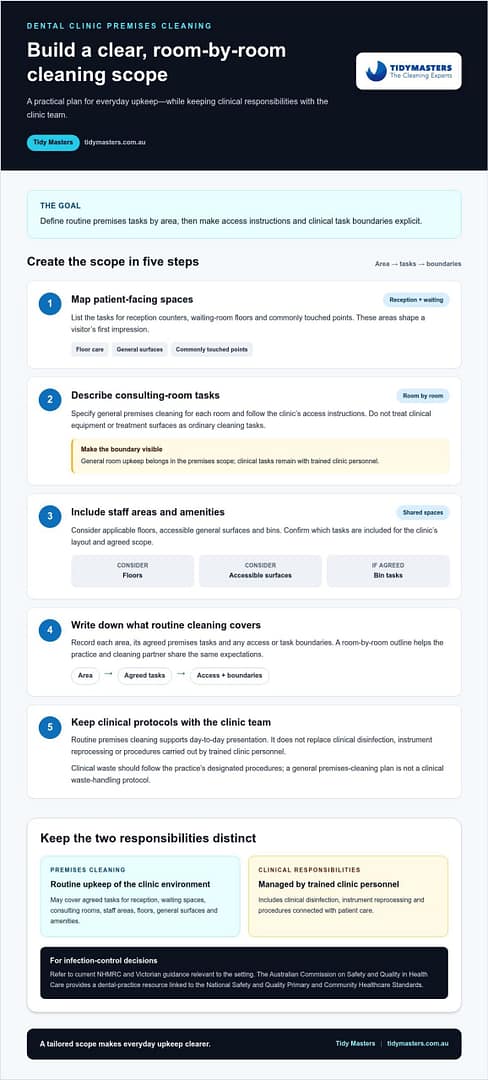
A useful plan turns “clean the clinic” into a clear, room-by-room scope. Depending on the premises and agreed tasks, common areas include reception, waiting spaces, consulting rooms, staff areas and amenities, with attention to floors, general surfaces, touchpoints and agreed waste-bin tasks. The plan gives the practice and cleaning partner a shared understanding of what routine upkeep covers.
Room-by-room areas to discuss in the cleaning scope
Start with patient-facing spaces. Reception counters, waiting-room floors and commonly touched surfaces shape a visitor’s first impression, so list the relevant tasks for each area. For consulting rooms, describe general premises tasks and follow the clinic’s access instructions. This keeps the scope clear without treating clinical equipment or treatment surfaces as ordinary cleaning tasks.
Include staff areas and amenities as well. Consider floors, accessible general surfaces and bins, with tasks set according to the clinic’s layout and agreed scope. A room-by-room outline helps prevent gaps between public, work and shared spaces.
- Reception and waiting areas: identify floor care, general surface cleaning and commonly touched points.
- Consulting rooms: define premises tasks and access boundaries for each room.
- Staff areas and amenities: include applicable surfaces, floors and agreed bin tasks.
Routine cleaning and clinical infection-control responsibilities
Routine premises cleaning supports the clinic’s day-to-day presentation. It is separate from clinical disinfection, instrument reprocessing and procedures carried out by trained clinic personnel. Make those boundaries explicit in the cleaning scope. Clinical waste should follow the practice’s designated procedures; a general premises-cleaning plan is not a clinical waste-handling protocol.
For infection-control decisions, practice managers should refer to current NHMRC and Victorian guidance relevant to their setting. The Australian Commission on Safety and Quality in Health Care provides a dental-practice resource linked to the National Safety and Quality Primary and Community Healthcare Standards. Use clinical guidance to inform the clinic’s own procedures, not to assume routine commercial cleaning replaces them.
For dental clinic cleaning melbourne practices can plan around, record each area, its agreed premises tasks and any access or task boundaries. Tidy Masters provides tailored professional cleaning in Melbourne, including medical centre cleaning. Explore tailored medical centre cleaning as a starting point for a premises plan suited to your clinic.
How Often Should a Dental Clinic Be Cleaned, and What Shapes the Schedule?
There isn’t one cleaning frequency that suits every dental practice. Room use, patient and staff traffic, opening hours, layout and the agreed premises scope all shape the schedule. A reception area used throughout the day may need different attention from a staff room used intermittently. Clinical task frequencies are separate and should follow the practice’s procedures and relevant current guidance.
For a dental clinic cleaning Melbourne plan, treat daily, periodic and one-off work as scheduling options, not universal prescriptions. The table below helps practice managers distinguish their roles before agreeing on specific tasks.
| Cleaning option | How it may fit the plan | What shapes the decision |
|---|---|---|
| Daily upkeep | Routine premises tasks may be scheduled regularly for selected areas. | Foot traffic, room use, opening hours and the agreed scope. |
| Periodic cleaning | Additional or deeper premises tasks can be planned at intervals that suit the site. | Surface and floor condition, layout and identified maintenance needs. |
| One-off deep cleaning | A standalone service option for premises cleaning beyond the routine plan. | The clinic’s current needs and the areas included in the agreed scope. |
Daily, periodic and one-off cleaning: how the roles differ
Daily upkeep can help maintain shared and patient-facing areas, but not every task needs to happen daily. Periodic work adds to the routine scope where the premises need further attention. A one-off deep clean is another option for a defined premises-cleaning need. None of these categories sets the frequency for clinical disinfection or instrument reprocessing, which remain part of the practice’s own clinical procedures.
Planning cleaning around appointments and clinic access
Start by mapping opening hours, appointment flow and room availability. A Melbourne clinic with back-to-back appointments may have different access windows from one with quieter periods. Share which spaces are in use, any room-specific access instructions, and how cleaning should fit around staff and patients. Clear arrangements help reduce avoidable disruption without assuming a particular cleaning time or turnaround.
Before setting any clinically required task frequency, practice managers should refer to current guidance and the clinic’s established protocols. The Australian Dental Association’s Guidelines for Infection Prevention and Control provide dental-specific guidance for practitioners. Use that clinical reference to inform the practice’s procedures, then keep the commercial premises schedule clearly scoped around agreed cleaning tasks.
How to Compare Dental Clinic Cleaning Services in Melbourne
A useful comparison starts with the clinic’s needs, not a generic cleaning checklist. Define what the premises plan should cover, how cleaners will access each area, which tasks belong to clinic personnel, and how instructions or changes will be communicated. These details help you assess whether a commercial cleaning arrangement fits the practice’s layout and operating pattern.
Questions that clarify scope, access, and accountability
Write down the rooms and surfaces included, access arrangements, and site-specific instructions for consulting rooms and shared spaces. Be precise about boundaries: clinical disinfection, instrument reprocessing and other clinical responsibilities remain with the practice team. A documented scope gives everyone a common reference for routine tasks and makes follow-up communication clearer if premises needs change.
- Scope: Which rooms, floors, general surfaces and agreed bin tasks are included?
- Access: Which areas are available, and what instructions apply while staff or patients are on site?
- Task boundaries: Which duties are premises cleaning, and which remain under clinic procedures?
- Communication: How will the agreed scope and any updates be recorded and shared?
Matching a cleaning plan to a Melbourne dental practice
Compare how well the proposed approach can be tailored to your premises, how clearly it defines responsibilities, and how consistently it supports the agreed tasks. Commercial-facility experience and local service capability also matter. The plan should reflect the clinic’s actual rooms and operating pattern, rather than assume every practice needs the same scope.
Tidy Masters is a Melbourne-based commercial cleaning and property maintenance company. It provides medical centre cleaning and tailors cleaning solutions to client requirements. This commercial cleaning experience is relevant when planning premises cleaning for a dental practice, while clinical protocols remain with the clinic team. For further context, see the Melbourne medical centre cleaning guide.
For dental clinic cleaning melbourne practices can organise with confidence, bring your room list, access needs and task boundaries into the planning conversation. Discuss a tailored clinic cleaning plan that suits your premises and daily operations.
Arrange Dental Clinic Cleaning in Melbourne with a Clear, Tailored Plan
A well-planned cleaning arrangement starts with a defined premises scope, a schedule that fits clinic operations and clear boundaries between commercial cleaning and clinical responsibilities. That structure helps practice managers set practical expectations and gives the cleaning partner a shared reference for the work. It also avoids treating every room or dental practice as if it needs the same approach.
What to prepare before discussing a cleaning plan
Before discussing dental clinic cleaning Melbourne practices can usefully list the areas to include and describe how the premises operate. A concise outline turns general needs into a practical conversation about the clinic’s layout and priorities.
- Clinic areas: note reception, waiting spaces, consulting rooms, staff areas and amenities that may need premises cleaning.
- Operating hours: describe appointment patterns and the times or room access arrangements that shape the cleaning schedule.
- Cleaning priorities: identify the surfaces, floors, shared areas and agreed bin tasks that matter to day-to-day upkeep.
- Task boundaries: identify clinical procedures, instrument reprocessing and clinical waste processes that remain under the practice’s own protocols.
Specific details help prevent assumptions. A consulting room’s access instructions, for example, may differ from those for reception or staff spaces. A clear description of the premises gives the plan a sound starting point without implying that commercial cleaning replaces the clinic’s infection-control procedures.
A straightforward next step for Melbourne practices
Tidy Masters is a Melbourne-based commercial cleaning and property maintenance company that provides medical centre cleaning. Its cleaning solutions are tailored to client requirements. This local commercial cleaning capability is relevant when planning premises cleaning for a dental practice, while clinical procedures remain the responsibility of the practice team. For broader context on commercial cleaning, see the commercial cleaning guide for Melbourne businesses.
Bring your area list, operating pattern, access arrangements and cleaning priorities into the conversation. A tailored plan can be shaped around the clinic’s premises and day-to-day operations, with responsibilities clearly defined. Discuss cleaning for your clinic with Tidy Masters.
Set Up a Cleaning Plan That Fits Your Clinic
A well-organised dental clinic cleaning melbourne plan starts with a clear premises scope, a schedule shaped around room use and appointments, and defined boundaries between routine cleaning and clinical responsibilities. These essentials help practice managers set expectations and support a tidy, welcoming environment without confusing facility upkeep with clinical procedures.
Tidy Masters provides commercial cleaning in Melbourne, including medical centre cleaning, and tailors cleaning solutions to client requirements. This gives dental practices a practical starting point for discussing their premises needs.
Prepare a list of clinic areas, operating hours, access arrangements and cleaning priorities, then use it to shape the conversation. Discuss a tailored cleaning plan for your Melbourne clinic with Tidy Masters. A clear plan can make everyday premises upkeep easier to organise, so your team can focus on caring for patients.
Frequently Asked Questions
Is dental clinic cleaning different from a dental check-up and clean?
Yes. A check-up and clean is a patient appointment that may include an examination and professional teeth cleaning. Dental clinic cleaning means maintaining the premises, such as reception, waiting areas, floors, amenities and agreed room surfaces. These are separate services with different responsibilities. Clinical disinfection and instrument reprocessing follow the practice’s procedures and applicable guidance, rather than being assumed as part of routine commercial premises cleaning.
What does dental clinic cleaning usually include?
The scope depends on the clinic’s premises and agreed cleaning plan. It may include routine tasks in reception, waiting areas, general room surfaces, floors, staff spaces and amenities. A written scope clarifies which areas are included and when they can be accessed. It should also distinguish general premises cleaning from clinical procedures, instrument processing and designated clinical waste processes managed under the practice’s own procedures.
How often should a dental clinic be professionally cleaned?
There’s no single schedule that suits every practice or every task. Consider patient and staff traffic, room use, operating hours, layout and the agreed premises-cleaning scope. A tailored plan can separate routine upkeep from periodic deep cleaning. Any frequency related to clinical infection-control procedures should be determined by the practice’s protocols and checked against current guidance. This keeps premises scheduling practical without treating it as clinical advice.
Can commercial cleaners disinfect dental treatment rooms?
That depends on the agreed scope, clinic instructions and the practice’s infection-control procedures. Don’t assume routine commercial cleaning includes clinical disinfection or replaces responsibilities held by trained clinic personnel. The practice should clearly define which premises tasks are included and which clinical procedures stay with its team. Before describing any task as a requirement, practice managers should refer to current Australian and Victorian guidance relevant to their setting.
How can dental clinic cleaning be scheduled around appointments?
Plan access around opening hours, appointment flow and room availability. Share which areas can be entered, any room-specific access instructions, and spaces that are restricted or require direction from the clinic team. Reception may have different access needs from a consulting room in use. A tailored schedule can help reduce disruption while setting consistent expectations. Agree on timing for the individual premises rather than assuming all Melbourne clinics follow the same pattern.
What should a Melbourne dental practice include in a cleaning brief?
Describe the premises, rooms, operating hours, access arrangements and cleaning priorities. Specify the routine tasks expected in shared and general areas, such as floors and agreed surfaces. Include site-specific instructions, then clearly distinguish premises cleaning from clinical disinfection, instrument reprocessing and clinical waste procedures. A precise brief gives the cleaning partner a clear basis for tailoring the work and helps the practice review whether the agreed scope is being followed.
Does dental clinic cleaning cover sterilising instruments?
No. Instrument cleaning and sterilisation are clinical reprocessing activities, not ordinary premises-cleaning tasks. The dental practice manages these processes through its established procedures and applicable professional guidance. A commercial cleaning plan can cover agreed premises areas, but it should keep responsibilities for instruments and clinical equipment separate. For dental clinic cleaning Melbourne practices can plan clearly, define these task boundaries in writing before arranging the premises scope.