
Independent School Cleaning: A Guide for Melbourne Schools
October 7, 2026
What if your clinic’s cleaning plan followed patient flow instead of a standard office checklist? In an allied health practice, reception, treatment rooms and shared touchpoints have different cleaning needs. A generic scope can overlook details that matter between appointments. That’s why allied health clinic cleaning melbourne should be planned around how people use each room, not just the floor plan.
Patient-facing spaces need consistent care without disrupting appointments or leaving staff unsure about their responsibilities. A clearly defined scope makes routine cleaning easier to manage and separates general facility tasks from clinical work.
This guide explains how to map cleaning to patient movement, identify areas for routine attention and set clear expectations for cleaners and clinic staff. It also covers how room use, access and daily routines affect a cleaning plan. Tidy Masters provides commercial cleaning in Melbourne, including medical centre cleaning tailored to client requirements. A considered scope can help your clinic manage its day-to-day cleaning needs.
Key Takeaways
- Plan cleaning around how patients move through reception, treatment rooms and shared spaces, rather than relying on a generic office checklist.
- Set clear boundaries between routine facility cleaning and equipment or clinical tasks that follow clinic-specific instructions.
- Understand what cleaning can support, and why it can’t guarantee infection-free rooms on its own.
- Build a practical allied health clinic cleaning melbourne plan by mapping room use, foot traffic, access and clinic routines.
- Tidy Masters’ medical centre cleaning and tailored scopes can help shape a cleaning arrangement around your clinic.
Why allied health clinic cleaning in Melbourne needs a patient-first plan
Allied health clinic cleaning is facility cleaning planned around how patients use a practice and how the clinic operates. It accounts for the different functions of reception, waiting areas, consultation rooms, treatment spaces and amenities, rather than treating every room as an interchangeable office. For clinic managers, a clear plan helps make routine cleaning consistent while keeping its role realistic: cleaning supports a well-maintained environment, but it cannot guarantee infection prevention or replace clinical procedures.
The scope should reflect the rooms, access arrangements and routines at your Melbourne site. Tidy Masters provides commercial cleaning and property maintenance, including medical centre cleaning tailored to client requirements. A patient-first approach helps shape a practical scope for allied health clinics across Melbourne.
Which clinic spaces shape the cleaning plan?
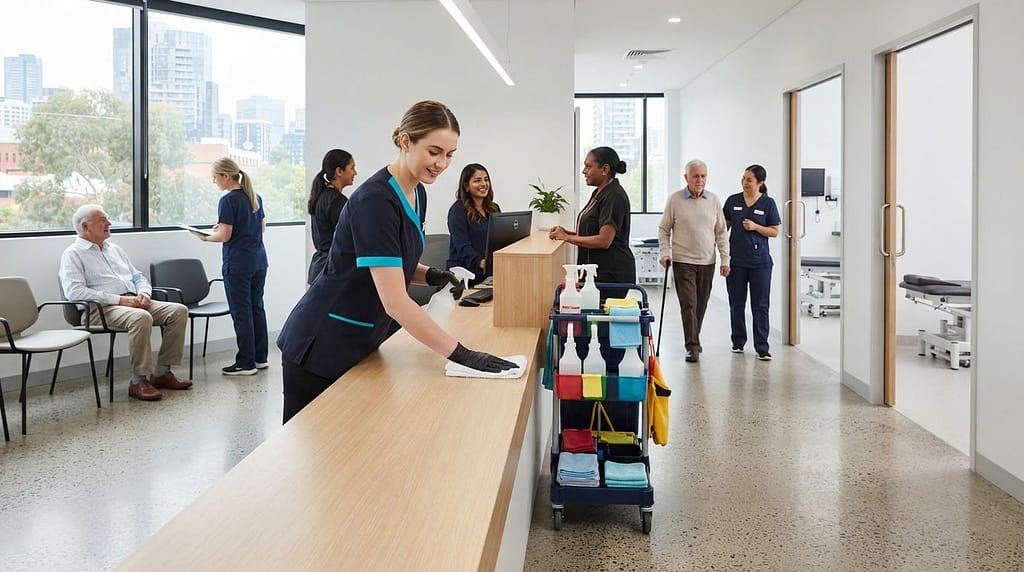
Map the patient journey, from the entrance and waiting area to reception, consultation rooms, treatment spaces and amenities. Each area has its own surfaces and patterns of use. Door handles, reception counters, chair arms and shared amenities may be used by different people throughout the day. Include them in the routine according to how the clinic operates and the tasks agreed with the practice.
Room function matters too. A physiotherapy space may be arranged around movement and treatment equipment, while a psychology room may prioritise a quiet, private setting. A dental practice has its own room uses and clinical workflows. Allied health includes a broad range of professions, as outlined in this overview of allied health professions. Facility cleaning should suit the actual rooms and routines, not assumptions about the clinic’s specialty.
How is a clinic different from a standard office?
Office routines often centre on desks, meeting spaces and shared amenities. A clinic also manages patient arrivals, room changes and treatment spaces used by different people. That turnover affects which areas need attention and when. A generic task list may miss a frequently used consultation room or give equal priority to a low-traffic staff space and a busy waiting area.
A patient-flow-led cleaning scope follows how people move through a clinic, matching routine facility tasks to the rooms and touchpoints they use. This gives cleaners and staff a shared understanding of what’s included, while leaving equipment care and clinical tasks to the clinic’s instructions. Managers can also use this approach to identify access needs and fit cleaning around operating routines. For a broader healthcare-facility perspective, the existing guide to medical centre cleaning provides useful context alongside this clinic-specific planning approach.
For practices arranging allied health clinic cleaning melbourne, start with a room-by-room view of patient use. That turns a general expectation of “clean throughout” into a scope that reflects the clinic’s layout and activity.
How allied health clinic cleaning follows rooms, surfaces and patient flow
A practical cleaning sequence follows the clinic’s layout and the movement of patients through it. Start at the entrance and waiting area, then consider reception, consultation and treatment rooms, and shared amenities. This helps staff define which facility surfaces need routine attention and where access or room turnover affects the scope. For allied health clinic cleaning melbourne, the plan should reflect the site’s operating routines, rather than assume every practice uses its rooms in the same way.
Map high-touch areas without treating every surface alike
Patients, staff and visitors may all use reception counters, door handles, waiting-room chairs and shared amenities. Their location and frequency of use can guide how they’re included in routine tasks. Treatment-room surfaces need to be considered in light of the room’s purpose and agreed scope. A space used for movement-based appointments may have different surfaces in regular use from a quiet consultation room.
Keep clinical equipment distinct from facility surfaces. Cleaning staff should follow the clinic’s instructions for surfaces in scope, while equipment care should follow clinic procedures and manufacturer instructions. A general task list should not replace those directions.
Keep cleaning responsibilities clear around clinical care
Facility cleaning and clinical care are separate responsibilities. Routine cleaning addresses agreed environmental surfaces; clinical instrument reprocessing and patient care follow the practice’s own procedures. Defining this boundary helps prevent uncertainty about who handles equipment, instruments and tasks that require clinical direction.
Facility cleaning covers agreed room surfaces; clinical equipment care follows the clinic’s procedures and manufacturer instructions. Keeping this distinction visible gives cleaners and clinic staff a shared reference point. The clinic’s infection-control procedures remain central to clinical practice.
To turn the sequence into a usable scope, record each room, its common use, the surfaces included and any access considerations. Then agree how task frequency will respond to room use and patient traffic, within the clinic’s protocols. A simple room-by-room outline might distinguish:
- Entry, waiting and reception areas, with attention to shared touchpoints.
- Consultation and treatment spaces, with routine facility surfaces defined by room use.
- Amenities and staff areas, with tasks set according to their use and the agreed scope.
This isn’t a universal cleaning schedule. It’s a practical way to make expectations specific, so a frequently used room can be considered differently from a staff space with less traffic. The clinic can also identify which tasks belong to its own team and which routine facility tasks form part of the cleaning arrangement.
Tidy Masters tailors commercial cleaning to client requirements, including medical centre cleaning. Explore Tidy Masters’ tailored cleaning services to learn about its cleaning services.
Does allied health clinic cleaning prevent cross-contamination? Setting realistic expectations
Professional cleaning can help maintain a clean, orderly clinic, but it can’t guarantee infection-free rooms or prevent every instance of cross-contamination. Outcomes depend on the agreed scope, the surfaces included, the methods used and consistent delivery. Cleaning removes visible soil and other material from surfaces. Disinfection is a separate process, and its use depends on the clinic’s protocols and the applicable product instructions.
That distinction matters. Routine facility cleaning supports the clinic’s environment; it doesn’t replace clinical infection-control procedures, instrument reprocessing or patient-care practices. Managers can set realistic expectations by defining the cleaner’s responsibilities alongside the tasks retained by the clinic team.
What routine cleaning can, and cannot, do
A clear scope makes routine work more consistent. It should identify which rooms and facility surfaces are included, how access is managed and how cleaning fits the clinic’s operating routines. A reception counter or waiting-room surface may be part of the routine scope, while clinical equipment and instruments require direction from the practice.
No general cleaning plan can promise that all microorganisms are removed or that infections won’t occur. The clinic team remains responsible for its clinical policies and procedures, including decisions about disinfection and equipment care. This boundary keeps responsibilities clear without overstating what routine cleaning can achieve.
How to communicate a clear clinic cleaning scope
Put the arrangement in plain language. List the rooms, surfaces and routine tasks included, then state any exclusions or clinic-specific instructions. For example, distinguish general room surfaces from equipment the clinic manages under its own procedures. This helps prevent assumptions and gives staff a practical reference if room use changes.
Product selection and use should follow relevant instructions and the clinic’s procedures. Don’t assume one disinfectant or method suits every surface or situation. Where applicable to a clinic’s setting or accreditation arrangements, managers can refer to current guidance from the Australian Commission on Safety and Quality in Health Care and relevant National Safety and Quality Health Service Standards. Their relevance depends on the service and its circumstances, so they should not be treated as a one-size-fits-all checklist.
Use a brief review process to keep the scope useful:
- Record each room’s routine facility-cleaning tasks and any exclusions.
- Identify which responsibilities stay with clinic staff, especially for clinical equipment and instruments.
- Review the plan when room use, patient flow or clinic procedures change.
This gives cleaners and clinic staff a shared understanding of what routine work covers, while preserving the clinic’s authority over clinical practice. A tailored scope for allied health clinic cleaning melbourne should support a well-maintained environment without promising clinical outcomes. Clear boundaries make the arrangement easier to follow and keep clinical decisions where they belong.

How to build a practical allied health clinic cleaning plan
A reliable plan starts with the site, not a standard schedule. Before setting tasks or frequency, document how the clinic operates: which rooms patients use, how staff access them and which areas have specific instructions. This gives clinic managers and cleaners a shared brief, makes responsibilities easier to follow and helps the service adapt when needs change.
Create the site brief before cleaning begins
Walk through the clinic and record the details that affect the work. Include room types, flooring, shared surfaces, restricted areas and general access arrangements. Note alarm procedures and the preferred communication channel for routine updates or urgent site changes, without putting sensitive access information in an unsecured document.
Also record the clinic’s directions for equipment, products and sensitive surfaces. These notes help distinguish routine facility tasks from work that must follow clinic procedures or manufacturer instructions.
- Rooms and surfaces: List reception, waiting areas, consultation rooms, treatment spaces, amenities and staff areas, noting relevant flooring and shared touchpoints.
- Access and exceptions: Identify restricted rooms, access steps and any surfaces or tasks excluded from the cleaning scope.
- Responsibilities: State which routine tasks are part of the cleaning arrangement and which remain with clinic staff.
- Communication: Name the person or role responsible for reporting changes, access issues and feedback.
Next, prioritise rooms according to their actual use and foot traffic. A frequently used waiting area may need different attention from a staff space used intermittently. A treatment room’s requirements can also vary with its function and the clinic’s procedures. Set task frequency around those conditions and the agreed scope, rather than applying a universal schedule that may not fit the site.
Keep the plan practical. If room use changes, such as a consultation space becoming a treatment area, update the room notes and responsibilities. This gives everyone a clear reference point and reduces the chance that a change in routine creates an unclear cleaning expectation.
Review service quality with useful feedback
Review the service against the agreed tasks and observable room condition. Keep feedback specific: identify the room, the task and what needs attention. A simple reporting process helps address missed tasks and makes it easier to update the scope when traffic, access or clinic routines shift.
Agree who receives reports, how changes are recorded and how follow-up is communicated. This creates accountability without relying on vague impressions or expecting cleaners to make clinical decisions.
A clear brief supports a tailored allied health clinic cleaning melbourne arrangement that reflects your rooms, access and operating routines. Tidy Masters tailors commercial cleaning to client requirements, including medical centre cleaning. Learn about Tidy Masters’ cleaning services.
Tidy Masters allied health clinic cleaning in Melbourne: tailored next steps
Every allied health clinic has its own layout, patient flow and operating routines. A cleaning arrangement should reflect those details rather than apply a standard office checklist to every room. Tidy Masters provides commercial cleaning and property maintenance in Melbourne, including medical centre cleaning tailored to client requirements. This experience is relevant when planning routine facility cleaning around the varied spaces in allied health practices.
A tailored scope can account for how your clinic uses reception, waiting areas, consultation rooms, treatment spaces, amenities and staff areas. It can also clarify access, the facility surfaces included and the boundary between routine cleaning and tasks managed by clinic staff. These details help set clear expectations and support a well-maintained patient-facing environment, without promising clinical outcomes.
What a tailored Tidy Masters service plan considers
The first step is understanding the site. Room type and use, patient movement, flooring, shared surfaces, access arrangements and task boundaries all help shape a practical plan. A busy treatment space may call for a different scope from a staff area, while sensitive surfaces or equipment may need instructions from the clinic. The plan should make those distinctions easy to understand.
Recurring commercial cleaning can form the foundation of the arrangement. Tidy Masters also provides one-off deep cleaning, which can sit alongside an ongoing plan according to the site’s needs. The scope should reflect your clinic, including how rooms operate and which routine tasks you want covered. It doesn’t replace clinical procedures or instructions for equipment and products.
Before discussing the arrangement, it can help to note:
- Which room types the clinic uses and how their purposes differ.
- Which routine facility surfaces and areas should be included.
- Any access arrangements, restricted spaces or sensitive surfaces.
- How clinic routines affect the scope and communication about changes.
Make the next step straightforward for your clinic
Melbourne clinic managers can start by outlining the room types, operating routines and cleaning priorities that matter most. Include access considerations and explain which responsibilities remain with clinic staff. This gives the discussion a practical starting point and helps shape an arrangement around your site rather than a generic task list.
Tidy Masters provides medical centre cleaning as part of its commercial services and tailors cleaning to client requirements. If you’re planning allied health clinic cleaning melbourne, share your clinic’s spaces and routines to discuss a suitable scope. Discuss a tailored clinic cleaning plan with Tidy Masters.
Make your clinic’s next cleaning plan fit the way it works
Turn day-to-day observations into a clear brief. Note which rooms are busiest, where patient movement creates shared touchpoints, which surfaces belong in routine facility cleaning and what must remain under clinic staff direction. These details give a cleaning partner a practical starting point and help keep expectations clear as your practice evolves.
A considered allied health clinic cleaning melbourne arrangement should work with your clinic’s routines, not add uncertainty for staff. Start with your priorities, then shape the scope around your rooms, access needs and preferred communication approach. Identify how changes in room use should be shared so the plan stays relevant as your clinic develops.
Tidy Masters can help plan a cleaning arrangement around your site. A clear brief about room types and operating routines gives the conversation a practical starting point.
Discuss a tailored clinic cleaning plan with Tidy Masters.
Frequently Asked Questions
How often should an allied health clinic be professionally cleaned?
There’s no fixed frequency that suits every allied health clinic. Patient numbers, room turnover, opening hours and how often surfaces are used all affect the plan. A practice with appointments moving through several rooms may have different priorities from one that uses fewer spaces. Set a site-specific routine, then review it when services, patient flow or room use changes.
How much does allied health clinic cleaning cost in Melbourne?
The cost depends on the clinic’s size, room count, floor types, access arrangements, frequency and agreed tasks. A one-off deep clean may have a different scope from recurring cleaning. For allied health clinic cleaning melbourne, an estimate needs to reflect the actual site rather than a generic figure. List the rooms and priorities you want covered so the scope can be considered against your clinic’s requirements.
Do allied health cleaners clean treatment equipment?
Not automatically. Treatment equipment may need care under clinic procedures or manufacturer instructions, so the practice should define who handles it and what those instructions require. A cleaning scope can specify facility surfaces such as floors, benches or other agreed areas without implying that equipment is included. Instrument reprocessing and specialist equipment care should remain separate from routine facility cleaning.
Can an allied health clinic be cleaned while patients are present?
It depends on the task, room and appointment flow. Cleaning in a waiting area may affect access, while work in a consultation room could interrupt an appointment or require the space to be temporarily unavailable. Plan access and communication around the clinic’s operations. Staff should manage patient care and decide when a room can be accessed, particularly if its use or status changes during the day.
Are hospital-grade cleaning products required in every allied health clinic?
There isn’t one product that suits every surface or cleaning task. Choose products according to their intended use, surface compatibility, clinic procedures and manufacturer directions. A broad label such as “hospital-grade” doesn’t by itself establish that a product is suitable for every room or purpose. Clinic managers should define product requirements through their own procedures and applicable guidance, rather than relying on marketing terms alone.
Should clinic cleaners handle clinical waste or sharps?
Clinical waste and sharps shouldn’t be treated as ordinary rubbish. The clinic’s waste-management procedures should specify how each waste stream is handled, secured and assigned to responsible people. Make those boundaries clear in site instructions so routine cleaning doesn’t lead to unsafe assumptions. If a bin or item requires clinical handling, clinic staff should follow the practice’s established process rather than treating it as a general cleaning task.
Can a Melbourne allied health clinic arrange a one-off deep clean?
Yes. Tidy Masters provides one-off deep cleaning, which can give focused attention beyond routine cleaning, such as when a room’s use changes or a space is being prepared to reopen. Agree the tasks around the clinic’s surfaces, access arrangements and procedures. A deep clean can sit alongside an ongoing cleaning plan, but shouldn’t replace routine maintenance or the clinic’s own infection-control practices.