
Allied Health Clinic Cleaning in Melbourne: A Practical Guide
October 8, 2026
Melbourne Commercial Disinfection: 2026 Business Guide
October 10, 2026

What if the most useful cleaning quote isn’t the one with the lowest hourly rate? A search for “commercial cleaning prices melbourne” can bring up hourly, per-visit and ongoing service proposals, but the headline figure won’t tell you whether the work suits your site. The difference often comes down to scope: what gets cleaned, how often and what the facility needs.
It’s reasonable to want a clear estimate and confidence that essential tasks or consumables haven’t been overlooked. A medical centre, warehouse and office have different layouts, usage patterns and cleaning priorities, so one standard scope won’t fit them all.
This guide explains how Melbourne commercial cleaning quotes are shaped, which site details can affect the scope and how to compare proposals by tasks and service frequency, not price alone. You’ll also learn what to prepare for a site assessment, from facility type and size to busy areas and specific cleaning requirements. Tidy Masters has supported Melbourne businesses since 2009, tailoring cleaning scopes to each facility.
Key Takeaways
- Commercial cleaning prices melbourne depend on the agreed tasks, service frequency, site access and facility conditions, not just a headline rate.
- Floor area matters, but layout, high-traffic areas, amenities and accumulated soiling also affect the work required.
- Compare proposals side by side for scope, visit timing, consumables, periodic tasks and exclusions to check whether they cover equivalent services.
- Prepare your approximate floor area, facility use, operating hours, occupancy patterns and amenity count to help define your cleaning needs.
- A tailored scope reflects the distinct requirements of offices, medical centres, schools, aged care facilities, gyms, warehouses and retail spaces.
What determines commercial cleaning prices in Melbourne?
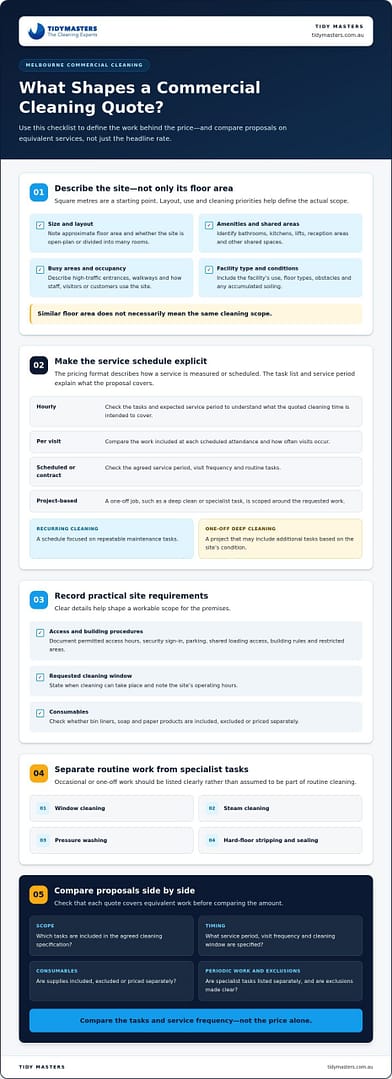
A commercial cleaning quote is an estimate based on the work required, not simply a rate attached to a building’s floor area. It reflects the agreed tasks, how often they’re performed, access to the premises and the conditions cleaners need to work in. A clear scope explains what the estimate covers and gives Melbourne businesses a fair basis for comparing proposals.
Cleaning can range from routine upkeep to a one-off deep clean or a specialist task such as window cleaning, steam cleaning or hard-floor maintenance. These requirements should be listed separately in a quote rather than left implied. For a general introduction to the activities involved, see this Commercial Cleaning Overview.
The same floor area can require a different cleaning scope depending on how the space is used, its layout and the tasks needed to maintain it.
Why there is no single Melbourne commercial cleaning price
Square metres offer a useful starting point, but they don’t show how a site functions. A compact premises divided into many rooms may need a different task plan from an open-plan area of similar size. Bathrooms, kitchens, shared spaces and busy entry points also affect which tasks need attention and how often.
Compare a quiet office with few shared amenities to a busy facility used throughout the day by staff, visitors or customers. The second site may have more frequently used touchpoints and heavier foot traffic, even if the floor areas are similar. Access, obstacles, floor types and accumulated soiling can also affect the work involved. An estimate should reflect the premises and agreed cleaning specification, not a generic template.
Hourly, per-visit, and contract pricing explained
Pricing language describes how a service is measured or scheduled. It doesn’t explain the full offer unless the quote also identifies the work included and the period it covers.
- Hourly: The quote is based on time spent cleaning. Check the task list and expected service period to understand what that time is intended to cover.
- Per visit: The quote applies to each scheduled attendance. Compare the tasks and visit frequency as well as the amount.
- Scheduled or contract: Cleaning is arranged as a recurring service over an agreed period. The schedule should specify visit frequency and routine tasks.
- Project-based: A defined one-off job, such as a deep clean or specialist task, is scoped around the requested work rather than a recurring routine.
Recurring cleaning and one-off deep cleaning are different quote requirements. A regular schedule focuses on repeatable maintenance, while a deep-clean project may include additional tasks based on the site’s condition. Specialist work can also be listed separately from routine cleaning. Before comparing commercial cleaning prices melbourne proposals, identify the service period, frequency and specific tasks in each. This helps you compare equivalent work rather than rates that cover different outcomes.
Which site and service factors change a Melbourne cleaning quote?
Floor area is only one part of the picture. A quote also needs to account for how the premises are divided and used. A building with several small rooms, busy entrances and shared amenities can need a different task plan from an open-plan site of similar size. Bathrooms, kitchens, lifts, reception areas and high-traffic walkways each create cleaning needs that a square-metre figure can’t describe on its own.
Floor area measures space, but layout, occupancy, access and cleaning priorities determine what that space requires. These details turn a search for commercial cleaning prices melbourne into a scope based on the actual site.
Facility type, occupancy, and cleaning frequency
Different facilities call for different priorities. An office may focus on workstations, meeting rooms and shared kitchens. A medical centre needs a task plan suited to its clinical environment, while schools and childcare settings have their own high-use rooms and shared areas. Aged care facilities, gyms and warehouses also have distinct occupancy patterns, surfaces and cleaning priorities. For broader service context, explore this Melbourne commercial cleaning guide.
Usage affects how quickly areas need attention. A busy gym’s change areas may need a different routine from a low-traffic office meeting room. More frequent cleaning can mean less soil builds up between visits; a longer gap may leave more work for each visit. The right schedule depends on the facility’s activity and required tasks, not just its category.
Access, consumables, and specialist tasks
Make practical site conditions clear before comparing quotes. In Melbourne’s CBD, building entry procedures, security sign-in, parking arrangements and shared loading access may affect how cleaners reach the premises. Document permitted access hours, the requested cleaning window, building rules and restricted areas. These details help shape a workable scope for your site.
Consumables can also cause confusion if a proposal leaves them undefined. Note whether items such as bin liners, soap or paper products are included, excluded or priced separately. The proposal should make this easy to find so you can compare like with like.
Separate routine cleaning from occasional or one-off work. Window cleaning, steam cleaning, pressure washing and hard-floor stripping and sealing are specialist or periodic tasks, not automatically part of a regular visit. A deep clean may also need its own defined scope. Listing these tasks separately clarifies the ongoing schedule and what each visit covers.
- Routine: Describe repeat tasks and their frequency.
- Periodic: Identify specialist work and how often it is planned.
- One-off: Define the areas and tasks for a deep-clean project.
Tidy Masters tailors commercial cleaning scopes to each facility’s use and priorities. Explore tailored commercial cleaning to see how a defined scope can reflect your site’s needs.
How to compare commercial cleaning quotes beyond the rate
A useful comparison starts with the work each proposal describes. Two totals may cover different rooms, tasks or service periods, so the lower figure isn’t automatically the better match. Put the proposals beside the same checklist and compare their scope first. This gives you a clearer basis for assessing commercial cleaning prices melbourne businesses receive.
What a clear cleaning proposal should spell out
Look for a written description of the areas covered, routine tasks, visit frequency and agreed service timing. The proposal should distinguish regular cleaning from periodic work, state how consumables are treated and explain how additional requests or changes to the premises are handled. For office-specific considerations, see the office cleaning guide for Melbourne.
| Compare | What to look for |
|---|---|
| Scope | Areas and routine tasks included, such as kitchens, bathrooms and shared spaces. |
| Frequency | How often visits occur and the service period the proposal covers. |
| Visit timing | The agreed cleaning window and any access conditions that affect it. |
| Consumables | Whether supplies are included, excluded or identified separately. |
| Periodic work | How window cleaning, floor maintenance or other occasional tasks are listed. |
| Exclusions | Tasks or areas outside the quoted scope, plus how extra work is treated. |
Use the same service period when comparing totals. A weekly schedule and a monthly figure aren’t directly equivalent unless you account for the number of visits and tasks each covers. Check whether periodic services are included in the total or quoted separately. This matters for offices with planned floor or window maintenance and for facilities with different recurring needs.
How to spot a misleading like-for-like comparison
Broad labels such as “general cleaning” can hide important differences. Check whether each proposal names the rooms, tasks and visit frequency instead of relying on a general description. Review exclusions and periodic work before interpreting a difference in totals. A proposal with fewer listed tasks may not provide the same service as a more detailed one.
Record changes clearly. If access hours shift, a room is added or the requested tasks change, document the revised scope and any resulting adjustment before the new work begins. That helps everyone understand what the agreed service includes and reduces confusion later.
Compare the details, not assumptions about why one total is lower. Match tasks, frequency, timing, consumables and exclusions first. Then assess how clearly each proposal defines the work and handles scope changes. Tidy Masters tailors commercial cleaning scopes to each Melbourne site’s requirements. Explore tailored commercial cleaning while defining the services your premises needs.
What information should Melbourne businesses prepare for an accurate quote?
A clear site brief helps turn a general enquiry into a cleaning scope tailored to your premises. Exact measurements aren’t essential to get started. Approximate details, your current cleaning routine and a list of priorities give Tidy Masters a practical picture of the work to consider. Use this sequence to organise information before requesting a proposal.
Create a useful Melbourne site brief
Start with the location and how the building operates. Include its suburb, approximate floor area, facility type and the spaces in use. Note anything that could affect access or the service window, particularly for a CBD building with security procedures or shared entry arrangements.
- 1. Describe the site. Give the suburb or CBD location, approximate floor area, facility use and number of levels, if relevant.
- 2. Map the spaces. List offices, reception areas, kitchens, bathrooms, shared spaces and other areas that need attention. Include the number of amenities and identify spaces with different cleaning needs.
- 3. Explain how the site is used. Share operating hours, typical occupancy patterns and busy periods. Note when spaces are quiet or heavily used so the proposed routine reflects actual activity.
- 4. Record access arrangements. Describe preferred service windows, entry procedures, security requirements, building rules and restricted areas. Mention relevant parking or access constraints.
- 5. Summarise current conditions. Note the existing cleaning frequency, flooring types, known problem areas and places where soiling builds up between visits.
Specific observations are more useful than broad requests. For example, identify a busy entrance or a shared kitchen that needs attention rather than describing the whole site as “high use”. This helps shape a scope around the areas that matter.
Set priorities before requesting a proposal
Separate essential routine tasks from optional or periodic work. Rank what must be covered, then list additional priorities such as window cleaning, steam cleaning, pressure washing or hard-floor maintenance. For office-specific context, the Melbourne commercial cleaning company guide offers related service-selection guidance.
- 6. Define the service type. State whether you need recurring cleaning, a one-off deep clean, periodic specialist work or a combination.
- 7. Identify the outcomes you need. List priority areas and tasks, then distinguish them from work that can be scheduled separately.
- 8. Note exclusions or sensitivities. Flag areas to exclude, access limitations or particular site considerations relevant to the scope.
These details help keep commercial cleaning prices melbourne proposals grounded in the same site information, without relying on invented measurements or assumptions. Tidy Masters tailors the cleaning scope to each facility’s use and priorities. Request a tailored commercial cleaning quote with your site details and service priorities ready.
Get a tailored commercial cleaning quote in Melbourne
Price research can help you understand what affects a quote, but your facility’s needs shape a practical cleaning scope. Tidy Masters uses details about the site, how it operates and the tasks you prioritise to tailor a proposal to your business. The scope can reflect the work required at your premises rather than assume every Melbourne facility needs the same routine.
Different settings have different day-to-day demands. An office may need a recurring cleaning schedule, while a business preparing a space for a reset may need a one-off deep clean. Medical centres, schools, aged care facilities, gyms, warehouses and retail spaces each have distinct uses and priorities. A tailored task list can account for those differences rather than apply one facility’s plan to another.
Match the proposal to your Melbourne facility
Start with the outcome you need. For recurring office cleaning, describe the routine you want maintained and the schedule that suits your operations. For a one-off deep clean, explain which areas need focused attention and what prompted the request. If you need both, keep regular tasks distinct from deep-clean work so the proposal can show each requirement clearly.
Facility use helps guide the proposed tasks and schedule. A warehouse, for example, is used differently from a medical centre or retail showroom. The layout, occupied areas and priorities won’t be identical. Share what matters most in your environment, such as frequently used shared areas or spaces that need particular attention. Tidy Masters can tailor the scope around those site-specific details.
Move from price research to a clear next step
You don’t need a perfect brief to begin. Start with a short summary of the site, its location, how people use it and the cleaning outcome you’re seeking. If you’re comparing commercial cleaning prices melbourne, these details make a proposal easier to understand because the scope connects directly to your facility.
Before sharing your requirements, bring together:
- Site type and location: Identify the facility and its Melbourne suburb or CBD location.
- Cleaning priorities: Note the areas and tasks that matter most to your business.
- Preferred schedule: Describe the service frequency or timing you have in mind.
- Type of service: Specify recurring cleaning, a one-off deep clean, or both.
With this context, you can review a proposal against your actual needs and see how the recommended scope fits your premises. Tidy Masters is a Melbourne-based commercial cleaning partner, tailoring proposals to each facility and its priorities. Discuss your commercial cleaning requirements and take the next step towards a clearly scoped service.
Make your cleaning scope work for your business
A well-defined cleaning scope can help you assess a quote and give your team a practical reference as site needs change. Keep a copy of the agreed tasks and schedule, and revisit it when occupancy, operating patterns or priorities shift. This helps the service continue to reflect how your premises are used.
Use your research into commercial cleaning prices melbourne as a starting point, then focus on a proposal that connects the work to your site. A tailored scope makes it easier to understand what’s planned and gives your business a sound basis for its next decision.
Tidy Masters provides commercial cleaning for Melbourne offices and a range of facilities, with scopes shaped around each site’s needs. Discuss your Melbourne commercial cleaning requirements and share your site priorities to get started.
Frequently Asked Questions
How are commercial cleaning prices in Melbourne usually structured?
Commercial cleaning prices melbourne may be quoted hourly, per visit or as a recurring service agreement, while a defined deep-clean project may use a project-based estimate. These formats describe how the work is priced, not necessarily which tasks are covered. An hourly figure, for example, needs a stated time allowance and task list to be meaningful. Check whether the quote applies per cleaner, per visit or across a specified service period.
Does a larger commercial space always cost more to clean?
No, a larger space doesn’t automatically mean a more demanding cleaning scope. A broad, open area may involve fewer separate work zones than a smaller premises divided into rooms with multiple amenities. Floor surfaces, furniture, obstacles and how people use the building also affect the tasks involved. For a clearer comparison, consider both the area and the work needed to clean its different spaces.
Can more frequent commercial cleaning reduce the work needed per visit?
It can, because regular attention may limit how much soil builds up between visits. For example, a frequently used kitchen may be easier to maintain through a steady routine than after a long gap. That doesn’t mean more visits always reduce the overall cleaning requirement. The useful schedule depends on occupancy, the premises’ condition and which areas need attention to maintain the desired standard.
Are consumables included in commercial cleaning quotes?
Not necessarily. Consumables such as bin liners, hand soap and paper products may be included, excluded or identified separately, depending on the proposal. Don’t assume that a cleaning service automatically supplies them. Check how the quote treats each relevant product, including who replenishes it and whether restocking is covered. Clear wording helps you plan for supplies without confusing them with cleaning tasks.
What can make a Melbourne commercial cleaning quote change?
A quote may need revision if the agreed work or site conditions change. Examples include adding an area, changing access arrangements, increasing occupancy or requesting extra tasks. A change in the premises’ condition may also affect the work required. Keep an updated record of additions and adjustments, including when they apply, so the scope stays clear and any revised proposal reflects current requirements.
Is a one-off deep clean priced the same way as regular commercial cleaning?
Not usually, because the two services address different needs. Regular cleaning follows an ongoing routine, while a one-off deep clean is defined by the areas and intensive tasks required for that project. A business might arrange a deep clean before beginning a recurring schedule, or request one for a particular reset. Describe the desired outcome and areas involved so the project can be scoped separately from routine maintenance.
Do commercial cleaning prices include window or floor cleaning?
Window and floor work shouldn’t be assumed to form part of routine cleaning. The proposal needs to identify whether window cleaning, steam cleaning or hard-floor stripping and sealing is included, scoped separately or excluded. For example, wiping accessible surfaces is different from a defined floor-maintenance project. Naming the specific service and areas helps prevent misunderstandings about what the regular cleaning schedule covers.
What information should I provide to get a commercial cleaning quote?
Provide your facility type, Melbourne location, approximate floor area, operating hours and typical occupancy. Add the number of bathrooms and kitchens, flooring types, current cleaning routine, access requirements and any areas needing particular attention. Note whether you’re seeking ongoing cleaning, a one-off deep clean or specialist tasks. A floor plan or simple room list can clarify the layout, especially across multiple levels.