
What Is Included in a Commercial Deep Clean? A Practical Checklist
October 13, 2026
Pharmacy Cleaning Guide for Melbourne Managers
October 15, 2026
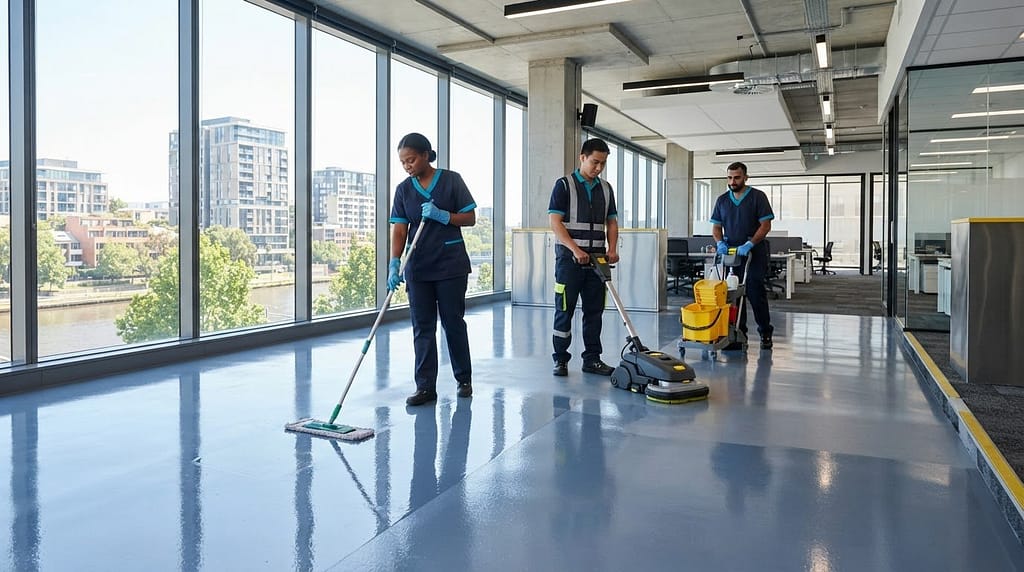
The wrong cleaning method can leave an epoxy floor dull, streaky or slippery, even when the aim is a deeper clean. Epoxy floor cleaning and maintenance works best when each task matches the soil, traffic and condition of the coating. Grit tracked in by shoes or equipment, spills left on the surface and unsuitable products can all contribute to avoidable wear. Scrubbing harder is not always the safer or more effective answer.
A practical routine should protect the floor without adding unnecessary work. This guide explains how to remove everyday dirt, manage spills and choose suitable cleaning methods for your facility. You’ll learn how to reduce scratches and residue, limit slip hazards and recognise when routine cleaning may no longer be enough. Traffic levels and changes in the coating can help you decide what to do next and keep busy commercial floors clean, safe and presentable.
Key Takeaways
- Match epoxy floor cleaning and maintenance to the coating guidance, floor condition, traffic and type of soil.
- Follow a careful cleaning sequence: clear loose debris, prepare a suitable solution, mop, remove residue if required and let the floor dry.
- Distinguish everyday cleaning from periodic attention, and watch for signs that routine care is no longer enough.
- Set cleaning and inspection routines by floor zone, considering foot traffic, vehicles, spills and operational needs.
- For Melbourne commercial facilities, tailored cleaning plans can help organise ongoing floor care alongside Industrial Cleaning, Warehouse Cleaning and Hard Floor Stripping & Sealing.
Epoxy Floor Cleaning and Maintenance: Why the Right Routine Matters
Epoxy floor maintenance involves removing soil, responding to spills and monitoring the coating’s condition. It’s about more than appearance. Grit can act like an abrasive under shoes and wheels, while residue or an unaddressed spill can affect safe movement and daily operations. A consistent routine also helps staff spot changes early, before a small cleaning issue becomes a larger floor concern.
The right method depends on more than the word “epoxy”. Coating systems and their care instructions can differ. A Melbourne office corridor with steady foot traffic has different demands from a warehouse aisle used by vehicles and equipment. Dust, gritty debris, oil and other spills also need different responses. Start with the flooring system’s care guidance, then match the cleaning approach to the soil and how the area is used.
Maintenance should match both the floor’s condition and its daily use. Check whether the coating is intact, note where traffic concentrates and consider what regularly reaches the surface. A durable finish can withstand demanding use, but it isn’t damage-proof. Grit may mark it over time, and dragging pallets, stock or equipment can scratch or scuff the coating. Moving loads carefully and clearing abrasive debris are practical parts of floor care, not just appearance management.
What makes epoxy floors different from uncoated concrete?
Epoxy is a resin-based material; the Epoxy overview explains its composition and general properties. For flooring, an epoxy coating system is applied over a prepared substrate, commonly concrete. Cleaning removes soil from the coating’s surface. It doesn’t restore a worn, peeling or damaged layer, and aggressive scrubbing won’t fix that problem. Because systems vary, don’t assume one product or method suits every epoxy floor. Follow the care instructions for the specific flooring system.
Which conditions change an epoxy floor’s care needs?
Pedestrian areas typically collect dust, marks and grit from footwear. Floors exposed to vehicles or equipment may also face heavier soil, concentrated wheel paths and scuffing from moved loads. In a Melbourne warehouse, oil or operational spills may call for prompt attention. In an office, keeping entrance routes clear of tracked-in grit may be a more regular priority. Consider what reaches the floor, how much traffic passes over it and the coating’s visible condition. These observations help set sensible cleaning priorities instead of relying on one routine for every zone.
Monitoring matters because a change in appearance can signal a different need. Surface soil may respond to appropriate cleaning, while peeling, persistent wear or visible damage calls for assessment of the coating itself. Keep these tasks distinct: routine cleaning isn’t a substitute for addressing coating condition. Remove what’s on the surface, prevent avoidable abrasion and recognise when the floor needs attention beyond its usual care.
How to Clean an Epoxy Floor Safely, Step by Step
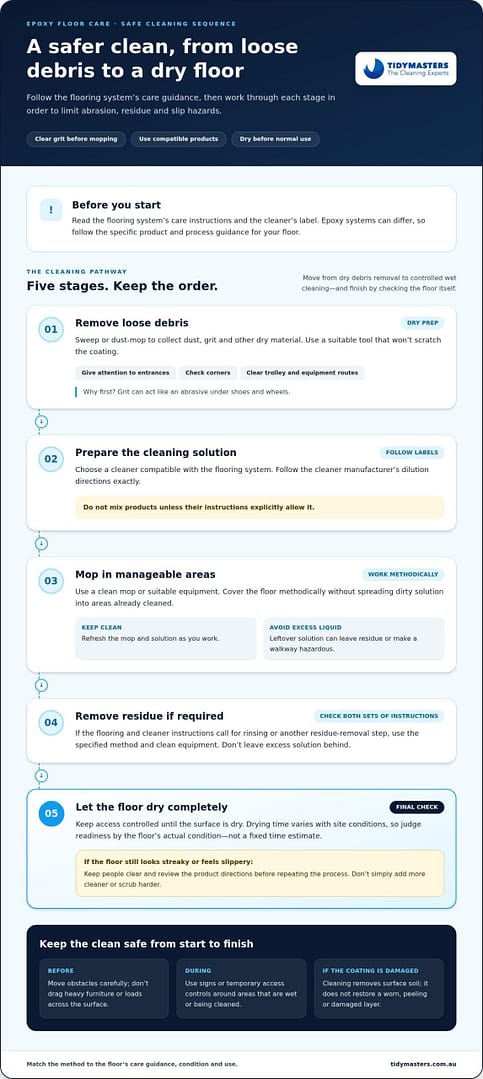
A safe clean is a sequence, not a single pass with a mop. Before using a solution, read the flooring system’s care instructions and the cleaner’s label. Epoxy finishes can vary, so a method that suits one floor may not suit another. If the instructions call for a particular product or process, follow them rather than relying on a general rule.
A good cleaning sequence moves from loose-debris removal to careful mopping, residue removal where directed and complete drying. This helps prevent grit from being dragged across the coating and limits leftover solution that could affect the finish or create a slip hazard.
Prepare the surface before mopping
Preparation helps prevent avoidable abrasion. Sweep or dust-mop first, paying particular attention to entrances, corners and routes used by trolleys or equipment. Move obstacles carefully, and don’t drag heavy furniture or loads across the surface. In a busy Melbourne workplace, use signs or temporary access controls to keep people clear of areas that are wet or being cleaned.
- Remove loose debris. Sweep or dust-mop the floor to collect dust, grit and other dry material. Use a suitable tool that won’t scratch the coating.
- Prepare the cleaning solution. Select a cleaner compatible with the flooring system. Follow the cleaner manufacturer’s dilution directions exactly, and don’t mix products unless their instructions explicitly allow it.
- Mop in manageable areas. Use a clean mop or suitable equipment. Work methodically so you cover the floor without spreading dirty solution into areas already cleaned.
- Remove residue if required. Check both sets of instructions. If they call for rinsing or another residue-removal step, use the specified method and clean equipment. Don’t leave excess solution behind.
- Allow the floor to dry. Keep access controlled until the surface is dry. Drying time varies with site conditions, so use the floor’s actual condition rather than a fixed time estimate to decide when it’s ready for normal use.
Mop, remove residue, and let the floor dry
Keep the mop and solution clean as you work. A dirty mop can redistribute soil, while excess liquid can leave residue or make a walkway hazardous. If the floor still looks streaky or feels slippery after cleaning, keep people clear and review the product directions before repeating the process. Don’t simply add more cleaner or scrub harder.
Abrasive pads can scratch or dull the finish. Harsh chemicals may affect the coating, and untested products can leave marks or residue. Avoid experimenting in a prominent area. If the flooring instructions permit a test, try the method in a discreet spot first and assess the result before cleaning the wider floor. NuFlorz’s Commercial Epoxy Flooring Care & Maintenance Guide also discusses practical care considerations for commercial settings.
For facilities that need a structured approach to day-to-day site cleaning, Tidy Masters’ commercial cleaning support can complement an organised floor-care routine. Keep routine cleaning distinct from coating repair.
Routine Cleaning, Periodic Cleaning, or Restoration: Which Does an Epoxy Floor Need?
Choose the maintenance level by looking at what remains after the usual clean. Everyday dust and removable marks generally call for routine care. Built-up residue that persists may need a more thorough, system-appropriate clean. Peeling, exposed substrate or coating damage is different: it’s a condition issue, not a cleaning task. This distinction keeps epoxy floor cleaning and maintenance practical and prevents aggressive cleaning from being mistaken for repair.
| Maintenance level | Typical trigger | Suitable action | Escalation signs |
|---|---|---|---|
| Routine cleaning | Loose dirt, ordinary footprints, dust and light soil | Remove debris and clean the surface using the flooring system’s care guidance. | Marks or residue remain after an appropriate routine clean. |
| Periodic cleaning | Residue or soil has built up and routine cleaning no longer clears it. | Review the system instructions and use a compatible deeper-cleaning method. | Staining persists, or the coating looks worn or uneven after cleaning. |
| Coating assessment or restoration | Peeling, exposed substrate, persistent staining or visible coating damage | Assess the floor system and determine whether coating repair or other restorative work is needed. | Coating is missing, lifting or damaged. Cleaning won’t replace it. |
Restoration is not simply a stronger clean. Work such as grinding, recoating or sealing changes or treats the floor system, so it shouldn’t be added to a routine cleaning schedule. First identify the flooring system and review its maintenance guidance. This helps distinguish removable surface soil from a coating problem that needs a different assessment.
Signs that routine cleaning is enough
Loose dirt, ordinary footprints and surface marks that lift with the recommended cleaning method are signs that routine care is working. Set the schedule according to observed conditions: a busy entrance or vehicle route may collect soil faster than a low-traffic area. There’s no single daily, weekly or monthly frequency that suits every facility.
Check familiar areas after cleaning. If they return to an acceptable condition without repeated scrubbing or stronger products, continue the established routine and adjust it when traffic or soil levels change. Consistent observation is more useful than following a calendar that doesn’t reflect how the floor is actually used.
When visible wear calls for a different response
Persistent staining, peeling, exposed substrate and visible coating damage are signs to escalate. Record where they appear and review the floor system’s maintenance guidance before considering restorative work. Cleaning can remove soil from an intact surface, but it can’t restore missing or failed coating. Treating damage as dirt may lead to unnecessary scrubbing without addressing the underlying condition.
Use a simple decision point: clean when the issue is on the surface; seek a coating assessment when the surface itself appears compromised. This keeps routine care focused and helps facility teams identify when the floor needs attention beyond cleaning.
Build an Epoxy Floor Maintenance Plan Around Traffic, Spills, and Equipment
A useful floor-care plan reflects how each area operates. Divide the facility into zones, then consider foot traffic, vehicle movement, spill exposure and how sensitive the work in that area is to disruption. This makes epoxy floor cleaning and maintenance more practical than applying one schedule across the whole site.
For example, an office entrance may need close attention to grit tracked in by shoes, while a warehouse route may collect debris from equipment movement and need a clear spill-response process. These areas shouldn’t automatically receive identical cleaning. Set inspection and cleaning frequency by what you observe: how quickly soil returns, where spills occur and whether marks or residue persist.
Set priorities for busy commercial floors
Start with entry points and the routes people and equipment use most. Grit repeatedly carried onto the floor can contribute to surface wear, so consider entrance mats and regular checks of high-traffic paths. In a warehouse, map vehicle routes and spill-prone work areas. In an office, focus on entries, corridors and shared spaces. The patterns differ, so the care plan should too.
Plan cleaning around facility activity where possible. Consider when an area is busiest, how staff and visitors move through it, and how to limit disruption and wet-floor exposure. Include preventive measures: respond to spills promptly, control grit at entrances, use suitable protective pads under movable furniture where appropriate, and move equipment carefully rather than dragging it over the coating.
- Foot-traffic zones: Monitor entrances and walkways for tracked-in grit and recurring marks.
- Vehicle and equipment routes: Watch for debris, scuffs and repeated wear along operational paths.
- Spill-exposed areas: Make sure staff know how to respond using the floor system’s care guidance.
- Sensitive work areas: Schedule cleaning to suit site activity and reduce disruption to operations.
Use inspections and records to refine the schedule
Keep simple records of cleaning actions and recurring problem areas. Note visible residue, repeated spills, scratches and zones that need attention sooner than others. Reviewing these observations helps you adjust the plan based on actual conditions rather than relying on a universal calendar. Records can also show whether a recurring mark calls for a change in cleaning practice or closer assessment of the floor’s condition.
For commercial facilities, quality audits and reports can support an organised cleaning plan by documenting conditions and follow-up actions. Tidy Masters provides tailored cleaning plans alongside quality audits and reports. Broader site routines matter too, and this commercial cleaning guide offers context for planning facility cleaning beyond the floor itself.
Make the plan a working document. Review it when operations change, a zone’s use shifts or inspection records show a recurring issue. For support with an organised commercial cleaning plan, request a free quote from Tidy Masters.
Keep Melbourne Commercial Epoxy Floors Presentable with Consistent Professional Care
Good floor care starts with a clear, repeatable routine. Identify the flooring system’s care guidance, remove grit before it is walked or wheeled across the surface, use a compatible cleaning method and monitor the coating for changes. This keeps everyday cleaning focused and helps facility teams notice when a concern goes beyond surface soil.
In Melbourne workplaces, epoxy floors sit within a wider cleaning plan. Entrances, work areas and shared spaces each contribute to the condition of the facility, but soil and cleaning priorities can differ from zone to zone. Coordinating floor care with the site’s broader cleaning routine makes responsibilities clearer and helps keep the environment orderly for staff, visitors and operations.
Coordinate floor care with wider facility cleaning
Office Cleaning can support a consistent approach across workspaces and shared areas, while Warehouse Cleaning can fit the needs of active operational environments. In either setting, routines should reflect the floor’s use and follow its care guidance. Tidy Masters uses non-toxic, environment-friendly cleaning products and offers tailored cleaning plans, with quality audits and reports to support organised facility maintenance.
For offices, planning floor care alongside other workplace cleaning priorities can help teams coordinate work across a site. The Melbourne office cleaning guide provides wider context on maintaining a hygienic workspace. For industrial and warehouse environments, Tidy Masters’ Industrial Cleaning and Warehouse Cleaning address broader facility cleaning needs. Hard Floor Stripping & Sealing is a separate floor-care service, not a repair for epoxy coating damage.
Request a tailored cleaning plan
A useful plan takes account of facility use, the floor’s observed condition and cleaning priorities across different areas. Tidy Masters can tailor cleaning plans to facility requirements and provide quality audits and reports to help organise ongoing maintenance. Keep notes on recurring concerns so the plan can respond to changes in traffic, soil and operational needs.
For Melbourne businesses, a free quote is a practical first step in planning commercial cleaning. Share the facility’s cleaning priorities and the areas that need attention, then discuss an approach suited to the site. A tailored plan can bring floor care into a dependable wider routine while keeping cleaning distinct from assessment or repair of a damaged coating.
To discuss your facility’s cleaning requirements and request a free quote, contact Tidy Masters about commercial cleaning.
Make Your Floor-Care Routine Part of Daily Operations
Make floor care easy to follow across your facility. Set clear responsibilities, keep the floor system’s care guidance accessible and give staff a simple way to flag spills or changes in the coating. A routine that fits the way your site operates is easier to sustain than a plan that exists only on paper.
Review the plan as work areas, equipment or traffic patterns change. Small adjustments can keep epoxy floor cleaning and maintenance aligned with current needs instead of relying on habits that no longer suit the space. For a broader commercial cleaning approach, Tidy Masters has supported Melbourne businesses since 2009.
If you’re ready to organise cleaning around your facility’s priorities, take the next step with a tailored discussion. Request a free quote for your commercial cleaning needs and move towards a clear, manageable plan for your workplace.
Frequently Asked Questions
Can I use vinegar to clean an epoxy floor?
Don’t assume vinegar is suitable for your epoxy floor. Vinegar is acidic, and some flooring systems or finishes may be affected by acidic cleaners. Check the flooring manufacturer’s care instructions and the cleaner’s label before use. If you don’t know the exact coating, don’t rely on a household remedy or test it in a visible spot. Follow the documented maintenance guidance for that specific floor system instead.
How often should an epoxy floor be cleaned?
There’s no universal cleaning schedule for every epoxy floor. Set the frequency according to foot traffic, vehicle movement, soil and how each space is used. In a Melbourne facility, an entryway that quickly collects dirt may need attention more often than a lightly used room. Remove grit and spills promptly, then review the floor’s condition regularly. If soil returns quickly, adjust the epoxy floor cleaning and maintenance schedule to suit.
Are epoxy floors waterproof?
Not necessarily. An epoxy coating can create a sealed surface, but that alone doesn’t mean the entire floor system is waterproof or designed for standing water. Performance can depend on the coating, substrate, installation, joints and current condition. Check the flooring documentation for its intended use. If water reaches damaged coating or the substrate, routine cleaning won’t resolve the underlying issue. Record the affected area and arrange an assessment of the floor system.
Can you use a steam cleaner on an epoxy floor?
Only use steam if the flooring system’s care instructions permit it. Heat, moisture and equipment pressure may affect different coatings in different ways, so don’t assume steam is appropriate just because it’s used elsewhere in the facility. Avoid applying an unfamiliar method across the whole floor. For a commercial site, document the approved method in the floor-care procedure so staff can follow consistent guidance.
What should I do if an epoxy floor has a sticky or cloudy residue?
First, consider whether cleaner residue, an unsuitable product or incomplete removal could be causing the film. Check the product label and floor-care guidance, then follow their directions for removing remaining solution. Don’t respond by adding a stronger chemical or scrubbing aggressively. If stickiness or cloudiness remains after appropriate cleaning, record where it appears and arrange an assessment. The surface may need attention beyond routine maintenance.
Can scratches in an epoxy floor be cleaned away?
No. Cleaning may remove dirt sitting in a scratch, but it can’t repair damage to the coating itself. Avoid abrasive pads and forceful scrubbing, which could worsen the mark. Note the scratch’s location and extent, then follow the maintenance guidance for that floor system to determine the appropriate next step. If the coating is damaged, more frequent cleaning won’t restore it; the floor may need assessment for restorative work.