
Commercial Cleaning Prices in Melbourne: What Shapes Your Quote?
October 9, 2026
Commercial Floor Sealing in Melbourne: Business Guide
October 11, 2026
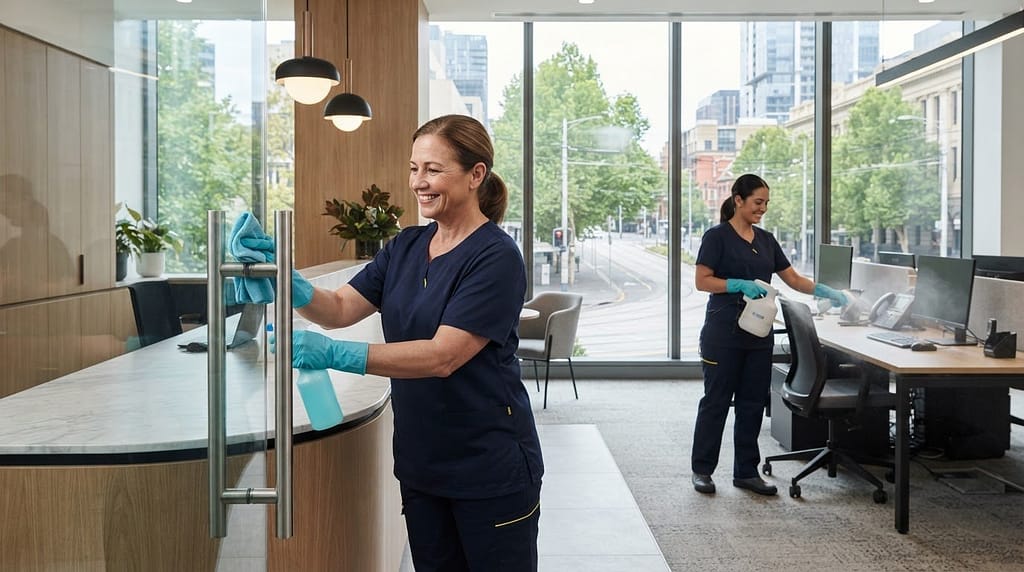
A thorough-looking clean can still leave frequently touched areas without the targeted attention they need. Choosing commercial disinfection services melbourne businesses can rely on means looking beyond a general promise to treat every surface. Start with how the site is used, which areas need priority and what the agreed service will cover.
Routine cleaning and disinfection have different roles. Cleaning removes dirt and grime; disinfection targets specified microorganisms on suitable surfaces when carried out appropriately. The right scope depends on your facility, its surfaces and its operating requirements.
This guide explains what commercial disinfection can do, how to compare service scopes and how to plan work around your Melbourne business. It covers ways to identify priority areas, clarify responsibilities and coordinate access and completion communication. Tidy Masters provides commercial cleaning across Melbourne for workplaces in a range of sectors.
Key Takeaways
- Cleaning removes soil, while disinfection targets specified microorganisms on suitable surfaces. Both may have a role in a workplace plan.
- A site-specific scope reflects how the facility is used, identifies priorities and sets out access, timing and communication.
- When comparing commercial disinfection services melbourne businesses can use, focus on the scope, priority areas, timing and fit for your facility.
- Prepare by identifying priority areas, occupancy needs, access arrangements and a site contact before work is scheduled.
- Tidy Masters provides commercial cleaning in Melbourne for offices, medical centres, schools, aged care facilities, gyms and industrial sites.
What commercial disinfection services do for Melbourne workplaces
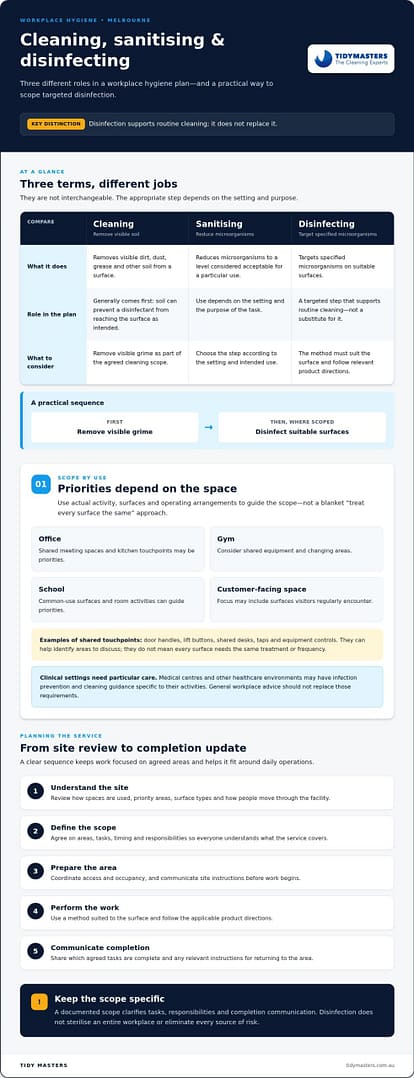
Commercial disinfection targets specified microorganisms on suitable surfaces. It supports routine cleaning, but does not replace it. Cleaning removes visible soil and other material, while disinfection uses an appropriate process to address particular microorganisms. Neither should be described as sterilising an entire workplace or eliminating every risk.
Disinfection targets specified microorganisms on appropriate surfaces; it does not make a workplace sterile or remove every source of risk. That distinction helps when planning commercial disinfection services melbourne businesses can use effectively. A sound scope considers how each area is used, the concerns identified, the surface materials and the site’s operating needs. A reception counter, shared kitchen and clinical treatment area may need different priorities and handling.
Disinfection methods and applications vary, as outlined in this general overview of disinfection. The chosen method must suit the surface and follow the relevant product directions. The goal is a clear scope that reflects the site, not a blanket promise to treat every surface in the same way.
Cleaning, sanitising, and disinfecting: what is the difference?
Cleaning removes visible dirt, dust, grease and other soil from a surface. Sanitising reduces microorganisms to a level considered acceptable for a particular use. Disinfecting targets specified microorganisms on suitable surfaces. These terms are not interchangeable, and the appropriate step depends on the setting and purpose.
Cleaning generally comes first because soil can prevent a disinfectant from reaching the surface as intended. A practical sequence is to remove visible grime, then disinfect where the scope calls for it. Surface suitability and product label directions matter, including stated application and use instructions. Disinfection is one part of workplace hygiene, not a substitute for regular cleaning, hand hygiene or other site practices.
When might a Melbourne business consider targeted disinfection?
A business might consider targeted disinfection when shared touchpoints are used frequently, when a space’s use changes or when a specific concern prompts a review of cleaning priorities. Common examples include door handles, lift buttons, shared desks, taps and equipment controls. These examples can help identify areas to discuss; they do not mean every surface needs the same treatment or frequency.
Facility use shapes the plan. An office may prioritise shared meeting spaces and kitchen touchpoints. A gym may need to account for shared equipment and changing areas. In a school, common-use surfaces and room activities can guide priorities. Customer-facing businesses may focus on the surfaces visitors regularly encounter. In each case, the scope should reflect actual use and operating arrangements rather than a generic “spray everything” approach.
Clinical settings require particular care. Medical centres and other healthcare environments may have infection prevention and cleaning guidance specific to their activities. General workplace disinfection advice should not replace those requirements. Aligning the cleaning scope with applicable facility guidance helps keep the approach clear and practical for the people who use the space.
How a commercial disinfection service is planned and carried out
A well-planned service follows a clear sequence, from understanding the site to communicating what has been completed. This keeps the work focused on agreed areas and helps staff understand how it fits around daily operations. For commercial disinfection services melbourne workplaces need, planning should account for facility use, surfaces, access and occupancy rather than defaulting to a one-size-fits-all treatment.
- Understand the site. Review how spaces are used, which areas need attention, what surfaces are present and how people move through the facility.
- Define the scope. Agree on the areas, tasks, timing and responsibilities so everyone understands what the service covers.
- Prepare the area. Coordinate access and occupancy, and communicate site instructions before work begins.
- Perform the work. Use a method suited to the surface and follow the applicable product directions.
- Communicate completion. Share which agreed tasks are complete and any relevant instructions for returning to the area.
A documented scope turns broad expectations into clear tasks, responsibilities and completion communication. It also gives the site team a useful reference if priorities or operating arrangements change.
What should happen before disinfection begins?
Start with the details that shape the work: facility use, priority areas, surface types, access needs and operational constraints. For example, a shared room used throughout the day may need different scheduling from a low-occupancy area. Note sensitive surfaces or equipment, and identify who can provide access or explain site-specific requirements.
The agreed scope can record the areas to be treated, the tasks for each area, the planned timing and the person responsible for site coordination. Use this stage to align the work with applicable site guidance. Products and methods must suit the surfaces involved and be used according to current label directions. The US OSHA workplace sanitation standards are a reference to US requirements, not Australian rules. Melbourne businesses should use relevant Australian and Victorian guidance for their circumstances.
How should a business plan access and re-entry?
Good scheduling considers staff, visitors, customers and the work taking place in each area. Identify quieter periods, spaces that must remain accessible and activities that could overlap with the service. Ventilation arrangements, occupancy and the type of work may also affect site preparation and when an area can be used again.
There is no universal re-entry time. Follow applicable product instructions and site requirements, and communicate relevant directions clearly to staff. A named site contact can coordinate access, share updates and receive completion information. This handover helps the workplace resume its normal routines with a clear understanding of what was done.
For a Melbourne workplace, a tailored scope and coordinated cleaning plan can make disinfection easier to manage alongside ongoing operations. Explore Tidy Masters’ commercial cleaning services to see how site-specific cleaning can support your facility.
How to compare commercial disinfection options for your facility
Compare what a service will actually cover, rather than relying on a broad claim about disinfection. When evaluating commercial disinfection services melbourne businesses are considering, look for a scope that connects priority areas, timing and communication to the way the facility operates. The same approach will not suit every workplace.
Which service details matter most when comparing scopes?
Compare practical details side by side. Which areas are included? What tasks are planned for each area? How will the work fit around occupancy and site access? How will completion be communicated? Clear answers help you understand what staff and customers can expect.
A general promise to “disinfect the premises” does not explain which surfaces are included or how the service fits daily operations. A defined scope does. It sets useful boundaries and helps avoid mismatched expectations without relying on unsupported claims about products or outcomes.
| Scope detail | What to compare | Why it matters |
|---|---|---|
| Included areas | Rooms, shared spaces and touchpoints named in the scope | Clarifies where the work will take place |
| Priority areas | Surfaces and spaces selected based on site use | Keeps attention on relevant areas |
| Timing and access | Occupancy, access arrangements and operational constraints | Helps coordinate the service with workplace activity |
| Communication | Site instructions and how completion is reported | Gives staff a clearer handover |
| Facility fit | Surface types, traffic and activities in each space | Helps shape a practical, site-specific plan |
How does facility type change the disinfection plan?
Facility use changes priorities. An office may focus on shared desks, meeting-room touchpoints and kitchen surfaces. A school needs to account for the use of common areas and learning spaces, while a gym may need to consider shared equipment and changing areas. In a showroom or other customer-facing site, visitor routes and frequently touched surfaces can help guide the scope.
Traffic, occupancy, surface materials and site activities all matter. A busy shared counter may need different attention from a rarely used storage area. Comparing plans against these everyday details helps you assess whether the scope suits the workplace, rather than simply counting the number of surfaces covered.
Clinical environments need a distinct approach. Medical centres may have cleaning and hygiene considerations tied to their activities, so general workplace comparisons should not replace relevant guidance. Tidy Masters’ medical centre cleaning guidance covers considerations for clinics. For childcare facilities, consult its childcare cleaning and safety guidance when considering how facility use shapes cleaning priorities.
Use the comparison to focus on your site: what needs attention, what must remain operational and how the work will be coordinated. Those details form the basis of a clear, manageable scope.
How Melbourne businesses can prepare for commercial disinfection
Preparing the site makes the work easier to coordinate and helps staff understand what to expect. Before scheduling commercial disinfection services melbourne businesses should identify the areas in scope, access arrangements, occupancy patterns and site-specific requirements. Share these details early, especially if work could overlap with trading, classes, appointments or operational shifts.
A practical pre-service checklist for business managers
Use this checklist to gather the information needed for a clear, site-specific plan. Preparing in advance can prevent access issues and make the handover smoother.
- Confirm access arrangements: identify entry points, access restrictions and who will arrange entry to the relevant areas.
- Mark priority areas: list the rooms, shared spaces and surfaces included in the agreed scope.
- Note occupancy: flag when staff, visitors, customers, students or clients are likely to be present.
- Identify surface or equipment concerns: point out sensitive equipment, surfaces that need special consideration and spaces requiring restricted access.
- Name a site contact: choose someone who can coordinate access, pass on instructions and receive completion communication.
- Prepare clear staff instructions: tell affected people which areas are included and share relevant directions for the planned work.
Share operational constraints before the work is scheduled, not on the day. For example, explain whether a treatment room has appointments booked, a classroom needs to be ready for a particular activity or a customer area must remain accessible. These details help shape practical arrangements without assuming every workplace can pause normal operations.
How to reduce disruption across a Melbourne worksite
Plan around how the business runs. A retailer can consider customer flow and access to displays. A school can factor in classes and shared spaces. A medical centre can account for appointments and room availability, while a warehouse may need to coordinate work with staff shifts and movement through active areas. The best timing depends on the site’s schedule and the agreed scope.
Clear communication supports a smoother visit, though it cannot guarantee zero disruption. Make sure the site team understands three things: what is included, when the work is planned and who manages access. If occupancy or operating needs change, share the update so arrangements can be adjusted where appropriate. Keep instructions straightforward, and give staff or visitors information relevant to the areas and timing affected.
Preparation is also part of a broader cleaning plan. Tidy Masters’ Melbourne commercial cleaning FAQ guide provides additional context for planning commercial cleaning around your workplace. For a site-specific cleaning plan in Melbourne, contact Tidy Masters about your business’s cleaning needs.
Tidy Masters commercial disinfection services in Melbourne
Tidy Masters provides commercial cleaning in Melbourne for offices, medical centres, schools, aged care facilities, gyms and industrial sites. A disinfection plan needs to fit how a facility is used, rather than applying the same scope everywhere. That means considering the site’s priorities, surfaces and operating patterns when planning the work.
Commercial disinfection services melbourne businesses need can be tailored to their site priorities, surfaces and operating patterns. A shared office, an active gym and a medical centre have different routines and access needs. Tidy Masters works with businesses to define which areas are in scope, coordinate the work and account for practical site requirements.
A tailored service for different commercial environments
Facility use helps determine where attention is most relevant. In an office, planning might focus on shared work areas and frequently used common spaces. A school or childcare facility may need to account for room activities and access, while a gym’s operating patterns and shared equipment can influence priorities. In aged care and medical settings, the facility’s activities and applicable site guidance also matter.
Industrial and warehouse sites bring their own layout and workflow considerations. Staff movement, active work areas and the surfaces in scope all help shape coordination. These examples are starting points, not a fixed checklist. Tidy Masters tailors commercial cleaning to the facility and its operating needs, keeping the agreed work focused and practical.
Plan a commercial disinfection service with Tidy Masters
A useful conversation starts with a few clear details. Describe your facility, the areas that need attention, any surface or equipment concerns, occupancy patterns and access arrangements. Share operational constraints too, such as trading periods, class schedules, appointments or shift changes. This information helps align the scope and timing with how your workplace runs.
Clear coordination helps both the site team and the cleaning partner. Tidy Masters provides commercial cleaning for facilities across Melbourne, with service coverage also extending to Geelong. The focus is on understanding the site, agreeing practical priorities and communicating arrangements clearly so the plan supports workplace routines.
Ready to discuss a site-specific approach? Discuss a commercial disinfection plan with Tidy Masters.
Make your next workplace plan fit the way you operate
Disinfection planning can change as your workplace does. A shift in occupancy, layout or daily activities is a useful prompt to review which areas need attention and how a service can fit around the people who use them. This keeps decisions connected to current site conditions instead of relying on a plan that no longer reflects your operations.
When considering commercial disinfection services melbourne businesses can arrange, focus on a practical scope that suits your facility and supports its routines. You do not need to resolve every detail in advance. A clear understanding of your priorities and operating needs is a strong starting point.
Discuss your workplace requirements with Tidy Masters to take the next step towards a tailored plan. Discuss a commercial disinfection plan with Tidy Masters. A considered approach helps you move forward with a clear understanding of the work.
Frequently Asked Questions
What is the difference between commercial cleaning and disinfection?
Commercial cleaning removes dirt and other visible material, while disinfection targets specified microorganisms on suitable surfaces. A surface can look clean without having been disinfected, so appearance alone does not show which tasks were completed. For example, a scope can distinguish routine desk cleaning from targeted disinfection of selected shared touchpoints. Defining those tasks helps managers understand the purpose of the service.
When should a Melbourne business consider commercial disinfection?
Consider commercial disinfection services melbourne businesses can arrange when an identified concern, a change in how a space is used or frequent sharing of equipment prompts a review of cleaning priorities. A meeting room used by more teams, for example, may lead a manager to reassess its shared surfaces. The decision should reflect the site’s circumstances and applicable guidance, rather than assuming every area needs the same treatment.
Does disinfection replace regular commercial cleaning?
No. Disinfection does not replace routine cleaning, which addresses everyday soil such as dust, food residue and spills. If a shared kitchen bench has crumbs or visible marks, cleaning is still needed to maintain the space. Continue regular cleaning and hygiene practices, then use targeted disinfection where the site’s scope and circumstances call for it.
How long does commercial disinfection take?
There is no single duration for every site. Timing depends on the areas included, their size and condition, the surfaces involved, access arrangements and the work required. Relevant product directions may also affect how the work is carried out and when spaces can be used again. A defined scope gives the business a more useful basis for coordinating staff and operations than a generic time estimate.
Can commercial disinfection be completed outside business hours?
Work timing depends on occupancy, site access and the agreed service arrangements. A business can identify quieter periods or times when particular rooms are available, then factor those preferences into planning. Do not assume a specific time window or re-entry period; arrangements should account for site requirements and applicable product directions. Clear communication helps staff know which areas may be affected and when.
What should a commercial disinfection service include?
A useful service scope identifies the areas and tasks included, surfaces needing special consideration, access arrangements and planned timing. It should also clarify whether preparation or routine cleaning is part of the agreed work, so expectations are clear. For example, naming a reception counter and door handles is more precise than referring broadly to “the front office.” Completion communication helps site managers close the loop.